Provide strong support
Install a sturdy trellis, fence, or wire netting before active growth starts so the vigorous vines can be tied and trained upward without breaking new shoots.

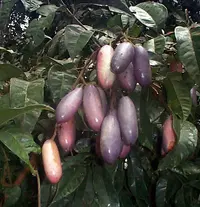
Pachylobus edulis, often called Ube in some regions, is a tropical fruit and nut tree grown mainly for its edible seeds and fleshy pulp. It forms a medium to large evergreen tree with a dense crown and glossy green leaves.
This species is native to West and Central Africa, where it occurs in humid lowland forests and farmed landscapes. It prefers warm conditions, consistent moisture, and deep, well-drained soils.
For home growers, it is a long-lived, slow-establishing tree that needs space, stable warmth, and protection from cold. Understanding how to care for Ube helps determine whether it is a realistic choice outside its natural range.

Care Difficulty
Moderate Care

Light Preference
Full Sun

Water Requirements
Regular Water

Temperature Preference
Tropical / Frost Sensitive

Hardiness Zone
11–12

Soil Texture
Loamy, Sandy, Organic-rich

Soil pH
Acidic (5.5–6.5), Slightly acidic (6.5–7.0)

Soil Drainage
Moist but well-drained

Fertilization
Minimal (feed rarely)
Scan your plant to receive care tips personalized for your specific plant
Available on iOS and Android
Pachylobus edulis prefers bright, stable light to support strong vegetative growth and flowering.
This species needs consistently moist but not waterlogged soil to establish a deep, resilient root system.
Stable warm temperatures support healthy growth and reduce stress in this tropical tree.
This species benefits from moderately humid air but tolerates typical household levels.
Pachylobus edulis prefers deep, well-structured soil that drains freely but does not dry out too fast.
This species can be grown in large containers if root space and stability are carefully managed.
This fruit tree benefits from light, balanced feeding during active growth but does not require heavy fertilization for healthy development.
Pachylobus edulis responds well to light structural pruning that maintains a strong framework and safe size.
This species is typically grown in the ground, so focus on careful transplanting of young trees rather than frequent repotting.
Propagation of this tree is usually done from seed, with some use of vegetative methods where material is available.
This tropical tree is frost-sensitive and needs protection in regions with cool winters.

Plant Health Check
Not sure what's wrong with your plant? Check your plant's health inside the app.
This species is a medium to large evergreen tree native to humid, lowland forests of West and Central Africa, where it produces elongated, fleshy fruits commonly called African plums or ube in local markets.
The fruit pulp is rich in oil and has a starchy, nutty flavor when boiled or roasted, which makes it an important traditional food and snack in parts of Nigeria, Cameroon, and neighboring countries.
Across its range, the tree is known by several vernacular names, such as African pear or African bush pear, reflecting its long-standing integration into regional diets and agroforestry systems.
The fruit pulp and seeds are traditionally eaten after thorough cooking or processing, but raw parts can be irritating. Only consume material that is positively identified and prepared according to local food traditions and safety guidelines.
Keep your plants happy and healthy with plant identification, disease detection, and easy care guidance.