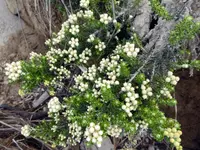
Narrowleaf Sugarbush Care (Protea neriifolia)

Also known as: Oleander-leaf Protea, Blue Sugarbush, Blue Protea, Cream Mink, Feathered Red, Frosted Fire, Green Velvet, Mink Sugarbush, Narrow-Leaved Protea, Neriifolia, Oleander-Leaf Erodendrum, Oleander-Leaved Sugarbush, Pinkmink Protea, Silk n Satin, Narrow-Leaved Sugarbush, Oleander-Leaf Sugarbush, White-Mink Protea, Green Ice, Moonshine
Narrowleaf Sugarbush

About Narrowleaf Sugarbush

Narrowleaf sugarbush (Protea neriifolia) is an evergreen shrub from South Africa’s fynbos, valued for its long, cylindrical flower heads and narrow, leathery leaves. It typically forms an upright, multi-stemmed shrub that can become a striking focal point in a dry, sunny garden.

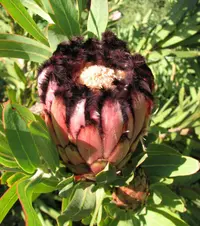
The blooms have sturdy, colorful bracts and a fuzzy central cone, making them popular in cut flower arrangements. Stems are woody and long-lived when grown in suitable conditions.

This species evolved in nutrient-poor, well-drained soils and is sensitive to root disturbance and excess fertilizer, which can make it challenging for beginners. Understanding how to care for Narrowleaf Sugarbush starts with providing strong light, good air flow, and fast-draining, slightly acidic soil kept on the drier side.

Main Plant Requirements

Care Difficulty

Hard Care

Light Preference

Full Sun

Water Requirements

Low Water

Temperature Preference

Warm Climate

Hardiness Zone

9–11

Soil Texture

Sandy, Loamy, Rocky

Soil pH

Strongly acidic (4.5–5.5), Acidic (5.5–6.5)

Soil Drainage

Well-drained

Fertilization

Minimal (feed rarely)

Get Personalized Care Plan

Scan your plant to receive care tips personalized for your specific plant

Available on iOS and Android

How to Care for the Narrowleaf Sugarbush

Protea neriifolia performs best in bright, open conditions with strong direct sun.

  • Provide 6–8 hours of direct sun daily; full sun is ideal, especially in coastal or mild-summer climates.
  • In hotter inland areas, give morning sun with light afternoon shade to prevent leaf scorch while still promoting flowering in Narrowleaf Sugarbush.
  • Avoid dense shade, which leads to weak, stretched growth and poor blooming; ensure no prolonged shading from buildings or taller plants, especially in winter.

This species prefers infrequent, deep watering in fast-draining, low-fertility soil.

  • Outdoors in the ground, water only when the top 5–8 cm of soil is completely dry, then soak thoroughly and let excess drain away.
  • Reduce watering in cool or wet seasons; established Protea neriifolia plants in suitable climates may need little to no supplemental water once rooted.
  • Watch for overwatering signs such as yellowing leaves, sudden leaf drop, or blackened roots; dry, curling leaves and very light stems indicate underwatering.

This shrub prefers mild, dry conditions and does not tolerate hard frost.

  • Aim for 60–75°F (16–24°C) during active growth, with good air movement and low to moderate humidity to reduce fungal issues.
  • Mature plants can tolerate brief drops to around 25°F (−4°C), but flower buds and young growth are damaged below 28°F (−2°C).
  • In hot climates, plants cope with 85–95°F (29–35°C) if soil is well drained and roots are insulated with mulch; avoid reflected heat from walls that can scorch foliage.

Protea neriifolia prefers dry, airy conditions and does not need added humidity.

  • Aim for 30–50% humidity, similar to typical indoor and outdoor air in many US regions.
  • The plant tolerates dry air well, but prolonged humidity above 60% increases risk of fungal dieback.
  • Leaves showing blackened tips or fuzzy stem spots can indicate excess humidity; improve air circulation and avoid grouping Narrowleaf Sugarbush with moisture-loving plants.

Protea neriifolia needs very free-draining, sandy soil with low nutrients and good aeration.

  • Use a mix of 50–70% coarse sand or fine gravel with the rest a low-nutrient, bark-based potting mix.
  • Maintain slightly acidic soil, around pH 5.0–6.5, and avoid lime or high-phosphorus fertilizers that can damage roots.
  • Ensure the mix feels loose and gritty so water drains in seconds, not minutes, after watering.
  • Avoid heavy clay, peat-rich, or compacted soil as these hold water around the protea’s sensitive roots.

This species can be grown in containers if its deep roots and drainage needs are carefully managed.

  • Choose a tall, deep container to allow the developing taproot to extend without circling tightly near the base.
  • Use a rigid, heavy pot material such as thick terracotta or concrete to stabilize the plant against wind and top-heaviness.
  • Raise the pot on feet or blocks so drainage holes stay clear and excess water runs off rapidly after rain or watering.

Protea neriifolia is adapted to nutrient-poor soils and needs very light, infrequent feeding to stay healthy.

  • Avoid high-phosphorus products; use a low-phosphorus, balanced NPK or native-plant fertilizer at half strength in spring and early summer.
  • Apply a light dose only 1–2 times during the active growing season in very sandy, leached soils.
  • Do not use rich composts or manures, which can burn sensitive protea roots and disrupt flowering.
  • Stop feeding in late summer to fall so the plant hardens off and avoids soft, frost-prone growth.

Pruning Protea neriifolia maintains shape, encourages branching, and supports reliable flowering.

  • Carry out main pruning after flowering, removing spent flower stems back to a pair of healthy leaves without cutting into old, bare wood.
  • Thin out dead, damaged, crossing, or congested shoots to improve air flow and light penetration into the canopy.
  • Use clean, sharp bypass pruners and disinfect blades between plants to limit disease spread.
  • Light tip-prune young plants to promote a compact, multi-stemmed habit suited to long-term garden performance.

Narrowleaf Sugarbush is best planted in-ground, but container plants or young specimens sometimes need careful transplanting.

  • Look for roots circling the pot drainage holes, dry-out very soon after watering, or stalled top growth as signs it has outgrown its container.
  • Plan any transplant or up-potting for late winter to early spring, before strong new growth starts or during mild weather in frost-free climates.
  • Handle the root ball gently, teasing only the outer roots and avoiding heavy disturbance, as protea roots are sensitive to damage.
  • Move to a pot or planting hole only 2–5 cm wider, using a very free-draining, low-phosphorus mix, then water once deeply and keep soil just barely moist.

Propagation of Protea neriifolia is possible by semi-hardwood cuttings or seeds but requires controlled conditions and patience.

  • Take semi-hardwood tip cuttings in late summer to early autumn, 8–12 cm long, with a heel of older wood if possible.
  • Use a very free-draining, low-phosphorus propagation mix and place cuttings under bright, indirect light with bottom warmth around 70–75°F.
  • Apply a suitable rooting hormone to the cut end, then keep humidity moderate to high while avoiding waterlogging.
  • Sow fresh, cleaned seed in late winter with smoke-treated or native-plant germination products, keeping trays cool to mildly warm and slightly moist.

Winter care for Protea neriifolia focuses on avoiding severe frost and waterlogged soil.

  • The shrub tolerates light frosts but is damaged below about 25°F, especially when young.
  • In cooler climates, apply a loose, dry mulch around the root zone to moderate soil temperature, keeping mulch off the stem base.
  • For container plants in cold regions, shift pots to a bright, frost-free porch, greenhouse, or indoor space for winter.
  • Reduce watering in winter so the soil stays barely moist, since cold, saturated conditions greatly increase root rot risk.

Care Tips

Root zone mulching

Apply a 5–8 cm layer of coarse bark or wood chips around the base, keeping it 5–10 cm away from the stem, to keep roots cool, suppress weeds, and reduce disturbance to this species’ sensitive root system.

Strict phosphorus control

Use only fertilizers specifically labeled low-P or native-plant safe and avoid planting near lawns or beds that receive high-phosphorus products, as excess phosphorus can cause long-term root damage and chlorosis in Protea neriifolia.

Wind and stem support

In exposed sites, install sturdy stakes and soft ties on young plants and prune lightly to maintain a balanced, open framework that resists wind rock and reduces the risk of main stem breakage under flower weight.

Targeted flower harvesting

Cut flowering stems when the central florets just begin to loosen, removing 20–30% of the current season’s flowering shoots at a time to promote airflow, reduce fungal risk, and stimulate new flowering wood for the next season.

Fire-wise placement

In fire-prone regions, position plants in discrete clumps with mineral mulch or gravel breaks between groups, and avoid placing them directly beside buildings or fuel loads since mature shrubs can carry intense heat when ignited.

Common Pests and Diseases

Protea mite

This pest feeds on young shoot tips and flower buds, causing distortion, bronzing, and stunted growth. Symptoms include curled new leaves and poor or deformed flower heads.

Solution

Prune and dispose of distorted shoot tips and affected flower buds, then improve airflow around plants to reduce mite build‑up. If needed, apply a targeted miticide or insecticidal soap to young growth, repeating according to label directions while avoiding spraying open flowers to protect pollinators.

Leaf spot

This disease causes dark, irregular spots or blotches on leaves that may coalesce and lead to premature leaf drop. Symptoms include yellow halos around spots and a gradual thinning of foliage on stressed plants.

Solution

Remove and discard affected leaves and any fallen litter, then ensure good spacing and air movement to keep foliage dry. Avoid overhead watering and, in persistent or severe cases, use a copper‑based fungicide labeled for ornamentals, applying only to well‑hydrated plants during mild weather.

Botrytis blight

This disease affects flowers and young shoots, leading to browning, soft decay, and a grey fuzzy mold on bracts and petals, especially in cool, humid conditions. Symptoms include flower heads that fail to open properly and collapse early.

Solution

Cut off and destroy all infected flowers and shoots, and avoid wetting the flower heads during irrigation. Improve ventilation, reduce humidity around the plant, and, where necessary, apply a registered Botrytis fungicide preventively during prolonged cool, damp periods as part of broader Protea neriifolia care.

Phytophthora root and collar rot

This disease attacks roots and the stem base, causing sudden wilting, dull grey‑green foliage, and dieback despite moist soil. Symptoms include brown, water‑soaked tissue at the collar and rapid decline of previously healthy plants.

Solution

Remove and dispose of severely affected plants, including as much of the root system as possible, and avoid replanting Protea in the same poorly drained location. Improve drainage, use low‑phosphorus, free‑draining soil mixes, water deeply but infrequently, and consider a phosphonate (phosphite) drench as a preventative measure for remaining plants in high‑risk sites.

Scale insects

These insects attach along stems and leaf midribs, appearing as small bumps that suck sap and weaken the plant. This pest can cause yellowing leaves, sticky honeydew, and sooty mold on foliage and flowers.

Solution

Prune out heavily infested stems and gently scrub remaining scale with a soft brush and soapy water or an alcohol‑dampened cloth. Encourage natural predators outdoors, and if infestations persist, use horticultural oil sprays applied thoroughly to stems and leaf undersides, repeating to target newly hatched crawlers.

Interesting Facts

Specialist bird pollinators

Its large nectar-rich flower heads are primarily pollinated by Cape sugarbirds and sunbirds, whose long bills and tongues match the flower structure, forming a tightly coevolved relationship in its native South African fynbos.

Fire-adapted life cycle

In its natural habitat, mature shrubs are often killed by wildfires, but their woody seed heads protect the seeds, which are released onto nutrient-rich ash beds, allowing populations to regenerate after burns.

Narrow, oleander-like leaves

The long, narrow, leathery leaves resemble those of oleander and reduce water loss through a small surface area and tough cuticle, an adaptation to the nutrient-poor, seasonally dry conditions of the fynbos.

Botan icon

Did you know?

This species is one of the classic cut flowers of the South African protea industry, valued because its firm flower heads, often with distinctive dark, hairy margins on the floral bracts, travel well and can last for weeks in the floral trade when harvested at the correct developmental stage.

FAQs about Narrowleaf Sugarbush

Poor flowering is usually linked to excess nutrients, especially phosphorus, or pruning at the wrong time. This species forms flower buds on older wood, so heavy pruning, rich fertilizers, or deep shade can all reduce or prevent blooms.

Grow Healthy Plants with Botan Care

Keep your plants happy and healthy with plant identification, disease detection, and easy care guidance.

Botan plant care app — identify plants on mobile

Explore More Plants