Palmer's penstemon Care (Penstemon palmeri)

Also known as: Palmer's Beardtongue
Palmer's penstemon

About Palmer's penstemon

Palmer's penstemon (Penstemon palmeri) is a perennial flowering plant native to arid regions of the southwestern United States. It naturally grows on dry slopes, roadsides, and rocky washes.

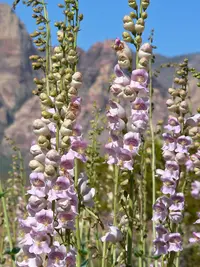
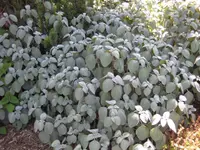
The plant forms upright clumps with tall flower spikes carrying large, tubular, often pink to pale lavender blooms and gray-green, waxy foliage. Its deep root system and drought tolerance make it well suited to low-water and xeriscape gardens.

Gardeners often care for Palmer's penstemon in sunny, open sites with fast-draining, often sandy or gravelly soil and only light to moderate moisture. Once established, it is generally easy to maintain if kept out of heavy, wet conditions.

Main Plant Requirements

Care Difficulty

Moderate Care

Light Preference

Full Sun

Water Requirements

Low Water

Temperature Preference

Cold Hardy

Hardiness Zone

4–9

Soil Texture

Sandy, Loamy, Rocky

Soil pH

Slightly acidic (6.5–7.0), Slightly alkaline (7.0–7.5)

Soil Drainage

Well-drained

Fertilization

Minimal (feed rarely)

Get Personalized Care Plan

Scan your plant to receive care tips personalized for your specific plant

Available on iOS and Android

How to Care for the Palmer's penstemon

This desert perennial needs strong sun to flower and stay compact.

  • Provide 6–8 hours of direct sun daily; full sun exposure suits Palmer's penstemon best in most temperate climates.
  • In very hot inland areas, give morning sun and light afternoon shade to reduce leaf scorch and premature flower fade.
  • Plants in too much shade grow tall, floppy, and produce fewer blooms; in winter, shorter days are acceptable as long as the site remains bright and open.

This species is adapted to dry conditions and is prone to root problems if kept too wet.

  • Allow soil to dry so the top 5–8 cm feel completely dry before watering, especially in established garden plants.
  • During hot, dry periods, water deeply but infrequently, then let well-drained soil fully dry; reduce watering sharply in cool or rainy seasons.
  • Signs of overwatering include yellowing leaves and soft stems, while crisp, drooping foliage and very light soil indicate Penstemon palmeri needs water.

This drought-tolerant perennial copes with a wide temperature range but has clear limits.

  • Active growth and flowering occur best around 65–85°F (18–29°C), typical of late spring and early summer in many US regions.
  • Mature plants tolerate winter lows near 0°F (−18°C) with good drainage, but young plants benefit from protection from severe freezes.
  • In heat waves above 95°F (35°C), airflow and slightly shaded afternoons help prevent heat stress, leaf scorch, and shortened bloom duration.

This species is adapted to arid climates, so humidity is rarely a concern for Palmer's penstemon.

Penstemon palmeri prefers lean, fast-draining, mineral-rich soil that mimics its native rocky habitats.

  • Use sandy or gravelly loam with at least 40–60% coarse material such as pumice, small gravel, or coarse sand to prevent water retention.
  • Aim for slightly alkaline to neutral pH around 7.0–8.0, avoiding strongly acidic mixes that can limit nutrient availability for this species.
  • Mix only a small amount of well-aged compost (10–20%) to avoid overly rich, moisture-holding soil that encourages weak, lush growth and root rot.
  • Raise beds or plant on mounded soil if drainage is marginal, so water moves quickly away from the crown and deeper roots.

This species can be grown in containers, but it performs best in deep, very free-draining pots outdoors.

  • Choose a tall, narrow container that allows a deep root run and reduces rocking in strong wind.
  • Use a gritty, fast-draining mix and elevate the pot slightly so drainage holes never sit in collected runoff.
  • Select a heavier material such as ceramic or thick-walled clay to stabilize upright flower spikes and reduce tipping risk.

This desert perennial needs only light feeding, as Penstemon palmeri is adapted to lean soils.

  • Use a low-dose balanced fertilizer (around 5-5-5) or a thin layer of compost in early spring.
  • Feed once at the start of the growing season; avoid repeated applications to prevent weak, lush growth.
  • Dilute liquid fertilizer to 1/2–1/4 strength if used on container plants.
  • Do not fertilize in late fall or winter, when growth is naturally slow or dormant.

Pruning supports flowering performance and keeps Penstemon palmeri compact and healthy.

  • Cut back spent flower spikes in late spring and summer to encourage additional blooming.
  • In late fall or very early spring, remove dead, damaged, or weak stems at the base with clean pruners.
  • Thin crowded shoots slightly to improve air flow and maintain an upright, open shape.
  • Avoid cutting into very old woody bases; focus on younger, green stems for shaping.

This species is most often grown in-ground, so focus on careful transplanting rather than frequent repotting.

  • Transplant in early spring or early fall when temperatures are mild and soil is workable.
  • Move plants only when necessary, such as poor drainage, crowding, or declining vigor in the current spot.
  • Lift with a wide root ball, disturb roots as little as possible, and replant at the same soil level.
  • Water deeply after transplanting, then allow soil to drain well to limit root stress and rot risk.

Penstemon palmeri is commonly propagated from seed, which suits its natural lifecycle.

  • Sow fresh seed in late fall outdoors or provide 4–6 weeks of cold stratification in a refrigerator.
  • Use a very well-drained, gritty seed mix and keep it just barely moist to reduce damping-off.
  • Provide bright light and cool to moderate temperatures (55–70°F) during germination and early growth.
  • Softwood cuttings in late spring can root in a sterile, gritty medium under high humidity and bright shade.

This species is quite cold hardy in much of its range and usually needs only minimal winter care.

  • In regions colder than its normal range, apply a light, dry mulch around the crown after soil freezes.
  • Avoid heavy, wet mulch that stays against stems, since this increases rot and crown damage.
  • For container plants in very cold climates, move pots to an unheated garage or cold frame to reduce freeze–thaw stress.

Care Tips

Encourage Deep Roots

In the first growing season, space irrigation events but water more deeply so roots extend 20–30 cm into the soil, which greatly improves drought tolerance in later years when growing Palmer's penstemon.

Improve Drainage Mounds

On heavy or marginal soils, plant on slight mounds or raised rows 5–10 cm high to keep the crown from sitting in winter-wet conditions that can cause crown and root rot.

Limit Summer Crowding

Avoid planting dense groundcovers or tall perennials right against the base, so air can move freely around stems and foliage stays dry after rare summer rains.

Targeted Seed Collection

For reliable self-sowing, leave some flowering stems until seed capsules turn tan and start to split, then collect and scatter seed in fall in the same well-drained, sunny area.

Strategic Rejuvenation

After 3–5 years, if flowering declines, remove a few older, woody rosettes at the base and lightly disturb the soil surface nearby to create openings for new seedlings to establish.

Common Pests and Diseases

Powdery mildew

This disease appears as white to gray powdery growth on leaves, stems, and sometimes flower spikes, often during warm days with cool, humid nights. Symptoms include distorted new growth and reduced flowering if the infection is heavy.

Solution

Remove and discard heavily infected foliage, then increase spacing and airflow around plants to keep surfaces dry. Water at soil level in the morning, avoid overhead irrigation, and if needed use a sulfur or potassium bicarbonate fungicide labeled for ornamentals, following label directions carefully.

Rust

This disease causes small orange to brown pustules on the undersides of leaves, with yellowing or spotting visible on the upper surfaces. Symptoms include premature leaf drop and weakened plants during extended humid or wet periods.

Solution

Promptly remove and dispose of infected leaves and any fallen plant debris to reduce spore levels. Improve air circulation, avoid wetting foliage, and in persistent cases apply a labeled rust-control fungicide, rotating active ingredients if treatments are repeated.

Penstemon mosaic virus

This disease leads to mottled, streaked, or distorted leaves and flowers, sometimes with stunted growth and reduced vigor. Symptoms include uneven color patterns that do not follow normal leaf veins and do not disappear over time.

Solution

Remove and destroy infected plants since viruses cannot be cured, and disinfect cutting tools between plants with 10% bleach or 70% alcohol. Control sap-sucking insects such as aphids that can transmit the virus, and avoid saving seed or cuttings from symptomatic plants when focusing on Penstemon palmeri care.

Aphids

These insects cluster on tender stems, buds, and the undersides of leaves, feeding on sap and excreting sticky honeydew that can attract sooty mold. This pest often distorts new growth and may reduce flowering quality.

Solution

Spray colonies off with a firm stream of water and pinch back heavily infested tips. If needed, use insecticidal soap or a light horticultural oil, ensuring thorough coverage of leaf undersides and repeating applications as new aphids emerge.

Spider mites

These pests are tiny and often unnoticed until fine webbing and stippled, dull foliage appear, especially during hot, dry conditions. Symptoms include bronzed or speckled leaves that may dry and drop early.

Solution

Increase humidity around plants slightly and rinse foliage with water to remove mites and webbing, focusing on leaf undersides. For persistent infestations, apply insecticidal soap or a horticultural oil labeled for mites, treating in the cooler part of the day to avoid leaf burn.

Interesting Facts

Desert fragrance specialist

This species is one of the few penstemons with distinctly fragrant flowers, producing a sweet, musky scent that is especially noticeable in warm desert air and at dusk.

Inflated flower shape

The flowers have unusually inflated, balloon-like tubes with a wide, open mouth, an adaptation thought to guide large native bees and bumble bees toward the nectar and pollen.

Native gypsum lover

In parts of its range, this plant naturally colonizes harsh, alkaline, gypsum-rich soils where many other species cannot survive, helping stabilize loose desert substrates.

Botan icon

Did you know?

Palmer's penstemon can be an early colonizer after roadside or construction disturbance in arid regions of the southwestern US, and it has been deliberately included in some dryland restoration and roadside seed mixes to provide rapid cover, erosion control, and pollinator resources in nutrient-poor soils.

FAQs about Palmer's penstemon

This species is highly attractive to pollinators. Large tubular flowers provide nectar for native bees, bumblebees, butterflies, hummingbirds, and some moths. Planting several together creates a strong nectar source that supports local wildlife in dry landscapes.

Grow Healthy Plants with Botan Care

Keep your plants happy and healthy with plant identification, disease detection, and easy care guidance.

Botan plant care app — identify plants on mobile

Explore More Plants