Encourage Deep Roots
In the first growing season, give occasional, thorough soakings and then allow the soil to dry well so the plant develops a deep, drought-resilient root system rather than shallow, surface-feeding roots.

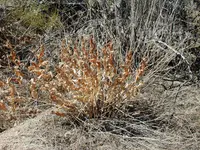
Brownfoot, Acourtia wrightii, is a small perennial shrub from arid regions of the southwestern United States and northern Mexico. It commonly grows on rocky slopes, desert grasslands, and open scrub.
Plants form low, bushy clumps with narrow, often toothed leaves and clusters of small, pink to purplish flower heads that attract butterflies and other pollinators. Stems and leaves have a somewhat rough, dry-textured look.
This species is adapted to heat, sun, and drought, which can make it relatively low-maintenance in dry gardens. Understanding how to care for brownfoot starts with providing strong light, well-drained soil, and avoiding consistently wet conditions.

Care Difficulty
Easy Care

Light Preference
Full Sun

Water Requirements
Low Water

Temperature Preference
Warm Climate

Hardiness Zone
7–10

Soil Texture
Sandy, Loamy, Rocky

Soil pH
Slightly acidic (6.5–7.0), Neutral (7.0)

Soil Drainage
Well-drained

Fertilization
Minimal (feed rarely)
Scan your plant to receive care tips personalized for your specific plant
Available on iOS and Android
This sun-loving perennial from arid regions needs strong light to flower well.
This drought-adapted species prefers infrequent, deeper watering over light, frequent drinks.
This desert-adapted perennial handles heat well but has limited frost tolerance.
This drought-adapted species tolerates low humidity and usually needs no special humidity management.
Acourtia wrightii thrives in lean, fast-draining, mineral soils that mimic its native rocky habitats.
This species can grow in containers if the setup prioritizes strong drainage and a dry root zone.
This drought-adapted native wildflower needs only light, occasional feeding in lean soils.
Pruning Acourtia wrightii is light and mainly focused on cleanliness and maintaining a compact, flowering clump.
This species is usually grown in the ground, so focus on thoughtful transplanting rather than frequent repotting.
Propagation of Acourtia wrightii is usually done from seed, with some success from careful division of established clumps.
This species is generally cold hardy in its native range and needs minimal winter care in well-drained soil.

Plant Health Check
Not sure what's wrong with your plant? Check your plant's health inside the app.
This species is native to arid and semi-arid regions of the southwestern United States and northern Mexico, where it is adapted to rocky slopes, canyon walls, and dry grasslands with low and irregular rainfall.
Although the flower heads look like typical daisies, they are composed almost entirely of tubular disk florets and lack the showy petal-like ray florets found in many other Asteraceae, giving the clusters a more plume-like appearance.
The dense heads of pink to purplish florets produce abundant nectar that attracts a wide range of native bees, butterflies, and other insects, making the plant a useful component of pollinator-friendly dryland plantings.

In parts of its range, brownfoot often pioneers disturbed or eroded dry sites, helping to stabilize shallow, rocky soils and contributing to early stages of plant community recovery in desert and canyon ecosystems.
This species often fails to flower if it is too young, recently transplanted, or growing in nutrient-poor or compacted soil. Excess shade, drought stress, or heavy pruning at the wrong time can also reduce or delay blooms.
Keep your plants happy and healthy with plant identification, disease detection, and easy care guidance.