Seedling thinning
When seedlings reach 5–8 cm tall, thin them to 20–30 cm spacing to reduce competition, strengthen individual plants, and lower the risk of fungal issues from overcrowding.

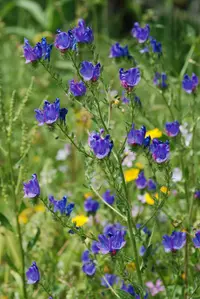
Paterson's curse, Echium plantagineum, is a fast-growing annual or short-lived biennial herb known for its dense displays of purple to violet funnel-shaped flowers. It typically forms a low rosette of rough, hairy leaves before sending up branched flowering stems.
This species is native to the Mediterranean region but is now naturalized in many temperate areas, including parts of Australia, where it can become invasive. It grows readily from seed, tolerates poor, dry soils, and thrives in full sun, which makes it easy to establish but harder to control. Simple awareness of how to care for Paterson's curse helps prevent unwanted spread in gardens and nearby areas.

Care Difficulty
Easy Care

Light Preference
Full Sun

Water Requirements
Low Water

Temperature Preference
Warm Climate

Hardiness Zone
8–11

Soil Texture
Sandy, Loamy, Rocky

Soil pH
Slightly acidic (6.5–7.0), Slightly alkaline (7.0–7.5)

Soil Drainage
Well-drained

Fertilization
Minimal (feed rarely)
Scan your plant to receive care tips personalized for your specific plant
Available on iOS and Android
This annual thrives in open, bright locations with strong sun exposure.
This drought-tolerant annual prefers infrequent, deep watering in fast-draining soil.
This species prefers mild to warm conditions and tolerates some heat once established.
This species tolerates low humidity well and rarely needs special moisture in the air.
This plant prefers lean, well-drained, mineral soils rather than rich, moisture-retentive mixes.
This species can grow in containers if the pot is set up to stay free-draining and stable in wind.
Echium plantagineum grows best in lean, well-drained soil and usually needs only light feeding.
Echium plantagineum benefits from light, targeted pruning to manage shape and flowering.
This species is usually grown outdoors and is more often transplanted than repotted.
Echium plantagineum is most commonly propagated from seed, which germinates readily in suitable conditions.
This plant is relatively short-lived and moderately frost sensitive, needing some attention in cooler climates.

Plant Health Check
Not sure what's wrong with your plant? Check your plant's health inside the app.
Individual flowers start purple and often fade toward bluish or pinkish tones as they age, a shift linked to changes in petal pigments and cell pH that can influence which pollinators visit them over time.
The plant contains pyrrolizidine alkaloids, which can cause liver damage in grazing livestock, yet its seeds are highly oil-rich and are studied as a potential source of industrial and biofuel oils under controlled cultivation.
Introduced to Australia in the 19th century, this Mediterranean annual became a major pasture weed known as Paterson's curse or Salvation Jane, forming dense stands that outcompete native flora and reduce pasture quality.

In parts of southern Australia, large spring and early-summer blooms of Paterson's curse can color entire hillsides purple, creating striking landscapes that are sometimes used in tourism imagery even though the plant is officially listed and managed as a noxious agricultural weed in many regions.
This species contains pyrrolizidine alkaloids, which can damage the liver of grazing animals, especially horses and livestock, when eaten repeatedly. Direct poisoning in humans or pets is uncommon but contact and ingestion should still be avoided.
Keep your plants happy and healthy with plant identification, disease detection, and easy care guidance.