Sand heat buffering
In very hot climates, mix a thin top layer of light-colored coarse sand or small gravel to reflect heat and reduce surface temperature around the shallow roots, which helps this desert annual persist longer into the warm season.

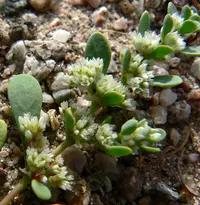
Onyxflower (Achyronychia cooperi) is a small, low-growing perennial adapted to hot, dry desert environments of the southwestern United States. It typically forms flat, mat-like clumps that hug the ground. The plant has tiny, silvery to gray-green leaves and small, pale, petal-like bracts that give a delicate, starry look close to the soil surface. Its growth habit helps it withstand wind, heat, and shifting sands. In cultivation, onyxflower suits rock gardens, xeriscapes, and troughs where space is tight and conditions are lean. It prefers strong light, very well-drained sandy soil, and low to moderate moisture, which influences how to care for onyxflower successfully.

Care Difficulty
Moderate Care

Light Preference
Full Sun

Water Requirements
Low Water

Temperature Preference
Warm Climate

Hardiness Zone
8–10

Soil Texture
Sandy, Rocky

Soil pH
Slightly acidic (6.5–7.0), Neutral (7.0)

Soil Drainage
Well-drained

Fertilization
Minimal (feed rarely)
Scan your plant to receive care tips personalized for your specific plant
Available on iOS and Android
This low desert annual needs strong light to stay compact and bloom well.
This desert annual is adapted to dry conditions and needs sparse, careful watering.
This species thrives in hot, arid climates with mild winters and intense sun exposure.
This desert annual tolerates very low humidity and usually does not need special humidity management.
This species requires very fast-draining, sandy substrate that mimics desert washes.
This low, mat-forming species can be grown in containers if the setup prevents any lingering moisture around roots.
Achyronychia cooperi is adapted to lean, sandy soils and usually needs little or no fertilizer.
Achyronychia cooperi needs only light pruning to keep the low mat tidy and healthy.
This desert annual is usually grown in the ground; focus on careful transplanting rather than long-term repotting.
Propagation of Achyronychia cooperi is usually done from seed collected from established plants.
This desert annual has low winter-care needs in mild, frost-free climates but may fail in regions with hard freezes.

Plant Health Check
Not sure what's wrong with your plant? Check your plant's health inside the app.
This species naturally grows in shifting sands of the Mojave and Sonoran deserts and often survives periodic burial by sand, with its low, mat-forming habit helping it resist wind and erosion.
The small white structures that look like petals are actually sepals, since the flowers lack true petals, a feature that helps reduce water loss in its arid native habitat.
This plant is endemic to the deserts of the southwestern United States and adjacent northwestern Mexico, meaning it is naturally found only in that region’s dry, sandy environments.
This species forms low, mat-like patches but is not considered aggressive. It spreads slowly by short stems, filling small gaps between rocks or in sandy soil without overrunning neighboring plants in typical garden settings.
Keep your plants happy and healthy with plant identification, disease detection, and easy care guidance.