Deep root zone
Encourage a deeper, drought-resilient root system by watering less often but applying enough water to soak the soil to 15–20 cm, especially during its active summer growth.

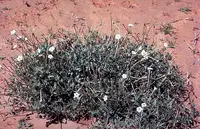
Acleisanthes longiflora, often called angel's trumpets, is a night-blooming perennial native to arid regions of the southwestern United States and northern Mexico. It belongs to the nyctaginaceae family, the same family as four o'clocks.
This plant forms a low, spreading mound with narrow gray-green leaves and long white tubular flowers that open at night and release a strong fragrance. Flowers are typically pollinated by moths and give the plant its trumpet-like common name.
A. longiflora is adapted to sandy, fast-draining soils, high light, and dry conditions, which makes it relatively low-maintenance where winters are mild. Understanding these desert adaptations is essential to know how to care for angel's trumpets successfully.

Care Difficulty
Easy Care

Light Preference
Full Sun

Water Requirements
Low Water

Temperature Preference
Warm Climate

Hardiness Zone
8–11

Soil Texture
Sandy, Loamy, Rocky

Soil pH
Slightly acidic (6.5–7.0), Neutral (7.0)

Soil Drainage
Well-drained

Fertilization
Minimal (feed rarely)
Scan your plant to receive care tips personalized for your specific plant
Available on iOS and Android
This desert native prefers strong light but benefits from some protection during the hottest hours.
This species prefers dryish conditions and is sensitive to waterlogged soil.
This plant is adapted to warm, arid climates and dislikes prolonged cold or frost.
Acleisanthes longiflora handles low humidity well, so air moisture is rarely a limiting factor.
Acleisanthes longiflora prefers a lean, very well-drained, mineral-based substrate.
This species is suitable for container growing in dry, bright outdoor conditions.
Acleisanthes longiflora is adapted to lean soils and needs only light feeding in cultivation, unlike heavy-feeding angel's trumpets.
Pruning Acleisanthes longiflora is mainly light maintenance to keep the clump compact and flowering well.
This species is usually grown in the ground, so focus on careful transplanting rather than frequent repotting.
Propagation of Acleisanthes longiflora is usually done from seed under warm, bright conditions.
This desert-adapted perennial prefers dry, mild winters and may struggle in cold, wet climates.

Plant Health Check
Not sure what's wrong with your plant? Check your plant's health inside the app.
This species opens its long white flowers at night, releasing fragrance after dusk to attract nocturnal moth pollinators in its native desert habitats of the southwestern United States and northern Mexico.
The flowers have very long, narrow tubes that match the tongue length of specific sphinx moths, an example of floral-pollinator matching where flower shape and pollinator anatomy evolve together.
The plant typically forms a low, sprawling mat close to the ground, an adaptation that helps reduce water loss and heat stress in its arid, high-radiation environment.

In parts of the Chihuahuan Desert, this species can remain nearly invisible during prolonged drought and then rapidly produce abundant flowers after summer rains, taking advantage of brief favorable moisture pulses typical of arid ecosystems.
Flowering often declines when the plant is too young, recently transplanted, or stressed by heat, nutrient imbalance, or irregular care. Stable conditions and patience are important when growing angel's trumpets for reliable flowering.
Keep your plants happy and healthy with plant identification, disease detection, and easy care guidance.