Slender Vervain Care (Verbena rigida)

Also known as: Slender Vervain, Creeping Verbena, veined verbena, Veined Vervain, Vervain Verbena
Slender Vervain

About Slender Vervain

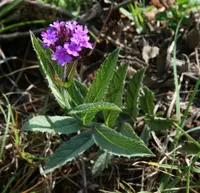
Slender vervain (Verbena rigida) is a low, clump-forming perennial grown mainly for its bright purple flower spikes and fine, textured foliage. It usually forms spreading mats that send up wiry stems topped with dense flower clusters through the warmer months.

This species is native to South America but is widely grown in warm and mild-temperate gardens as a long-blooming ornamental. It attracts bees and butterflies and often self-seeds lightly in suitable conditions.

Its tolerance of heat, sun, and poorer soils makes it relatively easy, though it dislikes cold, wet winters and heavy, waterlogged ground. Understanding how to care for Slender Vervain starts with providing plenty of light, good drainage, and moderate moisture.

Main Plant Requirements

Care Difficulty

Easy Care

Light Preference

Full Sun

Water Requirements

Moderate Water

Temperature Preference

Warm Climate

Hardiness Zone

7–10

Soil Texture

Sandy, Loamy, Rocky

Soil pH

Acidic (5.5–6.5), Slightly acidic (6.5–7.0)

Soil Drainage

Well-drained

Fertilization

Light (every 4–6 weeks)

Get Personalized Care Plan

Scan your plant to receive care tips personalized for your specific plant

Available on iOS and Android

How to Care for the Slender Vervain

Verbena rigida performs best in strong, consistent sun to fuel flowering.

  • Provide 6–8 hours of direct sun daily; morning sun with some light afternoon shade suits hot summer regions, while cooler climates can support full-day exposure.
  • Slender Vervain tolerates light partial shade (4–5 hours), but blooms thin out and stems stretch if light is reduced further.
  • In very intense summer sun, especially on dry, sandy sites, monitor for leaf scorch and wilting, and use neighboring plants or light shade cloth to soften harsh afternoon rays.

Verbena rigida prefers moderate moisture with very sharp drainage.

  • Allow the top 3–5 cm of soil to dry before watering again; in average garden soil, this often means deeper but less frequent soakings rather than light splashes.
  • Use well-drained, gritty soil or raised beds to prevent waterlogging; persistent wetness leads to root rot, yellowing foliage, and collapse of stems.
  • In hot, dry weather, watch for limp, dull leaves and slow rebound after sunset as signs of underwatering, while constantly soft, mushy stems indicate excess moisture.

This species thrives in warm conditions and struggles with hard frost.

  • Optimal growth occurs around 65–80°F (18–27°C), supporting steady foliage growth and reliable flowering through the main growing season.
  • Verbena rigida is usually hardy only to about 20–25°F (-6 to -4°C); below this, crowns may be killed unless mulched deeply or treated as an annual.
  • In prolonged heat above 90°F (32°C), flowering can slow; maintain soil moisture without saturation and use light mulch to buffer root-zone temperatures.

This species prefers relatively dry air and usually does not need special humidity management indoors or outdoors.

  • Aim for 30–50% humidity, which matches typical household air and many outdoor summer conditions.
  • Dry indoor air is tolerated, but extreme dryness with high heat may cause leaf edges to crisp and flowering to slow.
  • If air is very dry, group pots together on a pebble tray with water below the pot base to slightly raise local humidity.

Verbena rigida prefers lean, well-structured soil that drains quickly and never stays waterlogged.

  • Use sandy or gritty loam with low to moderate organic matter to keep the root zone airy and prevent rot.
  • Aim for slightly acidic to neutral pH around 6.0–7.0, avoiding strongly acidic or alkaline conditions that reduce nutrient uptake.
  • Mix 50–60% garden loam with 20–30% coarse sand and 20% compost to balance drainage, structure, and moderate fertility.
  • On heavy clay sites, build raised beds and incorporate coarse sand or fine grit to improve aeration and speed water movement away from roots.

This species is well suited to containers if the pot and drainage are chosen carefully.

  • Select a wide, relatively shallow pot to allow spreading roots and stems while preventing the plant from becoming top-heavy in wind.
  • Choose a breathable material such as unglazed terracotta if excess moisture is a risk, since it speeds evaporation from the root zone.
  • Elevate the container on pot feet so drainage holes stay clear and excess water escapes quickly after rain or irrigation.

Verbena rigida benefits from moderate feeding to support long blooming without excessive leafy growth.

  • Use a balanced, water-soluble fertilizer (around 10-10-10 or 15-15-15) at half strength every 3–4 weeks during the growing season.
  • Alternatively, apply a slow-release granular fertilizer in spring, following label rates, for steady nutrition.
  • In poorer soils, work a thin layer of compost into the topsoil in spring for organic matter and micronutrients.
  • Reduce feeding to once in late fall or stop entirely over winter when Slender Vervain growth slows or becomes dormant.

Pruning Verbena rigida keeps plants compact, encourages new flowering shoots, and extends bloom time.

  • In late winter or early spring, cut back old, woody stems to 5–10 cm above ground with clean, sharp pruners.
  • During the growing season, remove spent flower spikes to stimulate repeated blooming and prevent legginess.
  • Trim any dead, diseased, or crossing stems as needed to improve air flow and plant shape.
  • Disinfect pruning tools between plants, especially after removing diseased tissue, to limit pathogen spread.

Verbena rigida is usually grown in borders, so transplanting in-ground plants is more common than container repotting.

  • Transplant or upsize containers in early spring when new growth starts and soil is workable.
  • Look for crowded clumps, slow vigor, or roots circling the pot drainage holes as signs a move is needed.
  • Lift the plant with as much root ball as possible, gently loosen tight roots, and replant at the same depth in well-drained soil.
  • Water thoroughly after planting, then keep soil slightly moist for 1–2 weeks to limit transplant shock.

Verbena rigida is commonly propagated by stem cuttings, division, or seeds, allowing quick expansion of planting areas.

  • Take 7–10 cm softwood cuttings in late spring to early summer, remove lower leaves, and root in moist, free-draining mix under bright, indirect light.
  • Divide established clumps in early spring, keeping several shoots and healthy roots per division, then replant promptly.
  • Sow fresh seed in late winter to early spring on the surface of light seed compost, keeping 65–75°F and consistent moisture.
  • Provide good air circulation and avoid waterlogging during rooting or germination to reduce fungal issues.

Verbena rigida is marginally hardy in colder regions and benefits from simple winter protection, especially in containers.

  • In zones where winter drops below about 15°F, treat plants as tender perennials or short-lived perennials.
  • After the first hard frost, cut back dead top growth and apply 5–7 cm of dry mulch over the root zone.
  • In cold climates, move containers to a frost-free garage or porch, keeping soil just barely moist.

Care Tips

Encourage Lateral Spread

Lightly pinch back the longest stems in late spring to early summer to encourage low, bushy growth and a denser flowering carpet rather than a few tall, sparse shoots.

Seasonal Cutback Strategy

In mild climates, shear plants by one-third after the first heavy flush of flowers to trigger fast regrowth and extend the blooming season into late summer and fall.

Targeted Deadheading

Instead of removing single spent blooms, clip entire flowered stems back to a lower branching point, which saves time and directs energy into stronger new flowering shoots.

Winter Crown Protection

In zones where frost is common, apply a 5–8 cm layer of coarse mulch or gravel around but not on top of the crown in late fall to improve drainage and reduce crown rot risk over winter, which is important when caring for Slender Vervain outdoors.

Companion Spacing Plan

Plant low, non-invasive companions such as dwarf grasses or thyme at least 20–25 cm away to reduce weed pressure while still leaving enough open soil for stems to root as they sprawl and naturally expand the clump.

Common Pests and Diseases

Powdery mildew

This disease causes white, powdery patches on leaves and stems, often starting on lower foliage in warm, dry conditions with poor air movement.

Solution

Remove and discard heavily infected leaves, thin or space plants to increase airflow, avoid overhead watering, and water at the base in the morning; if needed, apply a sulfur or potassium bicarbonate fungicide labeled for ornamentals, following label directions carefully as part of general Verbena rigida care.

Spider mites

These pests cause fine speckling, a dull or bronzed appearance to foliage, and may produce delicate webbing on stems and leaf undersides in hot, dry weather.

Solution

Spray foliage thoroughly with a strong stream of water to dislodge mites, then increase humidity around plants and maintain regular watering; for persistent infestations, use insecticidal soap or a horticultural oil, repeating applications as directed to break the life cycle.

Aphids

These insects cluster on young stems and flower stalks, sucking sap and causing distorted growth, sticky honeydew, and sometimes sooty mold on leaves.

Solution

Rinse off colonies with a firm spray of water, pinch or prune heavily infested shoot tips, and introduce or conserve natural predators such as lady beetles; if needed, treat with insecticidal soap or a light horticultural oil, ensuring good coverage of stems and leaf undersides.

Botrytis blight

This disease produces gray, fuzzy mold on fading flowers, stems, and sometimes leaves, especially during cool, damp periods or when spent blooms remain on the plant.

Solution

Deadhead flowers promptly, remove and destroy all affected plant parts, and improve air circulation by spacing and light pruning; avoid overhead watering and, in persistent cases, use a labeled ornamental fungicide during prolonged wet weather.

Interesting Facts

Rigid trailing stems

This species has characteristically stiff, wiry, trailing stems that root where they touch bare soil, allowing it to slowly spread into clumps or groundcover in suitable conditions.

Narrow, rough leaves

Its narrow, lance-shaped leaves have a rough, sandpapery texture due to tiny surface hairs, which help reduce water loss and make the plant relatively tolerant of dry, sunny sites.

Long-lasting flower spikes

The plant produces dense spikes of small, purple flowers over a long season, often from early summer into fall, which are highly attractive to bees, butterflies, and other pollinating insects.

Botan icon

Did you know?

Verbena rigida is native to South America, especially Brazil and Argentina, but has naturalized in parts of Europe and other regions, where it can behave as a short-lived perennial or self-seeding plant depending on winter temperatures.

FAQs about Slender Vervain

This species is highly attractive to pollinators. The dense clusters of small purple flowers supply nectar from summer into fall, drawing bees, butterflies, and other beneficial insects, which can improve pollination in the surrounding garden.

Grow Healthy Plants with Botan Care

Keep your plants happy and healthy with plant identification, disease detection, and easy care guidance.

Botan plant care app — identify plants on mobile

Explore More Plants