Edge Containment
Use shallow plastic or stone edging around the planting area to prevent this fast creeper from invading nearby pots or beds while still allowing runners to root densely inside the defined space.

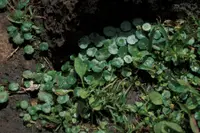
Whorled pennywort, Hydrocotyle verticillata, is a small creeping aquatic or semi-aquatic plant often used in aquariums, paludariums, and water gardens. It forms low mats of round, umbrella-like leaves held on slender stalks that rise from trailing stems.
In nature, it grows along the edges of ponds, marshes, and slow-moving streams in the Americas, rooting in shallow, constantly moist or submerged substrates. It can spread steadily under the right conditions, which makes it easy to fill in foreground areas but requires some trimming to keep it controlled.
This species prefers bright light, consistently moist to wet conditions, and nutrient-rich soil or aquatic substrates, which simplifies how to care for Whorled pennywort for most indoor and outdoor water setups.

Care Difficulty
Moderate Care

Light Preference
Partial Sun

Water Requirements
Aquatic

Temperature Preference
Tropical / Frost Sensitive

Hardiness Zone
8–11

Soil Texture
Loamy, Silty, Organic-rich

Soil pH
Acidic (5.5–6.5), Slightly acidic (6.5–7.0)

Soil Drainage
Waterlogged tolerant

Fertilization
Light (every 4–6 weeks)
Scan your plant to receive care tips personalized for your specific plant
Available on iOS and Android
This creeping aquatic plant thrives in bright, soft light that mimics sun over shallow water or pond edges.
This species prefers consistently wet conditions and is often grown in shallow water or very moist soil.
This plant grows best in mild to warm conditions typical of frost-free, temperate to subtropical regions.
This species prefers consistently moist air but tolerates average home humidity if the root zone never dries out.
Hydrocotyle verticillata thrives in consistently moist, organic-rich soil that resists drying out.
This species is well suited to shallow containers that can hold consistently wet substrate.
This aquatic or bog plant responds well to light, consistent feeding during active growth.
Hydrocotyle verticillata benefits from simple, periodic trimming to keep growth compact and healthy.
This species spreads by runners, so transplanting or dividing mats is more common than traditional repotting.
New plants are most often produced by division of runners rather than from seed.
Outdoor plants in mild climates usually overwinter with minimal intervention, especially in ponds that do not freeze solid.

Plant Health Check
Not sure what's wrong with your plant? Check your plant's health inside the app.
This species forms tiny, round leaves on individual stalks that arise from a creeping stem, creating a distinctive low rosette rather than the trailing habit seen in many other Hydrocotyle species.
It is naturally amphibious and can grow rooted in saturated soil, in shallow water, or fully submerged, adjusting leaf size and thickness to different water levels.
In aquascaping it is used as a foreground carpeting plant because its creeping stems spread slowly along the substrate and its small umbrella-like leaves create a fine-textured ground cover under strong light and added CO2.

In the wild, this plant often occupies the transition zone between land and water in marshes and pond margins, helping stabilize soft, silty substrates where few other broadleaf species can persist for long periods.
This species spreads by creeping stems and can form a dense mat in constantly moist or shallow-water settings. In small ponds or containers it may need regular thinning to prevent it from overtaking slower-growing aquatic plants.
Keep your plants happy and healthy with plant identification, disease detection, and easy care guidance.

-1-200x150.webp)