Water-edge positioning
Plant near the edge of ponds, ditches, or rain gardens where soil stays consistently moist but not submerged for long periods, which mimics this species’ natural habitat and keeps growth vigorous.

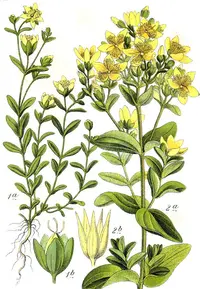
Square-stalked St John's-wort (Hypericum tetrapterum) is a small, herbaceous perennial native to damp meadows, stream banks, and wet ditches across much of Europe and western Asia. It forms upright clumps with distinctive four-angled stems, small paired leaves, and clusters of bright yellow flowers in summer.
The plant spreads gradually by short rhizomes and self-seeding, staying modest in height and fitting well into naturalistic or wildlife-friendly plantings. It prefers moist to wet soils, from loamy to clay, and does best in full sun to light shade.
Provided the site is consistently moist and not too nutrient-poor, it is generally easy to establish and maintain. Gardeners who want to care for square-stalked St John's-wort mainly need to focus on moisture and preventing the soil from drying out completely.

Care Difficulty
Easy Care

Light Preference
Full Sun

Water Requirements
Keep Soil Moist

Temperature Preference
Cold Hardy

Hardiness Zone
5–8

Soil Texture
Loamy, Silty, Organic-rich

Soil pH
Acidic (5.5–6.5), Slightly acidic (6.5–7.0)

Soil Drainage
Waterlogged tolerant

Fertilization
Minimal (feed rarely)
Scan your plant to receive care tips personalized for your specific plant
Available on iOS and Android
This species prefers bright, open conditions similar to moist meadows and stream edges.
This moisture-loving perennial performs best in consistently damp but not stagnant soil.
This hardy perennial tolerates a wide temperature range but grows best in mild conditions.
Humidity is not a critical factor for Hypericum tetrapterum, which adapts well to typical indoor and outdoor air levels.
Hypericum tetrapterum grows best in moist, well-structured mineral soil that still drains freely.
This species is suitable for container growing when the pot is chosen to match its spreading, moisture-loving root system.
This wetland shrub needs only light feeding, as too much nutrient input can encourage weak, lush growth.
Hypericum tetrapterum responds well to thoughtful pruning that maintains a compact, flowering shape.
This species is more often grown in the ground, so care usually focuses on transplanting rather than frequent repotting.
This plant is commonly propagated by cuttings, division, or seed when managed under suitable moisture conditions.
This hardy species usually needs minimal winter care in temperate climates, especially when planted in the ground.

Plant Health Check
Not sure what's wrong with your plant? Check your plant's health inside the app.
This species has distinctive square stems with narrow wings along the edges, which is the origin of both its scientific epithet tetrapterum and the common name square‑stalked St John’s-wort.
Unlike many Hypericum species, it naturally favors damp habitats such as marshes, ditches, and wet meadows, often forming stands in seasonally waterlogged ground.
Its leaves contain translucent oil glands arranged in fine lines and small dots, which become visible when a leaf is held to the light and help distinguish it from related St John’s-wort species.

In parts of Europe, this species is considered a useful bioindicator of consistently high soil moisture and relatively unpolluted, moderately nutrient-rich wetland habitats, so its presence can help ecologists assess local site conditions without instruments.
This species spreads moderately by self-seeding and short rhizomes, forming loose patches rather than dense, choking mats. In most gardens it is easy to manage with occasional thinning and deadheading to limit unwanted seedlings along damp borders.
Keep your plants happy and healthy with plant identification, disease detection, and easy care guidance.