Shallow Water Setup
Use a wide, shallow container or pond basket and keep the crown just at or slightly below the water surface to encourage dense clump formation and stable growth when growing many-stalked spike-rush.

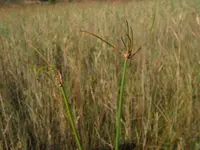
Eleocharis multicaulis, commonly called many-stalked spike-rush, is a fine-textured aquatic or bog plant in the sedge family. It forms dense clumps of thin, leafless green stems topped with tiny brownish spikelets. This species usually grows along pond margins, in marshes, wet meadows, and shallow ditches in temperate regions. It prefers consistently wet conditions and low competition from taller plants. The plant is generally undemanding if given steady moisture and suitable wet soil, which makes it useful for naturalistic ponds, rain gardens, and restoration projects. Understanding how to care for many-stalked spike-rush mainly involves maintaining waterlogged or very damp conditions and avoiding heavy foot traffic or strong disturbance around the clumps.

Care Difficulty
Moderate Care

Light Preference
Full Sun

Water Requirements
Aquatic

Temperature Preference
Cool Climate

Hardiness Zone
5–9

Soil Texture
Sandy, Loamy, Silty

Soil pH
Acidic (5.5–6.5), Slightly acidic (6.5–7.0)

Soil Drainage
Waterlogged tolerant

Fertilization
Minimal (feed rarely)
Scan your plant to receive care tips personalized for your specific plant
Available on iOS and Android
This small rush prefers bright, open conditions similar to sunny pond margins.
This wetland species thrives in constantly moist to saturated conditions.
This rush prefers cool to mild conditions but tolerates a fair range in temperate climates.
This species prefers consistently moist air but tolerates a broad range of humidity if water supply is constant.
This wetland sedge thrives in saturated, fine-textured substrates rather than typical potting mixes.
This species is well suited to container culture, especially in water gardens and shallow ponds.
This wetland sedge needs only light feeding, especially when grown in containers or nutrient-poor media.
Pruning Eleocharis multicaulis is mainly cosmetic and helps keep clumps tidy and healthy.
This species is usually grown in ponds or wet beds, where transplanting matters more than classic indoor repotting.
New plants are most reliable from division rather than from seed for this small rush.
This aquatic species is generally cold hardy in much of its range and needs limited winter care in the ground.

Plant Health Check
Not sure what's wrong with your plant? Check your plant's health inside the app.
This species occurs naturally almost only in nutrient-poor, acidic wetlands such as Sphagnum bogs and wet heaths, especially in Atlantic Europe. Its presence often indicates long-term, low-nutrient, low-disturbance conditions in the habitat.
The plant forms very slender, almost hair-like green culms (stems) that can create a soft, lawn-like texture in shallow water or saturated soils. These delicate culms allow dense stands that trap fine sediments and organic matter in bog pools.
It has a scattered, often local distribution across western and central Europe, being common in some Atlantic regions but rare or declining where bogs have been drained. Habitat loss and wetland modification have reduced many historical populations in several countries.

This sedge-like plant is so closely tied to intact bog systems that in several European regions it is used as an indicator species in habitat assessments for conservation projects, helping ecologists evaluate the quality and continuity of peatland ecosystems.
This species spreads by short rhizomes and self-seeding but is usually not strongly aggressive. In small ponds or bog gardens, occasional thinning of clumps and removing stray seedlings keeps growth controlled and prevents it from filling shallow areas.
Keep your plants happy and healthy with plant identification, disease detection, and easy care guidance.