Cool rest period
Provide a distinct rest phase by keeping the plant in bright shade at 45–55°F for 8–10 weeks in late fall, with only very light watering, to encourage reliable flower initiation the following season.

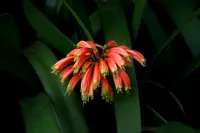
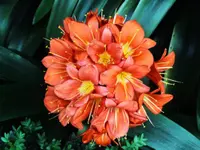
Clivia nobilis is an evergreen, bulb-like perennial grown mainly for its arching, strap-shaped leaves and hanging tubular flowers in orange, salmon, or yellow shades. It forms dense clumps over time and is usually grown in pots indoors or in frost-free, shaded gardens.
This species is native to coastal areas of South Africa, where it grows in leaf litter under shrubs and trees. Its slow growth and fleshy roots make it sensitive to overwatering and root disturbance, but quite long-lived when kept stable.
Clivia nobilis prefers bright, indirect light, modest but steady moisture, and a free-draining, organic-rich potting mix. Once basic needs are understood, it is relatively straightforward to care for Clivia nobilis.

Care Difficulty
Moderate Care

Light Preference
Bright Indirect Light

Water Requirements
Moderate Water

Temperature Preference
Tropical / Frost Sensitive

Hardiness Zone
10–12

Soil Texture
Loamy, Organic-rich

Soil pH
Acidic (5.5–6.5), Slightly acidic (6.5–7.0)

Soil Drainage
Moist but well-drained

Fertilization
Light (every 4–6 weeks)
Scan your plant to receive care tips personalized for your specific plant
Available on iOS and Android
This shade-loving plant prefers bright, indirect light and protection from harsh sun.
This plant prefers moderate, carefully controlled moisture and dislikes sitting in wet soil.
This species prefers cool to mild conditions with clear seasonal temperature changes.
This plant manages well in typical indoor humidity but benefits from slight moisture in the air.
This species prefers a free-draining, organic-rich mix that keeps roots moist but never waterlogged.
This species is well suited to container growing due to its compact root system and clumping habit.
Feeding supports steady growth and flowering in Clivia nobilis when done in moderation.
Pruning needs are minimal and focus on cleanliness rather than shaping in Clivia nobilis.
Container-grown plants prefer slightly crowded roots, so Clivia nobilis is repotted infrequently.
New plants are most reliably produced by division in Clivia nobilis, with seed used mainly by patient growers.
Cool, dry rest in winter supports future flowering in Clivia nobilis, especially in indoor or mild-climate settings.

Plant Health Check
Not sure what's wrong with your plant? Check your plant's health inside the app.
In the wild, this species naturally occurs in a very narrow coastal belt of South Africa’s Eastern Cape, often on shaded, rocky ledges above tidal estuaries where it tolerates salt-laden air but not waterlogged roots.
Unlike the more familiar Clivia miniata with upright trumpet-shaped blooms, this species bears pendent clusters of narrow tubular flowers that are green at the tips and orange to red toward the base, adapted to bird pollination.
This was the first species of Clivia to be formally described in 1828, and its name nobilis honors Lady Charlotte Florentia Clive, Duchess of Northumberland, who played an important role in introducing the genus to European horticulture.

The tubular, hanging flowers of this species are specialized for pollination by sunbirds in its native habitat, which can hover or perch to access nectar while simultaneously dusting their faces and bills with pollen as they probe the downward-facing blooms.
This species needs a cool, drier rest period in winter to set flower buds. Crowded roots, excess nitrogen fertilizer, or disturbance while forming buds can also reduce flowering. Mature plants typically bloom more reliably than young offsets.
Keep your plants happy and healthy with plant identification, disease detection, and easy care guidance.