Secure Mounting
Attach the thallus to a stable rock or ceramic base using soft aquarium-safe ties or fishing line so it can anchor firmly without being crushed or cut.

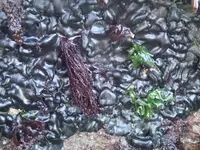
Green spongy cushion (Codium setchellii) is a marine macroalga, not a traditional land houseplant. It forms low, rounded, velvety cushions that feel firm yet spongy to the touch.
This alga naturally occurs on rocky shores of the Pacific coast, often in tide pools and wave-exposed zones. Its compact, slow-growing habit and tolerance of strong water movement make it relatively stable in suitable marine aquariums.
However, it needs consistent saltwater conditions, clean, well-oxygenated water, and moderate light, so it is more suited to keepers with some marine experience. Anyone wanting to learn how to care for green spongy cushion should focus on stable salinity, good flow, and avoiding aggressive herbivores.

Care Difficulty
Moderate Care

Light Preference
Partial Sun

Water Requirements
Aquatic

Temperature Preference
Cool Climate

Hardiness Zone
Unknown

Soil Texture
Sandy, Rocky, Organic-rich

Soil pH
Slightly acidic (6.5–7.0), Neutral (7.0)

Soil Drainage
Waterlogged tolerant

Fertilization
Minimal (feed rarely)
Scan your plant to receive care tips personalized for your specific plant
Available on iOS and Android
This marine alga prefers bright conditions that resemble its natural shallow coastal habitat.
This intertidal alga depends on consistent access to clean, moving seawater rather than soil moisture.
This coastal alga thrives in cool to mild marine temperatures with limited extremes.
This marine alga prefers high ambient humidity similar to coastal air for stable structure and color.
Codium setchellii is not a terrestrial plant, so it anchors to hard substrates rather than growing in soil.
This species adapts well to container culture in marine aquaria or dedicated macroalgae tanks.
Codium setchellii grown as a display specimen in aquaria or marine systems needs only light, targeted nutrition.
Pruning Codium setchellii is mainly corrective, to maintain shape and remove declining tissue in captive systems.
Codium setchellii is usually attached to rock or decor rather than grown in traditional pots, so transplanting focuses on re-anchoring thalli.
Propagation of Codium setchellii in captivity relies on vegetative fragmentation rather than sexual reproduction from spores.
In natural coastal habitats Codium setchellii tolerates cool water, but aquarium-kept specimens still benefit from stable winter conditions.

Plant Health Check
Not sure what's wrong with your plant? Check your plant's health inside the app.
This species commonly grows on outer, wave-battered rocky shores from Alaska to central California, where its dense, rubbery cushions tolerate strong surf that would dislodge many other seaweeds.
Its thallus forms firm, green cushions of repeatedly forked, cylindrical branches with a spongy interior, an unusual growth form that increases resistance to breakage and buffers the tissue against mechanical stress.
Populations often occur high in the intertidal zone, where individuals endure repeated air exposure, fluctuating temperatures, and brief freshwater inputs from rain by relying on thick, mucilaginous cell walls that reduce desiccation.

Molecular and anatomical studies place this species within a group of green algae that store carbon as starch-like compounds inside specialized plastids while simultaneously stiffening their tissues with dense internal cell wall thickenings, a combination that contributes to both its firm, cushion-like texture and its ability to withstand physically harsh shore environments.
Growth is generally slow to moderate. In stable, cool, nutrient-rich seawater, new branches extend gradually over months rather than weeks. Expect modest size increases annually, especially when water quality, light, and flow closely match its natural coastal conditions.
Keep your plants happy and healthy with plant identification, disease detection, and easy care guidance.