miner's lettuce Care (Claytonia perfoliata)

Also known as: Spring Beauty, Winter Purslane, Indian lettuce
miner's lettuce

About miner's lettuce

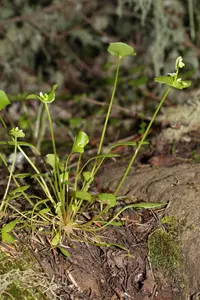
Miner's lettuce, Claytonia perfoliata, is a small, cool-season annual leafy plant valued for its mild, tender leaves. It forms low rosettes with rounded leaves that often appear to be pierced by the flower stalk. In the right conditions, it can gently self-seed and create a soft green carpet. This species is native to western North America, where it grows in moist, partly shaded woodland edges and open slopes. It is generally easy to grow, as long as it receives cool temperatures, consistent moisture, and loose, well-drained soil. These traits make it straightforward to care for miner's lettuce in home gardens and small containers.

Main Plant Requirements

Care Difficulty

Easy Care

Light Preference

Partial Shade

Water Requirements

Regular Water

Temperature Preference

Cool Climate

Hardiness Zone

3–9

Soil Texture

Loamy, Silty, Organic-rich

Soil pH

Acidic (5.5–6.5), Slightly acidic (6.5–7.0)

Soil Drainage

Moist but well-drained

Fertilization

Minimal (feed rarely)

Get Personalized Care Plan

Scan your plant to receive care tips personalized for your specific plant

Available on iOS and Android

How to Care for the miner's lettuce

Claytonia perfoliata prefers cool, soft light typical of spring woodland edges.

  • Provide 2–4 hours of gentle morning sun with bright, dappled shade the rest of the day for best leaf quality.
  • Tolerates full shade for part of the season but may grow longer, thinner leaves and produce fewer, weaker rosettes.
  • Avoid strong midday or afternoon sun in open sites, which can scorch tender foliage; in hotter months, use shade from taller plants to protect miner's lettuce.

Claytonia perfoliata thrives in consistently moist, cool soil without staying saturated.

  • Water when the top 2–3 cm of soil feel barely damp, aiming for evenly moist soil during active spring growth.
  • Use loose, well-draining soil rich in organic matter so excess water drains away and roots receive enough air.
  • In cooler, rainy seasons, reduce supplemental water to avoid yellowing, limp, or mushy leaves, which indicate overwatering, and watch for limp, dull leaves and dry soil as signs of underwatering.

This cool-season annual grows best in mild temperatures and struggles in summer heat.

  • Optimal growth occurs at 45–65°F (7–18°C), with the best leaf quality in the lower half of this range.
  • Plants tolerate light frost down to about 25–28°F (-4 to -2°C), but repeated hard freezes can damage foliage and slow regrowth.
  • Once temperatures regularly exceed 75°F (24°C), growth declines and plants bolt quickly, so shift sowing to cooler seasons or shadier, cooler microclimates.

This species grows well in typical indoor humidity and rarely needs special adjustment.

This shallow-rooted annual prefers moist, light, organic-rich soil that drains freely but does not dry out too fast.

  • Use a loose mix of 2 parts compost or worm castings to 1 part fine bark or coco coir with 1 part perlite or coarse sand for structure.
  • Aim for slightly acidic to neutral pH around 6.0–7.0, which supports balanced nutrient availability for Claytonia perfoliata.
  • Avoid dense clay or unamended garden soil in containers, as these hold excess water, reduce aeration, and can cause root rot.
  • If your mix compacts, blend in more perlite or fine bark to keep the root zone airy and evenly moist.

This species is well suited to containers for quick, small-space harvests.

  • Choose a wide, shallow container at least 10–15 cm deep to match its fibrous, relatively shallow root system and spreading rosettes.
  • Use a pot material that holds some moisture, such as plastic or glazed ceramic, to slow drying between waterings for this cool-season crop.
  • Arrange plants closer to the container rim so foliage can spread outward without shading the entire surface, which helps reduce excess moisture on crowded leaves.

Claytonia perfoliata is a fast-growing annual that usually needs minimal fertilization in reasonably fertile soil.

  • In garden beds, rely mainly on organic matter such as compost mixed into the soil before sowing.
  • For poor soils or containers, use a balanced liquid fertilizer (around 10-10-10) at 1/4–1/2 strength.
  • Feed lightly every 3–4 weeks during active spring growth if leaves appear pale or growth is weak.
  • Stop all feeding in summer heat or once plants begin to decline and set seed.

Claytonia perfoliata benefits from light pruning or harvesting to keep plants compact and productive.

  • Best timing is during the cool growing period, trimming plants when leaves are young and tender.
  • Remove yellowing, damaged, or floppy stems with clean scissors to maintain hygiene and airflow.
  • Harvesting outer leaves encourages fresh inner growth and delays bolting and seed set.
  • Avoid cutting back to bare crowns; always leave some healthy foliage to sustain regrowth.

This shallow-rooted annual is more often transplanted in the garden than repotted long term in containers.

  • Transplant seedlings when they have 2–3 true leaves and soil is cool in early spring or fall.
  • Move plants before roots become tightly circling or growth slows in small cell trays.
  • Lift seedlings with a dibber or spoon, disturbing roots as little as possible and replant at original depth.
  • Water gently after transplanting and shade for 1–2 days to reduce transplant shock and wilting.

Claytonia perfoliata is most commonly propagated from seed, which germinates well in cool, moist conditions.

  • Sow fresh seed in late summer to fall or very early spring, depending on local climate.
  • Scatter seed thinly on the surface and press in lightly; do not bury deeply, as light aids germination.
  • Keep the seedbed evenly moist and cool (about 45–60°F) until seedlings emerge.
  • Allow some plants to flower and set seed to self-sow, creating natural patches over time.

This cool-season annual often grows through mild winters and usually requires little special care.

  • Miner's lettuce tolerates light frosts but may be damaged by prolonged hard freezes below about 20°F.
  • In colder regions, use a light mulch or fabric row cover to buffer temperature swings and wind.
  • Container plants can be moved into an unheated, bright shelter such as a cold frame or garage.

Care Tips

Succession Sowing

Sow a small patch every 1–2 weeks during cool seasons so that older plants can be harvested heavily while younger plants grow on, keeping leaves tender and preventing the bed from going bare.

Shade Net Management

In late spring use a 30–40% shade cloth over beds to slow bolting, reduce leaf stress, and extend the harvest window by several weeks in full-sun sites.

Cut-and-Come-Again Harvest

Harvest by snipping the upper rosettes 2–3 cm above the crown rather than pulling plants, which encourages quick regrowth and cleaner leaves with less soil splash.

Living Mulch Partner

Underplant taller, cool-tolerant crops such as peas or early brassicas with miner’s lettuce so its low, spreading habit shades soil, suppresses small weeds, and stabilizes moisture while you are caring for miner's lettuce.

Cold Frame Extension

Use an unheated cold frame or low tunnel to protect plants from hard frosts and wind, which allows growing miner's lettuce later into winter and earlier in spring with minimal additional inputs.

Everything About miner's lettuce

Common Pests and Diseases

Flea beetles

These insects chew many small round holes in young leaves, giving them a shot-hole or peppered appearance and reducing the usable harvest.

Solution

Use floating row covers over new plantings to exclude adults, keep nearby weeds down, and if needed apply a neem oil or spinosad spray in the evening, targeting the leaf surfaces where beetles feed.

Aphids

These insects cluster on tender stems and undersides of leaves, sucking sap and causing curling, distortion, and sticky honeydew that can attract sooty mold.

Solution

Rinse plants with a firm stream of water to dislodge colonies, encourage lady beetles and other natural predators, and use insecticidal soap on leaf undersides, repeating every 5–7 days until populations drop.

Downy mildew

This disease causes pale or yellow patches on upper leaf surfaces with a grayish to purplish fuzz underneath, leading to thin, weak foliage in cool, damp conditions.

Solution

Increase spacing and airflow, water at soil level in the morning, remove and discard affected leaves, and rotate plantings to new ground; in persistent cases, use a copper or phosphorous acid fungicide labeled for leafy greens, following all instructions carefully.

Leaf spot

This disease produces small water-soaked or brown spots that can merge into larger lesions, often with a yellow halo, making leaves unattractive and less suitable for harvest.

Solution

Avoid overhead watering, remove heavily spotted leaves, keep plantings thinned for good air movement, and practice crop rotation; in severe outbreaks, apply an organic copper-based fungicide suitable for edible greens as a protective spray.

Interesting Facts

Natural vitamin C source

Miner's lettuce leaves were historically eaten raw by miners and travelers because they contain notable levels of vitamin C, helping to prevent scurvy when fresh fruits were scarce.

Distinctive perfoliate leaves

The round upper leaf of this species is perfoliate, meaning the stem appears to pass through the center of the leaf, giving the plant its characteristic saucer-like look.

Cool-season life cycle

This plant behaves as a cool-season annual, germinating and growing best in mild, moist conditions and often disappearing once sustained heat and drought arrive.

Botan icon

Did you know?

Claytonia perfoliata is native to western North America but has naturalized in parts of Europe and other regions, where it is sometimes grown intentionally as a salad green and can also appear as a mild, non-aggressive garden volunteer.

FAQs about miner's lettuce

Yes, this species is edible and commonly used as a mild-flavored salad green. Young leaves and stems are preferred. Harvest before it bolts, and always avoid plants growing in contaminated soil or near heavy traffic areas.

Grow Healthy Plants with Botan Care

Keep your plants happy and healthy with plant identification, disease detection, and easy care guidance.

Botan plant care app — identify plants on mobile

Explore More Plants