Stringy stonecrop Care (Sedum sarmentosum)

Stringy stonecrop

About Stringy stonecrop

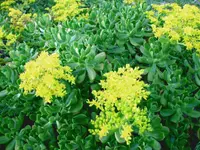
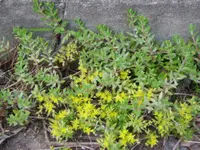
Stringy stonecrop (Sedum sarmentosum) is a low, mat-forming succulent often used as a groundcover or trailing plant in rock gardens and containers. Its slender stems root easily along the soil, creating dense carpets of small, fleshy leaves. In late spring or summer it produces clusters of star-shaped yellow flowers that attract pollinators and give the plant a bright, fine-textured look. This species is native to East Asia, where it grows on rocky slopes and open, well-drained sites. It is generally easy to grow and tolerant of heat, short dry periods, and poor soils, which makes it simple to care for Stringy stonecrop in many home gardens.

Main Plant Requirements

Care Difficulty

Easy Care

Light Preference

Full Sun

Water Requirements

Low Water

Temperature Preference

Cold Hardy

Hardiness Zone

4–9

Soil Texture

Sandy, Loamy, Rocky

Soil pH

Slightly acidic (6.5–7.0), Neutral (7.0)

Soil Drainage

Well-drained

Fertilization

Minimal (feed rarely)

Get Personalized Care Plan

Scan your plant to receive care tips personalized for your specific plant

Available on iOS and Android

How to Care for the Stringy stonecrop

Sedum sarmentosum thrives in bright outdoor conditions with several hours of direct sun each day.

  • Provide 4–6 hours of direct sun daily, ideally with morning sun and light afternoon shade, especially in hot summers.
  • It tolerates partial shade, but growth becomes looser and foliage less dense if it receives under 3–4 hours of direct light.
  • In very strong summer sun, especially in the US South or Southwest, protect Stringy stonecrop from intense mid‑afternoon exposure to reduce leaf scorch risk.

Sedum sarmentosum prefers infrequent, light watering and dries quickly between soakings.

  • Allow the top 3–5 cm of soil to dry before watering; in well‑drained ground this often means waiting until foliage looks slightly less plump.
  • Use sharply draining soil or a gritty mix so water runs through fast and roots do not sit in soggy conditions, which encourages rot.
  • Reduce watering in cool seasons when growth slows; pale, swollen leaves suggest overwatering, while wrinkled, soft leaves indicate underwatering.

This hardy sedum tolerates a wide temperature range once established in the landscape.

  • Best growth occurs around 65–80°F (18–27°C), especially during the main growing season in spring and early summer.
  • Mature plants in the ground usually survive down to about -10°F to -20°F (-23 to -29°C), dying back above ground but returning from roots or stems.
  • Heat tolerance is strong up to about 90–95°F (32–35°C) if soil drains well; prolonged heat with high humidity and poor airflow increases rot risk.

This species tolerates typical indoor humidity and does not require special humidity management.

This species prefers very well-drained, lean soil that dries quickly between waterings.

  • Use a gritty mix such as 50–60% cactus potting mix combined with 40–50% coarse sand or small grit for strong root health.
  • Keep structure open and airy; mix in perlite or pumice (20–30%) to prevent compaction and improve drainage around the roots.
  • Aim for slightly acidic to neutral pH, around 6.0–7.0, which suits Sedum sarmentosum in both pots and rock gardens.
  • Avoid heavy clay, peat-heavy, or constantly wet substrates that remain soggy, as these quickly lead to root rot in this succulent groundcover.

This species is well suited to shallow containers and troughs.

  • Choose a wide, shallow pot so the spreading stems can root along the surface without creating a deep, wet soil column.
  • Select terracotta or other porous materials to speed evaporation if the plant stays outdoors in rainy or humid regions.
  • Raise the pot slightly on feet or bricks so drainage holes stay clear and runoff leaves the container quickly during heavy rain.

Sedum sarmentosum is low nutrient-demand and usually needs only light feeding in containers or very poor soils.

  • Use a balanced, diluted liquid fertilizer (for example 10-10-10 at 1/4 strength) for potted plants in spring and early summer.
  • Feed every 4–6 weeks during active growth if foliage looks pale or growth is weak.
  • Skip synthetic fertilizers in rich ground soil and use a thin layer of compost instead if needed.
  • Stop feeding in late summer so growth hardens before winter and do not fertilize in winter dormancy.

Pruning helps keep Sedum sarmentosum dense, tidy, and within bounds.

  • Best timing is early to mid spring, with light touch-ups after flowering if stems sprawl too far.
  • Use clean scissors or hand pruners to remove dead, damaged, or weak stems at the base.
  • Shear or pinch back long runners to encourage branching and a fuller mat of foliage.
  • Avoid removing too much healthy growth at once to prevent stalling new shoots and flowers.

This sedum adapts well to both containers and ground, but benefits from occasional repotting or transplanting when crowded.

  • Look for roots circling the pot, water running straight through, or slowed growth as signs it needs attention.
  • Plan repotting or transplanting for spring or early fall, every 2–3 years for containers or when groundcover becomes too dense.
  • Move plants into a shallow, slightly wider container or new bed with sharply drained, sandy or gritty soil.
  • Handle roots gently, loosen only tight circles, water lightly, then keep in bright shade for a few days to limit stress.

Sedum sarmentosum is commonly multiplied from small stem pieces and divisions.

  • Take 5–8 cm stem cuttings in late spring or summer, removing the lower leaves.
  • Allow cut ends to dry for 1–2 hours, then set on or just in gritty, barely moist soil under bright, indirect light.
  • Divide crowded clumps in spring, replanting sections at the same depth and spacing them to allow spread.
  • Keep soil slightly moist but never wet until new roots and fresh growth appear, then reduce watering.

This sedum is quite cold hardy in most temperate climates and usually needs minimal winter care.

  • Plants in the ground tolerate frost and light freezes once established, especially in well-drained soil.
  • Apply a thin mulch layer around, not over, crowns in colder regions to buffer soil temperature.
  • For container plants in very cold areas, move pots to a sheltered, unheated but frost-sheltered spot with minimal watering.

Care Tips

Renew Old Mats

Every 2–3 years, lift and discard the oldest, woody center sections and replant fresh, vigorous stem tips at the edges to keep the groundcover dense and attractive.

Use As Living Mulch

Plant it in a 10–20 cm wide strip at the front of beds to act as a living mulch that suppresses weeds and helps keep soil from splashing onto nearby plants.

Control Spread Neatly

Edge beds with a shallow spade cut 5–8 cm deep once or twice a year to prevent stems from rooting into lawns or paths while still allowing a full, trailing effect.

Revive After Damage

If a patch is trampled or winter-damaged, clip back broken stems and immediately replant healthy 5–8 cm cuttings into bare spots, firming them into the soil for rapid fill-in.

Divide For Propagation

In spring or early summer, slice off and replant rooted sections 5–10 cm across in new areas, spacing them 15–20 cm apart to easily grow Sedum sarmentosum without special equipment.

Common Pests and Diseases

Aphids

This pest feeds on tender new growth, causing puckered, twisted stems and sticky honeydew on leaves and surrounding surfaces.

Solution

Prune and discard heavily infested stems, then rinse remaining foliage with a strong but controlled stream of water to dislodge insects. For persistent infestations, use insecticidal soap or a light horticultural oil, applying in the early morning or evening and repeating every 5–7 days until populations drop.

Mealybugs

These insects appear as white, cottony clusters in stem joints and under leaves, weakening the plant and sometimes leading to yellowing or stunted growth.

Solution

Isolate affected plants, then dab visible insects with cotton swabs dipped in 70% isopropyl alcohol to break down their waxy coating. Follow with thorough sprays of insecticidal soap, paying attention to crevices, and repeat weekly until no new insects are seen.

Scale insects

This pest forms small, brown to tan bumps on stems and leaves, extracting sap and causing gradual decline, yellowing, or patchy dieback in dense mats of foliage.

Solution

Gently scrape or rub off individual scales with a soft brush or cloth, then treat remaining insects with horticultural oil to suffocate them. Improve air circulation in groundcovers and repeat oil applications according to label directions to interrupt the life cycle.

Powdery mildew

This disease shows as white, powdery patches on leaves and stems, which can lead to dull, distorted foliage, especially in humid, shaded positions.

Solution

Remove and discard the worst affected shoots to reduce spore load, then increase sun exposure and spacing so foliage dries quickly. In persistent cases, apply a sulfur-based or potassium bicarbonate fungicide labeled for ornamentals, treating every 7–14 days while conditions favor disease.

Rhizoctonia stem rot

Symptoms include brown, sunken lesions at stem bases where they touch moist soil or mulch, leading to collapsing patches in an otherwise dense mat of growth.

Solution

Cut out and discard affected sections, ensuring tools are cleaned with alcohol between cuts, and allow the soil surface to dry between waterings. Reduce overhead irrigation, thin overcrowded mats to improve airflow, and, in severe cases, drench the soil margin around healthy plants with a fungicide labeled for Rhizoctonia to protect uninfected tissue.

Interesting Facts

Pigment-rich yellow flowers

This species produces star-shaped yellow flowers that are rich in carotenoid pigments, which strongly attract pollinating insects such as bees and hoverflies in late spring to early summer.

Efficient vegetative spreader

It spreads mainly by creeping stems that root at the nodes, allowing it to quickly form dense mats over shallow soils, rock faces, and disturbed ground without relying heavily on seed.

High urban tolerance

Due to its succulent leaves and shallow, fibrous root system, this plant tolerates heat, drought, and thin substrates, making it a common component of green roofs and urban rock gardens in temperate regions.

Botan icon

Did you know?

In parts of East Asia, especially Korea and China, this species has a long history of being used as an edible wild green, where the young shoots are blanched or lightly cooked and added to dishes for their crisp texture and mildly sour taste.

FAQs about Stringy stonecrop

This species spreads quickly by trailing stems and rooting at the nodes, forming a dense mat. In favorable conditions it can become aggressive, so edging, containers, or periodic thinning help keep it within the desired area when growing Stringy stonecrop.

Grow Healthy Plants with Botan Care

Keep your plants happy and healthy with plant identification, disease detection, and easy care guidance.

Botan plant care app — identify plants on mobile

Explore More Plants