Establish by division
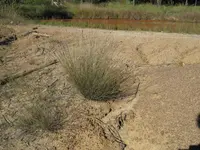
Every 3–4 years, dig and divide older clumps in late winter or very early spring to rejuvenate growth, prevent center die-out, and generate healthy new plants to expand a prairie-style planting.

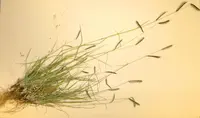
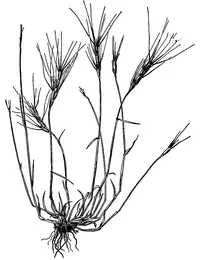
Tall grama (Bouteloua pectinata) is a warm-season perennial grass native to arid and semi-arid regions of North America and parts of Mexico. It typically forms upright, tufted clumps with narrow leaves and delicate seed heads held on slender stems.
This species is adapted to dry, open habitats such as prairies and desert grasslands, where it tolerates heat, sun, and poor soils. Its deep roots and drought tolerance make it relatively low-maintenance once established, though it can be slow to establish from seed.
For those who want to know how to care for tall grama, it usually prefers full sun, well-drained soil, and only occasional supplemental water in cultivation.

Care Difficulty
Easy Care

Light Preference
Full Sun

Water Requirements
Low Water

Temperature Preference
Warm Climate

Hardiness Zone
7–10

Soil Texture
Sandy, Loamy, Rocky

Soil pH
Slightly acidic (6.5–7.0), Neutral (7.0)

Soil Drainage
Well-drained

Fertilization
Minimal (feed rarely)
Scan your plant to receive care tips personalized for your specific plant
Available on iOS and Android
Bouteloua pectinata thrives in open, bright sites typical of prairie or meadow plantings.
Bouteloua pectinata is a drought-tolerant warm-season grass that prefers infrequent, deeper watering once established.
This warm-season grass prefers hot summers but can handle a broad range of outdoor temperatures.
This warm-season grass tolerates a wide humidity range and rarely needs special moisture control indoors or outdoors.
Bouteloua pectinata prefers lean, well-drained mineral soils that never stay saturated.
This species can be grown in containers if drainage and stability are carefully managed.
Bouteloua pectinata thrives in lean soils and needs only modest feeding, especially when grown as tall grama in poor ground.
Pruning needs for Bouteloua pectinata are minimal and focus on maintaining a clean, upright clump.
In gardens, this warm-season grass is usually transplanted in-ground rather than kept long term in containers.
Bouteloua pectinata is most commonly propagated by seed or division, depending on the planting scale and goal.
This warm-season grass is generally cold hardy in much of its range and needs little active winter care in the ground.

Plant Health Check
Not sure what's wrong with your plant? Check your plant's health inside the app.
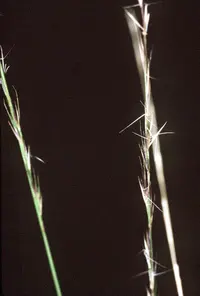
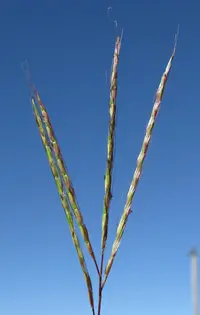
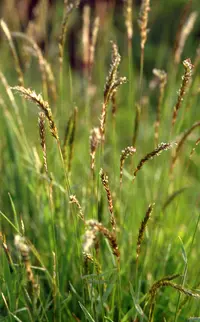
This grass is named for its comb‑like (pectinate) flower spikes, where the spikelets are arranged in a single plane along one side of the axis, giving the inflorescence a strongly one‑sided, combed appearance.
It is a warm‑season perennial bunchgrass of semi‑arid and arid regions, with narrow leaves and a deep root system that help it withstand seasonal drought and high temperatures.
In its native range of southwestern North America and northern Mexico, it contributes to soil stabilization and provides forage for wildlife and livestock, especially during the warm growing season.
This species forms clumps and expands slowly by short rhizomes and seed. It usually stays where planted, but in open, unmanaged sites seed can naturalize lightly. Regular deadheading and occasional division keep it from spreading undesirably when growing tall grama.
Keep your plants happy and healthy with plant identification, disease detection, and easy care guidance.