Encourage Dense Clumps
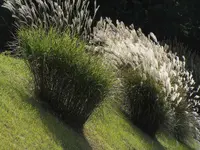
Cut mature plants back to 5–8 cm in late summer to stimulate fresh basal shoots and keep bison grass forming tight, wind-resistant clumps rather than sparse, floppy tufts.

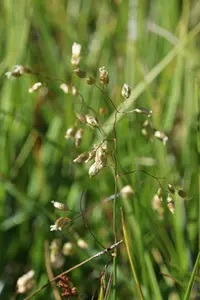
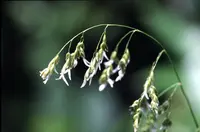
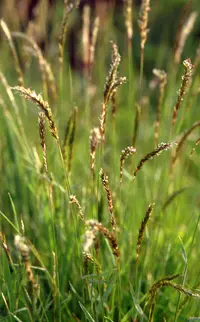
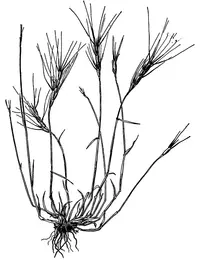
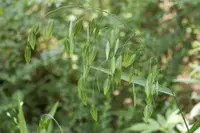
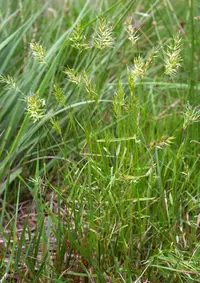
Bison grass, Anthoxanthum nitens, is a low, tuft-forming perennial grass known for its sweet, vanilla-like scent when dried. It forms fine, arching leaves and narrow flower spikes that create a soft, meadow-like look.
This species occurs naturally in cool temperate regions of North America and northern Eurasia, often in moist meadows, open woods, and along stream banks. It prefers consistent moisture, cool conditions, and light, well-drained soils, which influences how easy it is to establish.
Gardeners usually find it moderate to grow, as it dislikes drought and very hot sites. Understanding how to care for bison grass focuses mainly on providing steady moisture and avoiding prolonged summer heat stress.

Care Difficulty
Moderate Care

Light Preference
Partial Sun

Water Requirements
Regular Water

Temperature Preference
Cold Hardy

Hardiness Zone
3–7

Soil Texture
Loamy, Silty, Organic-rich

Soil pH
Acidic (5.5–6.5), Slightly acidic (6.5–7.0)

Soil Drainage
Moist but well-drained

Fertilization
Minimal (feed rarely)
Scan your plant to receive care tips personalized for your specific plant
Available on iOS and Android
Anthoxanthum nitens prefers bright, gentle light that mimics open meadows and woodland edges.
This grass prefers steadily moist, well-drained soil rather than extremes of drought or saturation.
This cool-season grass thrives in moderately cool to mild temperatures and tolerates substantial cold.
This grass tolerates a wide humidity range and rarely needs special humidity management.
Anthoxanthum nitens prefers loose, moderately fertile soil that stays evenly moist yet drains freely.
This species can adapt to container growing when moisture and space are carefully managed.
Anthoxanthum nitens is a low‑input grass that needs only light feeding in most garden soils.
Anthoxanthum nitens needs only simple pruning to keep clumps tidy and encourage fresh growth.
This grass is more often grown in the ground than in pots, so focus on careful transplanting of clumps.
Anthoxanthum nitens is commonly propagated by seed or by division of established clumps.
Anthoxanthum nitens is generally cold hardy in temperate climates and needs minimal winter attention.

Plant Health Check
Not sure what's wrong with your plant? Check your plant's health inside the app.
This species produces strongly fragrant coumarin compounds in its leaves, which develop a sweet hay or vanilla-like scent, especially as the plant dries, and has led to its traditional use for scenting rooms and ceremonial objects by some Indigenous communities in North America.
It naturally occurs in cool, moist meadows, stream banks, and open forest edges across northern North America, often indicating relatively undisturbed, moderately moist soils with good organic content.
This grass starts active growth quite early in spring in cold climates, allowing it to take advantage of high soil moisture and light before taller vegetation fully develops.

Sweetgrass vodka from eastern Europe traditionally used Hierochloe species, but modern commercial recipes sometimes reference bison grass more broadly, and some producers experiment with related fragrant grasses such as Anthoxanthum nitens to achieve similar coumarin-driven aroma profiles.
This species can be grown indoors, but it performs best in bright, cool, well-ventilated spots. It dislikes stagnant air and constant warmth, so indoor use is usually short-term display rather than long‑term bison grass indoor care.
Keep your plants happy and healthy with plant identification, disease detection, and easy care guidance.