Cut-and-come-again
Harvest flowering stems for arrangements by cutting low on the culm, which encourages new shoots and keeps the clump dense rather than floppy.

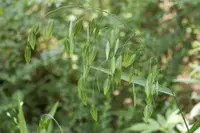
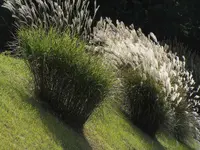
Northern sea oats, Chasmanthium latifolium, is a clump-forming ornamental grass valued for its flat, drooping seed heads that resemble oats. The foliage emerges bright green and often turns bronze or tan in fall and winter, providing multi-season interest.
This species is native to woodlands, stream banks, and shaded slopes in central and eastern North America. It tolerates a wide range of soils and moisture levels, which makes it relatively easy to establish.
Once rooted, it is quite resilient, though it may self-seed and spread if not managed. Understanding how to care for Northern Sea Oats mainly involves controlling its spread and matching its preference for light shade and consistent moisture.

Care Difficulty
Easy Care

Light Preference
Partial Shade

Water Requirements
Regular Water

Temperature Preference
Cold Hardy

Hardiness Zone
3–8

Soil Texture
Loamy, Clay, Silty

Soil pH
Acidic (5.5–6.5), Slightly acidic (6.5–7.0)

Soil Drainage
Moist but well-drained

Fertilization
Minimal (feed rarely)
Scan your plant to receive care tips personalized for your specific plant
Available on iOS and Android
This clumping grass prefers bright conditions and adapts well from full sun to partial shade in most gardens.
This grass prefers evenly moist but not soggy soil, especially during its first growing seasons.
This cool- to warm-season perennial grass tolerates a wide temperature range once established outdoors.
This species tolerates a wide humidity range and usually does not need special humidity management outdoors.
This grass prefers moist, well-structured ground that holds water yet drains freely.
This species can grow effectively in containers when the pot is chosen to support its clumping habit and height.
This native grass usually needs minimal feeding, especially in reasonably fertile soil.
Pruning helps keep Chasmanthium latifolium tidy and supports vigorous new growth.
This grass is usually grown in the ground, with transplanting focused on dividing mature clumps.
Propagation is commonly done by division or seed for this ornamental grass.
This species is cold hardy in much of the US and usually needs little winter attention.

Plant Health Check
Not sure what's wrong with your plant? Check your plant's health inside the app.
This species naturally occurs along shaded riverbanks and stream terraces in the central and eastern United States, where its spreading clumps help stabilize moist soils and reduce erosion.
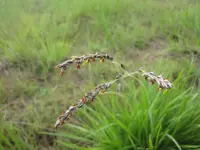
Its flowering spikes form flattened, drooping spikelets that resemble small fish or oats, a distinctive inflorescence structure that moves freely in wind and is highly visible to seed‑dispersing animals.
Unlike many ornamental grasses, it maintains vigorous growth and seed production in bright shade and open woodland conditions, making it an important understory grass in deciduous forests.

This grass serves as a documented larval host plant for several skipper butterflies, including the least skipper (Ancyloxypha numitor), providing essential food for caterpillars that specialize on cool-season woodland grasses.
This species self-seeds readily and also spreads by short rhizomes, forming expanding clumps over time. In small gardens, remove unwanted seedlings and cut back seed heads before they drop if you want stricter control.
Keep your plants happy and healthy with plant identification, disease detection, and easy care guidance.