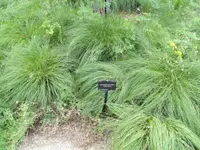
Divide Aging Clumps
Every 3–4 years, lift and split congested clumps in early spring, replanting smaller divisions at the same depth to keep plants dense, vigorous, and less prone to center dieback.

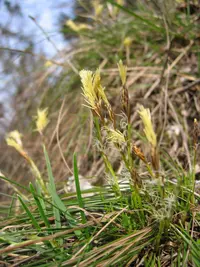
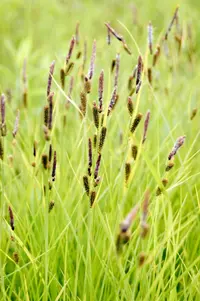
Dwarf sedge, Carex humilis, is a compact, clump-forming ornamental grass-like plant. It has fine, narrow leaves that create low, dense tufts with a neat outline. Growth is slow and tidy, so it suits small gardens, rock gardens, and naturalistic plantings where low-maintenance structure is needed. In its native range across dry, open habitats in Europe and parts of Asia, it often grows on sunny slopes and light, well-drained soils. Its tolerance of poor, sandy, or rocky ground makes it relatively easy to establish if drainage is good. To care for Dwarf Sedge, provide bright light, moderate moisture, and avoid waterlogged conditions.

Care Difficulty
Easy Care

Light Preference
Full Sun

Water Requirements
Low Water

Temperature Preference
Cold Hardy

Hardiness Zone
3–7

Soil Texture
Sandy, Loamy, Rocky

Soil pH
Slightly acidic (6.5–7.0), Neutral (7.0)

Soil Drainage
Well-drained

Fertilization
Minimal (feed rarely)
Scan your plant to receive care tips personalized for your specific plant
Available on iOS and Android
This low, clump-forming sedge prefers open, bright sites with some protection from intense midday sun.
This species prefers consistently slightly moist but not saturated soil once established.
This hardy sedge thrives in cool to moderately warm climates and tolerates significant cold.
Humidity is rarely critical for this hardy, outdoor sedge.
This sedge prefers lean, mineral soils that drain quickly yet hold enough structure to anchor its clumps.
This species can grow in containers if the potting setup closely reproduces its naturally dry, free-draining habitat.
Carex humilis is a low-feeding grass-like perennial that benefits from light nutrition on poor soils.
Carex humilis needs minimal pruning, mainly to keep the clump tidy and healthy.
This sedge is more often transplanted in the garden than kept in containers, as it forms compact clumps.
Carex humilis is most commonly propagated by division, which maintains the characteristics of the original plant.
This sedge is cold hardy and usually needs little special winter care once established in the ground.

Plant Health Check
Not sure what's wrong with your plant? Check your plant's health inside the app.
This species often starts active growth very early in spring, sometimes when night frosts still occur, allowing it to take advantage of light and moisture before taller vegetation develops a dense canopy.
Carex humilis is native to dry, open grasslands and rocky slopes across much of Europe and western Asia, and it is notably more tolerant of full sun and drought than many other sedge species.
The plant forms low, dense tussocks through short rhizomes, creating stable clumps that can persist for many years and help protect thin, erosion-prone soils.

In parts of Central and Eastern Europe, Carex humilis is considered a characteristic species of rare dry grassland and steppe-like habitats, so its presence is often used by botanists as an indicator of high conservation value grassland communities.
This species forms small, slow-spreading clumps and is not considered aggressive. It gradually enlarges via short rhizomes, making it suitable for rock gardens and small borders without overwhelming neighboring plants under normal conditions.
Keep your plants happy and healthy with plant identification, disease detection, and easy care guidance.