Clump Renewal
Every 3–4 years, slice out and remove the oldest, woodiest center sections of the clump in late winter, then backfill with compost to keep foliage dense and prevent plants from becoming floppy and bare at the base.

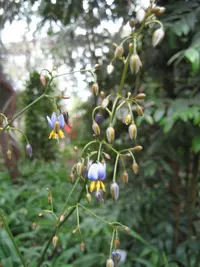
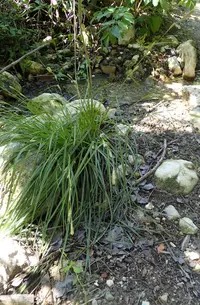
Tasmanian flax-lily, Dianella tasmanica, is a strappy evergreen perennial grown mainly for its glossy foliage and ornamental berries. It forms clumps of arching, grass-like leaves that create a neat, architectural shape in garden beds or containers.
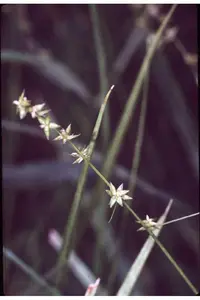
Small star-shaped blue flowers appear on slender stems, followed by bright blue to purple berries that add seasonal interest. This species is native to moist forests and coastal areas of southeastern Australia, which helps explain its preference for mild conditions and evenly moist, well-drained soil.
It is generally considered a tough, low-maintenance plant, adaptable to light shade and a range of garden soils. These traits make it relatively simple to care for Tasmanian flax-lily in many home landscapes.

Care Difficulty
Easy Care

Light Preference
Partial Shade

Water Requirements
Moderate Water

Temperature Preference
Warm Climate

Hardiness Zone
8–11

Soil Texture
Sandy, Loamy, Organic-rich

Soil pH
Acidic (5.5–6.5), Slightly acidic (6.5–7.0)

Soil Drainage
Moist but well-drained

Fertilization
Minimal (feed rarely)
Scan your plant to receive care tips personalized for your specific plant
Available on iOS and Android
This species prefers bright, gentle light rather than harsh, all-day sun.
Watering aims to keep the root zone moist but never saturated.
This plant is relatively hardy and tolerates a range of garden temperatures.
This species adapts well to typical home humidity and rarely needs special adjustment.
Dianella tasmanica prefers a well-aerated, free-draining mix that still retains moderate moisture.
This species grows reliably in containers when the pot supports its clumping, spreading root system.
This species is low-maintenance but responds well to light feeding in containers or poor soils.
Pruning needs for Dianella tasmanica are minimal and mainly focused on tidiness and plant health.
This clumping plant is usually grown in the ground but can be lifted or moved when overcrowded or poorly placed.
Division is the most reliable method for increasing Dianella tasmanica plants in gardens.
This species is moderately cold hardy but may need some help in areas with harsh winters or frequent hard frosts.

Plant Health Check
Not sure what's wrong with your plant? Check your plant's health inside the app.
This species produces glossy, metallic blue to violet berries that are technically fleshy fruits, often persisting for months and providing an important visual cue for bird dispersers.
Its strap-like leaves form dense clumps that tolerate deep shade and wind, allowing it to occupy understory niches in cool-temperate forests of southeastern Australia and Tasmania.
Unlike some other Dianella species from warmer regions, this plant is naturally adapted to cool, moist habitats and can withstand light frosts typical of its native Tasmanian and coastal environments.

The fruits of this species are considered mildly toxic to humans if eaten in quantity, yet are readily consumed by native birds, which pass the seeds through their digestive systems and help spread the plant in its natural habitats.
This species spreads slowly by short rhizomes, forming clumps rather than running widely. It is not usually considered aggressive in managed gardens. Divide or edge clumps every few years if they start to encroach on nearby plants.
Keep your plants happy and healthy with plant identification, disease detection, and easy care guidance.