James' sedge Care (Carex jamesii)

James' sedge

About James' sedge

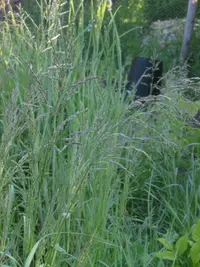
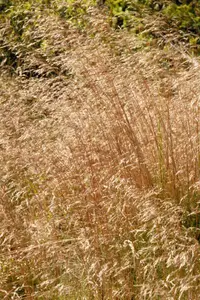
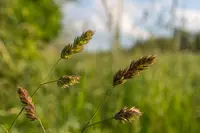
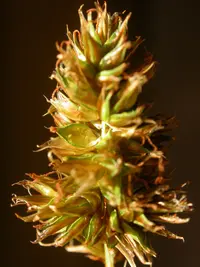
Carex jamesii, commonly called James' sedge, is a small woodland sedge native to central and eastern North America. It forms loose clumps with arching, grass-like leaves and small, rounded seed clusters held on slender stems.

In nature, it grows on shaded forest floors in moist, humus-rich soil, often among deciduous trees. Its slow, tidy growth habit and tolerance of shade make it a stable groundcover choice rather than a fast spreader.

Gardeners who care for James' sedge usually find it manageable, as it adapts well to dappled light, consistent moisture, and well-drained, organic-rich soils.

Main Plant Requirements

Care Difficulty

Easy Care

Light Preference

Partial Shade

Water Requirements

Regular Water

Temperature Preference

Cold Hardy

Hardiness Zone

4–8

Soil Texture

Loamy, Silty, Organic-rich

Soil pH

Acidic (5.5–6.5), Slightly acidic (6.5–7.0)

Soil Drainage

Moist but well-drained

Fertilization

Minimal (feed rarely)

Get Personalized Care Plan

Scan your plant to receive care tips personalized for your specific plant

Available on iOS and Android

How to Care for the James' sedge

This woodland sedge prefers soft, filtered light that mimics a forest floor environment.

  • Provide bright dappled shade or light shade, with 1–3 hours of gentle morning sun and no harsh afternoon sun to avoid leaf scorch.
  • Plant James' sedge under open trees, on the north or east side of buildings, or where it receives filtered light through shrubs.
  • In summer, increase shade if leaves bleach or crisp; in early spring and fall it tolerates slightly brighter exposure as sun intensity is lower.

This species favors consistently moist, humus-rich soil but not prolonged waterlogging.

  • Outdoors in average conditions, allow the top 2–3 cm of soil to lose surface sheen, then water so moisture reaches 10–15 cm deep.
  • Increase watering during hot, dry periods when soil dries within 1–2 days; reduce in cool, wet weather and during winter dormancy.
  • Watch for underwatering signs such as folding or browning leaf tips, and overwatering signs such as yellowing foliage and a sour, swampy soil smell around Carex jamesii.

This cool-temperate sedge is hardy and adapted to seasonal temperature shifts in much of eastern North America.

  • Active growth occurs roughly at 55–75°F (13–24°C), with best vigor in cool spring and fall conditions.
  • Established plants tolerate winter lows near 0°F (−18°C) under snow or leaf mulch, though young divisions benefit from some insulating organic mulch.
  • In summer, plants handle short heat waves up to about 90°F (32°C) if soil remains moist; extended hot, dry periods can cause tip browning and partial dormancy.

This woodland sedge handles a wide humidity range but benefits from slightly moist air in warm conditions.

  • Aim for 40–60% humidity, which matches typical outdoor and most indoor levels in temperate regions.
  • It tolerates short dry-air spells, but prolonged indoor air below 30% can cause browning tips and quicker leaf crisping.
  • To increase humidity in very dry rooms, group pots together on a pebble tray with water below the pot base, not touching the drainage holes.

This species prefers consistently moist, humus-rich soil that stays aerated but never waterlogged.

  • Use a loamy mix with high organic matter, such as 50–60% composted leaf mold or compost blended with native garden soil.
  • Ensure steady moisture yet drainage by adding 20–30% coarse sand or fine grit so water moves through but does not pool around roots.
  • Keep pH slightly acidic to neutral, around 6.0–7.0, which supports nutrient availability and healthy Carex jamesii growth.
  • Avoid heavy, compacted clay or bark-heavy mixes that stay saturated or dry into hard clods, since both reduce aeration and damage roots.

This sedge can be grown in containers if moisture and stability are managed carefully.

  • Choose a wide, medium-depth pot to allow shallow, spreading roots to form a dense clump without crowding the edges too quickly.
  • Select heavier materials like ceramic or clay when placing containers outdoors so wind does not tip over the arching foliage mass.
  • Raise the container slightly on feet or bricks so drainage holes never sit in collected runoff, preventing chronic saturation at the root zone.

This woodland sedge needs only modest feeding, especially when grown in the ground.

  • Apply a light top-dressing of compost or leaf mold in early spring to support growing James' sedge in lean soils.
  • Use a balanced slow-release fertilizer (around 10-10-10) once in spring if growth appears weak or foliage pale.
  • Dilute any liquid balanced fertilizer to 1/4–1/2 strength and apply to moist soil, never dry roots.
  • Avoid fertilizing in late fall and winter, when the plant is dormant or nearly dormant.

Pruning Carex jamesii is minimal and mainly focused on cleanup and maintaining a tidy clump.

  • Cut back dead or winter-burned leaves in late winter or very early spring before new growth emerges.
  • Remove damaged or yellowing blades at the base during the growing season using clean, sharp scissors or hand pruners.
  • Thin out crowded or lodged tufts to maintain good air flow and a neat, arching shape.
  • Avoid hard shearing to the ground during the growing season, which can stress the plant and slow recovery.

This species is usually grown in the ground, with transplanting only needed occasionally to adjust spacing or rejuvenate clumps.

  • Plan transplanting for early spring or early fall, when temperatures are mild and soil moisture is consistent.
  • Lift and move clumps when growth declines, centers thin out, or plants outgrow their space, typically every 3–5 years.
  • Dig widely around the root mass, keep soil around the roots, and replant at the same depth into moist, well-drained soil.
  • Water thoroughly after transplanting, shade briefly in sunnier sites, and keep soil evenly moist for 2–3 weeks to limit root stress.

Carex jamesii is most commonly propagated by division, with seed used when increasing numbers for restoration or naturalizing.

  • Divide mature clumps in early spring or early fall, when plants are not under heat stress.
  • Lift the clump, then separate it by hand or with a clean knife into sections with healthy roots and several shoots each.
  • Replant divisions immediately at the original depth into moist, humus-rich soil and water well.
  • Sow fresh seed outdoors in fall or in trays kept cool and evenly moist to allow natural cold stratification that improves germination.

This native sedge is cold hardy in much of its range and usually needs little winter attention in the ground.

  • Tolerates typical frosts and freezes in USDA zones where it is native, with foliage often semi-evergreen.
  • Apply a 3–5 cm layer of leaf mold or shredded bark around the root zone in late fall, keeping mulch off the crowns.
  • For container plants, move pots into a sheltered, unheated area or heel containers into the ground to insulate roots.

Care Tips

Leaf-litter mulch

Leave a light layer of shredded leaf litter or hardwood mulch around the clumps to mimic woodland duff, stabilizing soil moisture and suppressing weed competition without smothering the crowns.

Clustered planting

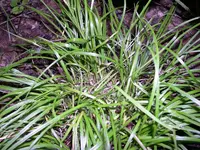
Plant several clumps 20–30 cm apart to create a small colony that shades its own root zone, reduces moisture loss, and produces a more natural-looking groundcover over time.

Hand-weeding strategy

Weed gently by hand rather than with tools that disturb shallow roots, working when the soil is slightly moist so unwanted seedlings pull out cleanly without tearing sedge rhizomes.

Seedling recruitment

If fruits develop, allow some to drop and mark the area so tiny seedlings are not weeded out by mistake, then thin or transplant the strongest young plants after 1–2 seasons to expand the patch.

Woodland companion choice

Pair the sedge with deep-rooted or early-spring woodland perennials rather than aggressive, shallow-rooted groundcovers so that root systems share space without outcompeting this fine-rooted grass-like plant while growing James' sedge.

Common Pests and Diseases

Rust

This disease causes small orange, brown, or rust-colored pustules on leaves, often leading to early leaf yellowing and drop in moist, shaded plantings.

Solution

Remove and discard affected leaves, avoid overhead watering, and thin surrounding vegetation to improve airflow; in severe or recurrent cases, apply a sulfur or chlorothalonil-based fungicide labeled for ornamental grasses according to label directions.

Leaf spot

This disease produces tan to dark-brown spots or blotches on blades, sometimes with purple or dark margins, and can coalesce to kill sections of foliage in dense clumps.

Solution

Trim out badly affected foliage, increase spacing and air movement, and water at soil level early in the day; if spotting continues, use a preventative fungicide labeled for leaf spots on ornamental grasses and dispose of fallen infected leaves.

Sedge webworm

This pest is the larval stage of a small moth that feeds on leaf blades, often tying them together with silk and leaving chewed, browned foliage patches in sedge colonies.

Solution

Hand-pick and crush visible larvae and remove silk-tied leaf bundles, encourage natural predators by avoiding broad-spectrum insecticides, and if damage is heavy, target young larvae with a Bacillus thuringiensis (Bt) product labeled for caterpillars on ornamentals.

Aphids

These insects cluster on tender stems and leaf bases, sucking sap and causing distorted growth, sticky honeydew, and sometimes sooty mold on nearby foliage.

Solution

Wash colonies off with a strong stream of water, repeat as needed, and if populations persist, apply insecticidal soap or a light horticultural oil, making sure to coat the insects on all plant surfaces while avoiding applications in high heat.

Interesting Facts

Ant specialist sedge

This woodland sedge produces small fleshy structures on its seeds, called elaiosomes, that attract ants which then disperse the seeds away from the parent plant.

Forest floor niche

James' sedge naturally grows in shaded, deciduous forests of eastern North America, often in rich, moist leaf litter where tree canopy cover is high and direct sun is limited.

Distinctive clustered perigynia

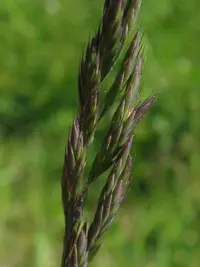
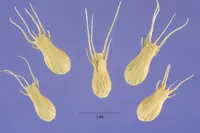
Its fruiting spikes carry perigynia (sac-like structures around the seeds) that are few in number and loosely clustered, a combination used by botanists to distinguish it from closely related woodland sedges.

Botan icon

Did you know?

James' sedge is considered a conservative woodland species in parts of its range, meaning it tends to occur in relatively undisturbed, high-quality forest habitats and can be used as an indicator of long-term ecological stability.

FAQs about James' sedge

This species is semi-evergreen in many temperate climates. Foliage often stays green through mild winters but may partially brown or flatten in severe cold. Old leaves can be trimmed in late winter to refresh growth.

Grow Healthy Plants with Botan Care

Keep your plants happy and healthy with plant identification, disease detection, and easy care guidance.

Botan plant care app — identify plants on mobile

Explore More Plants