Use low-stress support
Install low, wide mesh or short pegs and soft twine so the trailing stems can spread and lightly rest on support without being pulled upright, which keeps the plant stable and reduces stem breakage in wind or heavy rain.

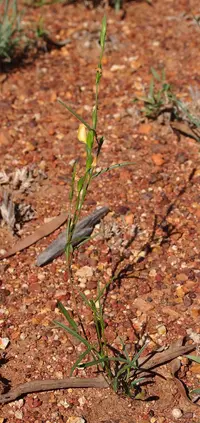
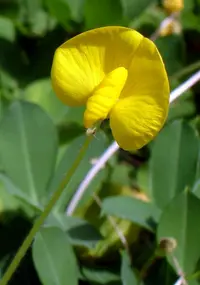
Zornia dyctiocarpa is a small herbaceous legume, usually forming low, spreading clumps with fine stems and delicate paired leaflets. Small yellowish flowers appear along the stems, giving it a subtle, attractive look in mixed plantings.
This species is native to tropical and subtropical regions, where it often grows in open grasslands and lightly disturbed sites. It is generally considered undemanding, as long as it receives warmth, good light, and a well-drained soil.
Gardeners who want to care for Zornia should focus on avoiding waterlogged conditions and strong, prolonged shade. Its modest size and adaptable nature make it suitable for informal borders, naturalistic plantings, or experimental collections.

Care Difficulty
Moderate Care

Light Preference
Full Sun

Water Requirements
Moderate Water

Temperature Preference
Warm Climate

Hardiness Zone
10–12

Soil Texture
Sandy, Loamy, Organic-rich

Soil pH
Acidic (5.5–6.5), Slightly acidic (6.5–7.0)

Soil Drainage
Well-drained

Fertilization
Minimal (feed rarely)
Scan your plant to receive care tips personalized for your specific plant
Available on iOS and Android
This species performs best in warm, open sites with consistent sun exposure.
This plant prefers moderately moist, well-drained soil rather than constant wetness.
This warm-season species grows best under stable, frost-free conditions.
This species handles a wide humidity range but grows best in moderately dry air.
This plant prefers light, well-drained soil that mimics its native, open habitats.
This species can be grown in containers if the pot and substrate are chosen to prevent waterlogging.
This species usually thrives in poor soils, so additional fertilizer for Zornia dyctiocarpa is rarely necessary.
Light pruning helps maintain healthy, compact growth in Zornia dyctiocarpa stands.
This plant is typically grown in the ground, so focus on thoughtful transplanting rather than frequent repotting.
Propagation of Zornia dyctiocarpa is most practical from seed under warm, bright conditions.
This warm-season species has low frost tolerance and needs simple measures in cooler climates.

Plant Health Check
Not sure what's wrong with your plant? Check your plant's health inside the app.
This species is naturally found in open campo and cerrado grasslands of central Brazil, where it grows as a small herb among grasses and other low forbs adapted to seasonal drought and nutrient-poor soils.
As a member of the Fabaceae, it forms symbioses with root nodule bacteria that fix atmospheric nitrogen, helping enrich the surrounding soil and supporting neighboring plants in low-fertility habitats.
Its fruits are small segmented pods that break into one-seeded articles at maturity, a trait that aids gradual seed release and short-distance dispersal close to suitable microsites in grassland ecosystems.
This species is usually grown as an annual in cultivation, especially in cooler or dry regions, although in warm, frost-free climates it can behave as a short-lived perennial and may self-seed into nearby bare soil.
Keep your plants happy and healthy with plant identification, disease detection, and easy care guidance.