Spring clump division
Every 3–4 years, lift and divide congested clumps in early spring, replanting only the vigorous outer sections to maintain strong growth and prevent the center from dying out.

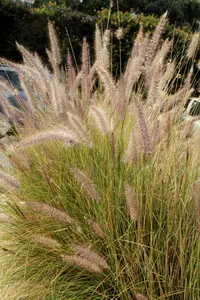
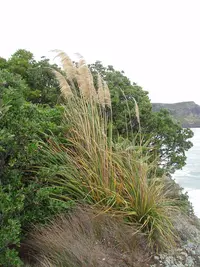
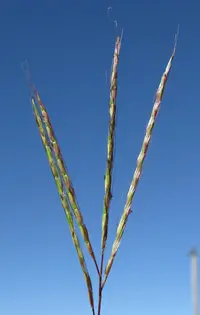
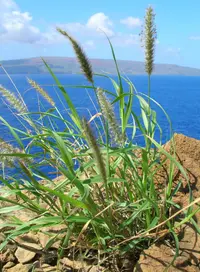
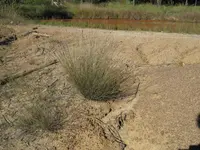
Fountain grass, Cenchrus setaceus, is a warm-season ornamental grass valued for its arching clumps and soft, bottlebrush flower spikes. It typically forms tidy mounds that sway easily in light wind and add movement to garden borders or containers.
This species is native to parts of Africa and the Middle East but is now widely used in landscaping in warm and mild climates. It grows quickly, adapts to many soil types, and usually needs little attention once established, which makes it straightforward to care for Fountain Grass.
It generally prefers full sun, well-drained soil, and moderate moisture, behaving as a perennial in frost-free areas and often treated as an annual where winters are colder.

Care Difficulty
Easy Care

Light Preference
Full Sun

Water Requirements
Low Water

Temperature Preference
Tropical / Frost Sensitive

Hardiness Zone
8–11

Soil Texture
Sandy, Loamy

Soil pH
Slightly acidic (6.5–7.0), Neutral (7.0)

Soil Drainage
Well-drained

Fertilization
Minimal (feed rarely)
Scan your plant to receive care tips personalized for your specific plant
Available on iOS and Android
This warm-season grass thrives in bright conditions with plenty of direct sun.
This drought-tolerant grass prefers infrequent, deep watering once established.
This species prefers warm conditions and does poorly in prolonged cold.
This grass tolerates a wide humidity range and rarely needs special humidity management.
This species prefers lean, fast-draining soil that mimics dry, open habitats.
This species grows reliably in containers when provided with adequate root space and drainage-focused setup.
Cenchrus setaceus benefits from light, controlled feeding during its active growing season.
Cenchrus setaceus responds well to periodic pruning to maintain tidy form and vigorous new growth.
Container-grown Cenchrus setaceus and young outdoor clumps benefit from occasional transplanting to maintain vigor.
Cenchrus setaceus is most commonly propagated by division, though seeds are also viable where spread is acceptable.
Cenchrus setaceus is frost sensitive and needs attention in regions with cold winters.

Plant Health Check
Not sure what's wrong with your plant? Check your plant's health inside the app.
This species was widely introduced worldwide as an ornamental fountain grass, and escaped cultivation in many warm regions, where it now forms self-sustaining wild populations along roadsides and disturbed sites.
In arid and semi-arid landscapes, its dense, dry clumps and persistent seed heads act as fine fuels, increasing fire frequency and intensity and helping fires spread into areas that formerly burned less often.
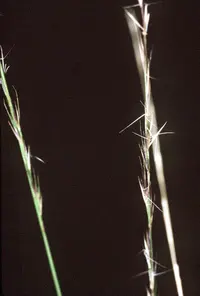
Mature plants produce large numbers of bristly, wind-dispersed spikelets that can also cling to animal fur, clothing, and vehicle tires, a combination that supports rapid local expansion once the grass is established.

In parts of Hawaii and the southwestern United States, this species is listed as a high-priority invasive grass because its ability to rebound quickly after fire can create a self-reinforcing grass–fire cycle that displaces many native dryland plants.
Lack of flowers usually comes from insufficient light, nutrient-poor or overly rich soil, or cutting back too late in spring. Crowded, old clumps may also flower less and benefit from division every 3–4 years.
Keep your plants happy and healthy with plant identification, disease detection, and easy care guidance.