Wind-hardening clumps
In the first 1–2 years, allow moderate wind exposure rather than sheltering completely, as regular movement strengthens roots and reduces the risk of mature clumps toppling in storms.

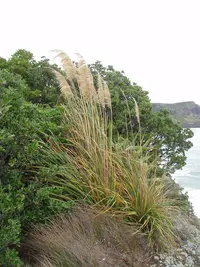
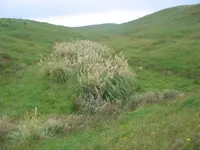
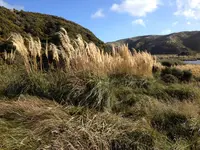
Coastal toetoe, Austroderia splendens, is a large clump-forming ornamental grass native to coastal areas of New Zealand. It forms dense tussocks with tall, arching leaves and feathery flower plumes held well above the foliage. These plumes provide strong vertical structure and movement in windy, exposed sites. The plant naturally occurs on dunes and coastal slopes, so it tolerates wind, salt spray, and poor soils better than many grasses. Once established, it is relatively low maintenance and copes with dry periods, which makes it suitable for low-input landscapes. To care for coastal toetoe, provide full sun, well-drained soil, and space for its mature size.

Care Difficulty
Easy Care

Light Preference
Full Sun

Water Requirements
Moderate Water

Temperature Preference
Warm Climate

Hardiness Zone
8–10

Soil Texture
Sandy, Loamy, Organic-rich

Soil pH
Acidic (5.5–6.5), Slightly acidic (6.5–7.0)

Soil Drainage
Moist but well-drained

Fertilization
Minimal (feed rarely)
Scan your plant to receive care tips personalized for your specific plant
Available on iOS and Android
Austroderia splendens performs best in bright, open sites with consistent direct sun exposure.
This grass prefers steady soil moisture but does not tolerate prolonged waterlogging.
This species is a hardy clump-forming grass that tolerates a wide range of outdoor temperatures when established.
This grass handles a wide humidity range and rarely needs special humidity management outdoors.
This species prefers free-draining, moderately fertile soil that never stays waterlogged.
This tall, clumping grass can be grown in large containers if stability and drainage are managed carefully.
This robust ornamental grass grows well in average soil, but light feeding improves vigor and flowering in containers or poor ground.
Pruning Austroderia splendens is mainly about tidying old growth and maintaining a clean clump.
This large tussock-forming grass is usually grown in the ground, with transplanting done infrequently.
New plants are most reliably produced by division rather than seed for this species.
This grass is generally hardy in mild to moderate winters and needs only modest attention in cold regions.

Plant Health Check
Not sure what's wrong with your plant? Check your plant's health inside the app.
This species is naturally restricted to coastal dunes and cliffs of New Zealand’s North Island and parts of the northern South Island, where it is adapted to salt-laden winds and sandy, low-nutrient soils.
Unlike some related toetoe species with whiter flower heads, this plant produces dense, warm golden to copper-tan plumes that often arch more strongly, helping botanists separate it from similar native grasses in the field.
In areas where it grows alongside other native toetoe, it can form natural hybrids, which complicates field identification and is a focus of conservation genetics work on native New Zealand grasses.

This species is one of several native toetoe that were historically overshadowed in plantings by the introduced pampas grasses, and conservation programs in New Zealand now promote Austroderia splendens plant care in landscaping as a way to support indigenous dune ecosystems and reduce reliance on invasive ornamental grasses.
Leaf tips and edges often brown from wind burn, accumulated salts, or old age. Strong sun with low moisture, compacted soil, or fertilizer build‑up also contribute. Remove damaged foliage and improve soil drainage and airflow to reduce stress.
Keep your plants happy and healthy with plant identification, disease detection, and easy care guidance.