Japanese Forest Grass Care (Hakonechloa macra 'Aureola')

Also known as: Forest Grass, Gold-Striped Hakone Grass, Hakone Grass
Japanese Forest Grass

About Japanese Forest Grass

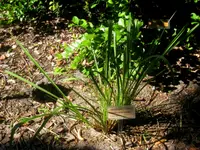
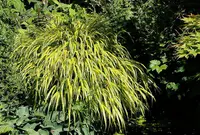
Hakonechloa macra 'Aureola', commonly called Japanese forest grass, is a clump-forming ornamental grass grown mainly for its arching, variegated foliage. It creates soft, cascading mounds that move gently with air flow and provide strong texture contrast in mixed plantings.

This grass is native to the cool, moist woodlands of Japan, which explains its preference for partial shade and consistently moist, well-drained soil. It grows slowly but steadily and is generally low-maintenance once established.

Understanding how to care for Japanese Forest Grass mainly involves providing even moisture, protection from harsh afternoon sun, and a sheltered spot where its foliage will not dry out quickly.

Main Plant Requirements

Care Difficulty

Moderate Care

Light Preference

Partial Shade

Water Requirements

Moderate Water

Temperature Preference

Cold Hardy

Hardiness Zone

5–9

Soil Texture

Loamy, Silty, Organic-rich

Soil pH

Acidic (5.5–6.5), Slightly acidic (6.5–7.0)

Soil Drainage

Moist but well-drained

Fertilization

Minimal (feed rarely)

Get Personalized Care Plan

Scan your plant to receive care tips personalized for your specific plant

Available on iOS and Android

How to Care for the Japanese Forest Grass

This grass prefers soft, dappled light that protects its variegated leaves from scorching.

  • Provide 3–5 hours of morning sun with afternoon shade, or bright filtered light under open shrubs or small trees.
  • In hot climates, avoid strong sun from 11 a.m.–4 p.m., which can bleach and crisp foliage; light, even shade keeps color richer.
  • Tolerates partial to full shade, but in deep shade growth becomes looser and yellow tones fade; adjust site to balance color and vigor in Japanese Forest Grass.

This grass performs best in consistently moist, but not saturated, soil.

  • Water when the top 2–4 cm of soil feels dry, aiming for evenly damp soil from spring through early fall, especially in the first 1–2 years.
  • Improve drainage with organic matter so water drains within a few minutes; roots sitting in puddles or a sour smell indicate overwatering risk.
  • In summer heat, leaf tips browning and curling signal the need for deeper, more frequent watering, while yellowing and limp stems suggest excess moisture.

This cool-to-warm temperate grass handles a wide range of outdoor conditions when established.

  • Best active growth occurs around 60–75°F (16–24°C), with strong color and steady clump expansion in spring and early summer.
  • Hakonechloa macra 'Aureola' is cold-hardy to about -10°F to -20°F (-23 to -29°C) once established, dying back in winter and returning from the crown in spring.
  • In hot regions, growth may slow above 86°F (30°C); provide extra shade and moisture during heat waves, though mature plants tolerate short hot spells without lasting damage.

This grass handles a wide range of outdoor humidity and rarely needs special humidity management.

Hakonechloa macra 'Aureola' prefers consistently moist, humus-rich soil with reliable drainage.

  • Use a loamy mix with high organic matter, such as garden loam blended with leaf mold or compost, to mimic woodland leaf litter conditions.
  • Ensure free-draining structure by incorporating 20–30% coarse sand or fine grit to prevent waterlogging around the roots.
  • Aim for slightly acidic to neutral pH around 6.0–7.0, avoiding strongly alkaline or salty substrates that reduce nutrient availability.
  • Improve aeration in compact soils by working in fine bark or well-rotted compost to create small air pockets and reduce stagnation.

This species grows well in containers when provided with stable moisture and moderate shade.

  • Choose a wide, shallow to medium-depth pot to accommodate its spreading root system and arching habit without crowding.
  • Select a heavier material like ceramic or stone to keep the clumping foliage stable in wind and prevent pots from tipping.
  • Use a moisture-retentive but free-draining mix, and raise the pot slightly on feet or bricks so drainage holes never sit in pooled water.

This ornamental grass benefits from light, consistent feeding during the active growing season.

  • Apply a balanced slow-release fertilizer (around 10-10-10) in early spring at half the label rate to support steady growth.
  • Supplement with a thin layer of compost around the root zone to improve soil structure and nutrient availability for Japanese Forest Grass.
  • During late spring and summer, use a diluted liquid balanced fertilizer at 1/4–1/2 strength every 4–6 weeks if growth appears weak.
  • Stop feeding in fall and winter when the plant is dormant to avoid soft, frost-prone growth.

Pruning Hakonechloa macra 'Aureola' is straightforward and mainly focused on removing old foliage.

  • Cut back the entire clump to 5–8 cm above soil level in late winter or very early spring before new shoots emerge.
  • Remove dead, damaged, or tattered leaves during the season with clean hand pruners to keep the mound tidy.
  • Thin out any congested or crossing stems at the base to maintain good air flow and a graceful, arching habit.
  • Use sharp, disinfected tools and make clean cuts to reduce the risk of disease entry.

This grass is usually grown in the ground, but division and transplanting keep clumps healthy and well-sized.

  • Consider transplanting when the clump becomes crowded, shows dead patches in the center, or growth slows noticeably.
  • Plan to lift and divide every 3–5 years in early spring or early fall, when temperatures are mild and soil is workable.
  • Dig widely around the root mass, lift gently, and tease or cut the root ball into smaller sections with several healthy shoots each.
  • Replant divisions at the same depth, water thoroughly, and shade for a few days if conditions are bright or windy to reduce stress.

Propagation is most reliable through division rather than seed or cuttings.

  • Divide established clumps in early spring as new shoots appear or in early fall while soil is still warm.
  • Lift the plant carefully and split the root mass into sections using a sharp knife or spade, keeping multiple buds and roots on each piece.
  • Replant divisions into moist, well-drained soil or containers, firming gently so roots make good contact with the soil.
  • Maintain even moisture and light shade until divisions establish, then transition gradually to the usual light and watering regime.

This ornamental grass is generally cold hardy in much of the US and needs only modest winter care.

  • In zones where it is hardy, allow foliage to brown naturally, then cut back in late winter rather than fall to shelter the crown.
  • Apply a 5–7 cm layer of mulch over the root zone after the ground cools to moderate freeze-thaw cycles.
  • In colder zones or exposed sites, grow in containers that can be moved to a sheltered, unheated space above about 25°F.

Care Tips

Divide Aging Clumps

Lift and divide mature clumps every 3–4 years in early spring, replanting only the vigorous outer sections to maintain dense, arching growth and prevent a tired, thinning center.

Edge To Contain

Install a shallow, flexible edging strip around beds before planting to keep the slowly spreading rhizomes from creeping into paths or neighboring shade perennials while still allowing a natural, flowing form.

Use Leaf Mulch

Top-dress with 2–3 in of shredded leaf mulch each fall to mimic a woodland floor, moderating soil temperature, improving structure, and gradually adding organic matter around the shallow root system.

Protect From Winter Heave

In colder regions, add an extra 1–2 in of loose mulch after the ground has cooled to reduce frost heave, which can lift and dry out the plant’s shallow roots over winter.

Staggered Planting Blocks

Plant in staggered groups rather than straight rows to create a fuller, layered effect along paths or under shrubs, which also helps shade the soil and provides more even moisture for growing Japanese Forest Grass.

Common Pests and Diseases

Slugs and snails

This pest is strongly attracted to the soft, arching foliage and can cause extensive chewing damage, especially on young growth in damp, shaded plantings.

Solution

Hand-pick at dusk or early morning, use slug traps or iron phosphate pellets, and reduce hiding spots such as dense debris or boards near the clump; in damp climates, a sharp grit or copper barrier ringed around the planting can significantly reduce feeding pressure when caring for Japanese Forest Grass.

Leaf spot

This disease appears as small brown or tan spots that may merge into larger patches, often during prolonged wet or humid weather with poor air movement.

Solution

Remove and dispose of affected leaves, avoid overhead watering, and space clumps to improve airflow; in persistent cases, apply a labeled ornamental grass fungicide at the first appearance of new spots and keep foliage dry in the evening hours.

Rust

This disease causes orange, brown, or rust-colored pustules on the undersides of leaves, sometimes leading to yellowing and premature leaf drop in crowded or poorly ventilated plantings.

Solution

Prune and discard infected leaves, thin or divide dense clumps to improve air circulation, and water at soil level; if rust recurs, use a sulfur or other appropriate fungicide according to label directions when symptoms first appear.

Aphids

These insects cluster on tender stems and leaf bases, sucking sap and sometimes causing distorted growth and sticky honeydew on nearby foliage or surfaces.

Solution

Spray the foliage with a firm stream of water to dislodge colonies, then treat remaining aphids with insecticidal soap or a light horticultural oil, ensuring full coverage of leaf bases and undersides; encourage natural predators such as lady beetles by minimizing broad-spectrum insecticide use.

Interesting Facts

Natural woodland origin

This cultivar originates from selections of Hakonechloa macra native to the cool, moist woodlands and mountain slopes around Hakone in Japan, which explains its preference for partial shade and evenly moist soil in gardens.

Stable variegated foliage

Unlike some variegated grasses that readily revert to plain green, this cultivar tends to hold its yellow-and-green striped foliage pattern reliably over time when grown in appropriate light.

Graceful cascading habit

The plant forms dense, arching mounds that flow in one direction, creating a distinctive waterfall-like effect that is uncommon among small ornamental grasses of similar size.

Botan icon

Did you know?

In Japan, forms of Hakonechloa macra, including the lineage that gave rise to this cultivar, have long been valued as companion plants to hostas and maples in traditional shade gardens because their flowing texture is considered to visually echo the movement of water and wind in the landscape.

FAQs about Japanese Forest Grass

This species forms slow, clumping mounds and spreads gradually by short rhizomes. It does not run or take over beds. Clumps may widen over several years but are generally easy to contain and divide if needed.

Grow Healthy Plants with Botan Care

Keep your plants happy and healthy with plant identification, disease detection, and easy care guidance.

Botan plant care app — identify plants on mobile

Explore More Plants