Burn Management
In regions where burning is allowed, use a cool-season prescribed burn every 2–3 years to remove accumulated thatch and stimulate dense new tiller growth, but only under local regulations and with professional supervision.


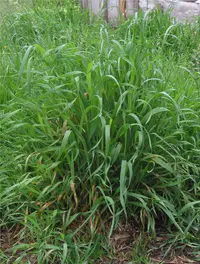
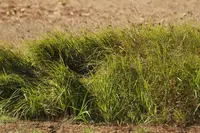
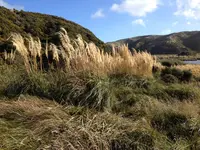
Caucasian bluestem, Bothriochloa bladhii, is a warm-season perennial grass grown mainly for pasture, erosion control, and low-maintenance landscapes. It forms dense clumps with slender upright stems and fine, blue-green foliage that turns tan as it matures.
This species is native to parts of Eurasia but is now widely naturalized in warmer regions, including the southern United States. It spreads by seed and can be vigorous, which affects how easy it is to manage.
Bothriochloa bladhii tolerates heat, drought, and poor soils, so it often persists where many grasses struggle. To care for Caucasian bluestem successfully, it helps to match it with open, sunny sites and well-drained ground.

Care Difficulty
Easy Care

Light Preference
Full Sun

Water Requirements
Low Water

Temperature Preference
Warm Climate

Hardiness Zone
7–11

Soil Texture
Sandy, Loamy, Clay

Soil pH
Slightly acidic (6.5–7.0), Slightly alkaline (7.0–7.5)

Soil Drainage
Well-drained

Fertilization
Minimal (feed rarely)
Scan your plant to receive care tips personalized for your specific plant
Available on iOS and Android
This warm-season grass thrives in open, sunny sites with strong light for most of the day.
This species prefers dry to moderately dry conditions and is adapted to low-water landscapes.
This warm-season grass grows best in hot summers and does not tolerate severe cold.
This grass tolerates a wide humidity range and rarely needs special humidity management outdoors.
Bothriochloa bladhii prefers lean, well-drained mineral soils rather than rich, moisture-retentive mixes.
This species can grow in containers if provided with a stable, fast-draining setup suitable for its deep, fibrous roots.
Bothriochloa bladhii usually grows well in lean soils and needs only light feeding in managed plantings.
Pruning focuses on renewing foliage and removing dead material while maintaining the natural clumping form of Bothriochloa bladhii.
This grass is more often established in the ground, so care focuses on dividing and transplanting mature clumps rather than frequent container repotting.
Bothriochloa bladhii is commonly propagated by seed or by division of established clumps for uniform stands.
This warm-season grass is generally cold hardy in mild to moderate climates and needs minimal winter care in the landscape.

Plant Health Check
Not sure what's wrong with your plant? Check your plant's health inside the app.
This species is native to tropical and subtropical parts of Africa and Asia, where it evolved in warm, seasonally dry grasslands and savannas, making it well adapted to heat and periodic drought.
It uses the C4 photosynthetic pathway, a carbon-fixing strategy that allows efficient growth in high light, high temperature, and low moisture conditions compared with many temperate C3 grasses.
In parts of the southern United States and Australia, it behaves as an invasive grass, forming dense, near-monoculture stands that can displace diverse native herbaceous species and alter fire regimes.
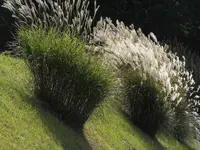
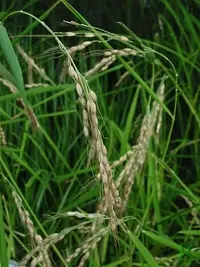
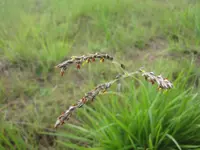
This grass forms tufted clumps with distinctive purplish, silky seed heads that are easily wind-dispersed, helping it colonize open, disturbed sites such as roadsides, overgrazed rangeland, and degraded pastures far from original planting areas.
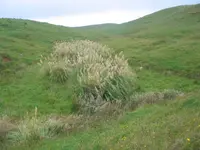
This grass spreads by seed and short rhizomes, forming dense clumps that can gradually expand. In many regions it is considered invasive, so monitor self-seeding, remove unwanted seedlings, and avoid planting near natural prairies or conservation areas.
Keep your plants happy and healthy with plant identification, disease detection, and easy care guidance.