Manage Water Levels
In constructed wetlands or ponds, install simple adjustable weirs or standpipes so you can raise or lower water levels by 5–10 cm to keep roots submerged while preventing overly deep water that weakens stems.

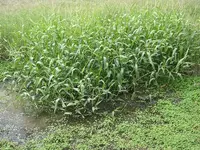
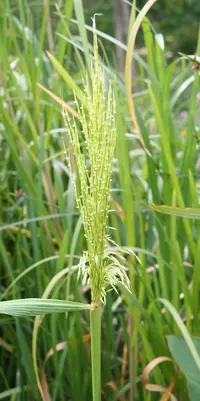
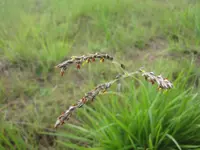
West Indian marsh grass, Hymenachne amplexicaulis, is a fast-growing perennial grass adapted to wet, swampy, or seasonally flooded areas. It forms dense, tall stands with thick, hollow stems and broad, clasping leaves that help it stay upright in shallow water.
This species is native to tropical America but has been introduced to other warm regions, where it can become invasive in wetlands and irrigation channels. It is generally easy to establish wherever soil stays saturated, which affects how to care for West Indian marsh grass.
The plant favors full sun, warm temperatures, and consistently wet, nutrient-rich soil, making it suited to ponds, ditches, and low-lying pasture areas rather than dry garden beds.

Care Difficulty
Moderate Care

Light Preference
Full Sun

Water Requirements
Aquatic

Temperature Preference
Tropical / Frost Sensitive

Hardiness Zone
10–12

Soil Texture
Loamy, Silty, Organic-rich

Soil pH
Slightly acidic (6.5–7.0), Neutral (7.0)

Soil Drainage
Waterlogged tolerant

Fertilization
Minimal (feed rarely)
Scan your plant to receive care tips personalized for your specific plant
Available on iOS and Android
This semi-aquatic grass thrives in warm, bright conditions with long days of sun.
This species is adapted to saturated soils and even shallow standing water.
This warm-climate grass prefers consistently mild to hot conditions and does poorly in cold.
This semi-aquatic grass needs very high humidity to stay vigorous.
This species prefers permanently wet, oxygen-poor substrates that mimic marsh or shallow pond edges.
This species can be grown in containers if those containers are managed as mini-wetlands or pond baskets.
Hymenachne amplexicaulis grows vigorously in nutrient-rich, wet soils and usually needs only modest supplemental feeding.
Pruning Hymenachne amplexicaulis focuses on controlling spread and maintaining healthy, accessible stands.
This species is mainly transplanted in wetland or pond-edge settings rather than grown as a long-term container plant.
Hymenachne amplexicaulis is commonly propagated for research, habitat projects, or forage trials, but it can become invasive in suitable climates.
This tropical to subtropical grass lacks real frost tolerance and needs protection or replacement in cold-winter regions.

Plant Health Check
Not sure what's wrong with your plant? Check your plant's health inside the app.
This grass develops spongy, air‑filled tissues (aerenchyma) in its stems, allowing them to float and remain upright in waterlogged or flooded habitats for long periods.
Its leaf sheaths clasp tightly around the stem, which helps the plant stay anchored and supported as stems creep and lodge over the water surface.
Outside its native range in Central and South America, this species is a serious invasive weed in wetlands and irrigation systems, where dense stands can displace native plants and obstruct water flow.

In some invaded regions, this grass creates such dense, floating mats that livestock and large animals have been recorded walking over the vegetation as if it were solid ground, dramatically altering natural wetland structure.
This species is highly invasive in many warm regions. It forms dense stands in wetlands, displacing native plants, altering water flow, and reducing habitat quality for wildlife. Always check local regulations before planting or moving it.
Keep your plants happy and healthy with plant identification, disease detection, and easy care guidance.