Basket sizing
Use a wide, shallow aquatic basket (20–30 cm diameter) lined with a fine mesh or newspaper so the rhizome can spread horizontally while soil stays contained and does not cloud the water.

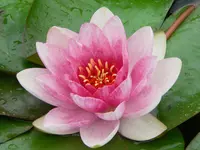
Pygmy waterlily, Nymphaea tetragona, is a compact aquatic plant known for its small floating leaves and delicate, star-like white flowers. It suits smaller ponds, tubs, and container water gardens.
This species is native to cool and temperate regions of the Northern Hemisphere, where it grows in still or slow-moving freshwater. Its small size and moderate growth rate make it easier to manage than larger waterlilies.
To care for pygmy waterlily, provide calm, shallow water, plenty of light, and a stable aquatic substrate. Its overall ease depends mainly on consistent water conditions and sufficient sun.

Care Difficulty
Moderate Care

Light Preference
Full Sun

Water Requirements
Aquatic

Temperature Preference
Cool Climate

Hardiness Zone
3–8

Soil Texture
Loamy, Silty, Organic-rich

Soil pH
Slightly acidic (6.5–7.0), Neutral (7.0)

Soil Drainage
Waterlogged tolerant

Fertilization
Light (every 4–6 weeks)
Scan your plant to receive care tips personalized for your specific plant
Available on iOS and Android
Nymphaea tetragona needs strong light on the water surface to flower and maintain compact growth.
This aquatic species depends on stable, clean water depth and quality rather than conventional soil watering cycles.
This hardy waterlily prefers cool to moderately warm conditions and is sensitive to strong frost on exposed tissues.
This aquatic species relies on water rather than air humidity, so ambient humidity is rarely a concern.
This species prefers a heavy, mineral-based aquatic substrate that anchors roots and resists floating.
This species is well suited to container cultivation in ponds, tubs, or half-barrels.
This small hardy waterlily benefits from moderate, targeted feeding during the active growing season.
Nymphaea tetragona benefits from light, ongoing pruning to keep the plant healthy and flowering well.
Container-grown plants need periodic dividing and repotting to maintain strong flowering and stable growth.
This species is most reliably propagated by rhizome division rather than by seed in home ponds.
Nymphaea tetragona is cold hardy in many temperate climates but needs basic winter management in ponds and containers.

Plant Health Check
Not sure what's wrong with your plant? Check your plant's health inside the app.
This species is one of the few waterlilies that naturally reaches subarctic regions, occurring as far north as areas just below the Arctic Circle in parts of Eurasia and North America.
Its flowers are among the smallest in the genus, often only about 3–5 cm across, which is why it is widely known as the pygmy waterlily.
Cytological studies report a stable diploid chromosome number of 2n = 28 for this species, a feature used in taxonomic and evolutionary research within Nymphaea.

Some botanists treat certain Asian and North American forms once included in this species as distinct taxa, so modern floras may differ on whether particular northern populations belong to Nymphaea tetragona or to closely related segregate species.
Lack of flowers usually comes from water that is too cool, not enough direct sun on the water surface, overly deep planting, or nutrient-poor substrate. Crowded rhizomes or excessive shade from taller plants also reduce blooming.
Keep your plants happy and healthy with plant identification, disease detection, and easy care guidance.