Black Mondo Grass Care (Ophiopogon planiscapus 'Kokuryu')

Also known as: Mondo Grass, Black Lilyturf

About Black Mondo Grass

Black mondo grass, Ophiopogon planiscapus 'Kokuryu', is a compact, clumping perennial grown mainly for its striking dark purple to near-black foliage. It forms low, grass-like tufts that slowly spread, creating dense edging, accents, or groundcover in beds and containers.

This cultivar originates from garden selections of a species native to Japan. It is valued for its stable color, year-round structure, and relatively slow, contained growth.

The plant tolerates partial shade, consistent moisture, and well-drained soil, which makes it straightforward for gardeners who want to care for Black Mondo Grass without intensive maintenance.

Main Plant Requirements

Care Difficulty

Easy Care

Light Preference

Partial Shade

Water Requirements

Moderate Water

Temperature Preference

Cold Hardy

Hardiness Zone

5–10

Soil Texture

Sandy, Loamy, Organic-rich

Soil pH

Acidic (5.5–6.5), Slightly acidic (6.5–7.0)

Soil Drainage

Moist but well-drained

Fertilization

Minimal (feed rarely)

Get Personalized Care Plan

Scan your plant to receive care tips personalized for your specific plant

Available on iOS and Android

How to Care for the Black Mondo Grass

This plant prefers bright, gentle light that protects the dark foliage from scorching while allowing good color development.

  • Provide 3–5 hours of morning sun with light shade or dappled light in the afternoon; eastern or light northern exposures are ideal for growing Black Mondo Grass.
  • Tolerates partial to full shade, but in deep shade growth becomes looser and leaves may appear less glossy and slightly greener over time.
  • Avoid intense midday summer sun, which can bleach or crisp leaf tips; in hot climates, increase filtered shade from late spring through early fall.

This plant prefers consistently moist but not waterlogged soil once established in the landscape.

  • Water when the top 2–4 cm of soil feels dry, then soak the root zone thoroughly so moisture reaches 10–15 cm deep.
  • In spring and summer, check soil every few days during dry spells; in cool, rainy seasons, reduce watering and rely more on natural rainfall.
  • Ensure free-draining soil or raised beds to prevent standing water; yellowing, limp leaves suggest overwatering, while browning tips and folding leaves indicate the plant is too dry.

This species is a hardy, cool- to mild-climate groundcover that tolerates a wide temperature range once established outdoors.

  • Optimal growth occurs around 55–75°F (13–24°C), with steady foliage color and slow, compact clump expansion in these conditions.
  • Mature plants tolerate lows near 0–10°F (-18 to -12°C); foliage may burn in severe freezes, but crowns usually resprout in spring if soil is not frozen for long periods.
  • Handles summer heat up to about 90°F (32°C) if soil moisture is maintained and roots are mulched; extended hot, dry periods without moisture cause leaf tip scorch and thinning clumps.

This grass handles a wide humidity range but grows best with moderate ambient moisture.

  • Target 40–60% humidity, similar to most occupied indoor spaces or sheltered outdoor spots.
  • Tolerates relatively dry air, but prolonged very low humidity can cause leaf-tip browning and slight curl.
  • Increase humidity around Black Mondo Grass by grouping containers, using a nearby open tray of water and stones, or placing it away from strong drying drafts.

This plant prefers loose, moisture-retentive but sharply drained soil to prevent root problems.

  • Use a loamy, organic-rich mix, such as 2 parts garden loam, 1 part compost, and 1 part fine bark or grit for structure.
  • Ensure fast drainage so water does not pool; raised beds or slightly mounded planting help in heavy soils.
  • Aim for slightly acidic to neutral pH (6.0–7.0), avoiding strongly alkaline sites that can reduce vigor.
  • For Ophiopogon planiscapus 'Kokuryu', improve aeration in clay by working in coarse sand or fine gravel plus well-rotted compost.

This species is well suited to container growing outdoors on patios, balconies, or at entryways.

  • Choose a pot at least 20–25 cm wide so the slowly spreading clumps have room to form a dense, arching mat.
  • Select a heavier material such as ceramic when exposed to wind, as the foliage can make the container top-heavy when mature.
  • Raise the container slightly on feet or spacers so drainage holes stay clear and runoff leaves the pot quickly after heavy rain.

This plant has modest nutrient needs, so light, consistent feeding during the growing season is enough for caring for Black Mondo Grass.

  • Apply a balanced, slow-release fertilizer (around 10-10-10) once in early spring as new growth starts.
  • Optionally top-dress with a thin layer of compost to support soil structure and microbial life.
  • Use granular or liquid feeds at 1/2 strength to avoid salt buildup in container-grown plants.
  • Stop fertilizing by late summer and avoid feeding in winter dormancy to prevent weak, tender growth.

Pruning needs for Ophiopogon planiscapus 'Kokuryu' are minimal and focus on cosmetic cleanup rather than reshaping.

  • Best time is late winter to early spring before fresh shoots fully emerge.
  • Use clean hand pruners or sharp scissors to remove dead, browned, or damaged leaves at the base.
  • Shear lightly across the clump if foliage looks tattered, encouraging a fresh flush of growth.
  • Avoid cutting into the crown; preserve the natural arching shape and flowering potential.

This plant forms dense clumps that benefit from occasional division or transplanting when crowded or declining.

  • Look for roots circling the pot, slow growth, or a congested clump as signs it needs a new spot or larger container.
  • Plan to repot or lift and divide every 3–4 years, ideally in early spring or early fall when temperatures are mild.
  • Gently loosen and separate clumps by hand or with a clean knife, keeping several shoots and roots together per division.
  • Replant at the same depth in well-drained soil, water thoroughly, and shade for a few days to reduce transplant shock.

Propagation of this plant is most reliable by division, with seeds used less often due to slow and variable results.

  • Divide mature clumps in early spring or early fall when soil is workable and temperatures moderate.
  • Lift the plant, then tease apart or cut sections so each division has healthy roots and 3–5 fans of leaves.
  • Replant divisions promptly into moist, well-drained soil, spacing them to allow future clump expansion.
  • For seed, sow fresh in a cool, bright place; expect slow germination and several seasons to reach full size.

This species is generally cold hardy in much of the US and usually needs only light winter attention in the ground.

  • Tolerates typical frosts in USDA zones around 6–9, though foliage may discolor in severe cold.
  • Apply a 5–7 cm mulch layer around the root zone in late fall, keeping it just clear of the crown.
  • For container plants in colder areas, move pots to a sheltered, unheated but frost-sheltered spot or insulated porch.

Care Tips

Divide Mature Clumps

Every 3–4 years in early spring or early fall, lift and divide congested clumps into smaller sections with several fans and healthy roots to keep growth dense and to refresh older plantings.


Edge To Contain

Install a shallow physical edge (metal, stone, or rigid plastic) 5–7 cm deep along beds and paths to prevent rhizomes from slowly creeping into lawns or neighboring groundcovers while still allowing the plant to form a neat border.

Use Grit For Crowns

After planting, dress the soil surface around the crowns with a thin layer of fine gravel or horticultural grit to improve surface drainage and reduce crown rot in wet climates.

Winter Foliage Grooming

At the end of winter, remove only the obviously damaged, brown, or collapsed leaves by cutting them at the base so that new shoots emerge cleanly and the planting keeps its dense, tufted look.

Check For Vine Weevils

In containers and shaded borders, inspect roots once a year for vine weevil larvae and, if present, apply a biological control such as nematodes according to label directions, since healthy roots are critical for growing Black Mondo Grass in long-term plantings.

Common Pests and Diseases

Southern blight

This disease causes sudden collapse of clumps, yellowing and wilting of foliage, and white fungal growth with mustard-colored sclerotia at the crown and soil line.

Solution

Remove and discard all affected plants and surrounding soil, then avoid replanting susceptible species in the same spot for several years; improve drainage, reduce overhead watering, and apply a labeled soil fungicide as a preventative in beds with a history of Southern blight.

Anthracnose leaf spot

This disease produces tan to dark brown spots or blotches on leaves, sometimes with a slightly sunken or scorched appearance along the blades.

Solution

Cut and discard infected foliage to reduce spore load, avoid overhead irrigation, water early in the day so leaves dry quickly, and improve spacing and airflow; in persistent, wet conditions, a labeled foliar fungicide may be used as a short-term protective measure.

Slugs and snails

These pests chew irregular holes and notches in the strappy leaves, often leaving slime trails on or around the plants.

Solution

Hand-pick slugs and snails in the evening, remove nearby hiding places such as dense debris, and use barriers or iron phosphate slug baits placed around clumps; maintain slightly drier soil surfaces and avoid heavy mulch layers that shelter these pests.

Narcissus bulb fly

This pest occasionally attacks the fleshy root crowns, leading to decline, distorted foliage, and weak or collapsing clumps as larvae tunnel into the crown tissue.

Solution

Inspect declining plants and discard any crowns that show tunneling or soft, infested tissue; encourage good plant vigor through proper watering and feeding, and in areas with known narcissus bulb fly issues, cover newly planted divisions with fine mesh during peak adult flight to reduce egg laying.

Crown rot (Phytophthora)

This disease leads to browning and dieback from the base of the leaves, with soft, discolored crown tissue and poor overall vigor, especially in waterlogged soils.

Solution

Remove and destroy affected plants, improve drainage by raising beds or amending soil, and avoid chronic overwatering; in sites with a known history of Phytophthora, consider using resistant companion species and only replant divisions of healthy clumps into well-drained areas as part of careful Ophiopogon planiscapus 'Kokuryu' care instructions.

Interesting Facts

Naturally near-black foliage

The leaves contain high levels of dark pigments, giving the plant a saturated purple-black appearance that remains stable through the growing season in suitable light. This pigment concentration is higher than in most other Ophiopogon cultivars, which is why its foliage appears almost jet black rather than dark green.

Clumping, not invasive

Although it slowly spreads via short underground stems called rhizomes, it forms tight, low clumps instead of running aggressively. This growth habit allows gardeners to use it as edging or groundcover without the rapid takeover seen in many true grasses.

Subtle flowers and berries

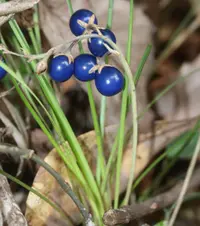
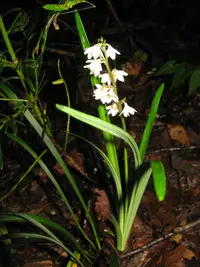
In summer it produces small, bell-shaped pale lilac to white flowers that sit low within the foliage on short spikes. These are followed by shiny, rounded blue-black berries, which add seasonal interest and contrast with the leaves.

Botan icon

Did you know?

The species Ophiopogon planiscapus, including the cultivar 'Kokuryu', is not a true grass but belongs to the Asparagaceae family, meaning that growing Black Mondo Grass is more closely related botanically to asparagus and hosta than to lawn grasses.

FAQs about Black Mondo Grass

Leaf tips usually brown from drought, excess fertilizer, or winter wind burn. Check soil moisture, flush salts with a deep watering, then remove worst leaves. Mulch lightly and avoid direct road salt or strong drying winds.

Grow Healthy Plants with Botan Care

Keep your plants happy and healthy with plant identification, disease detection, and easy care guidance.

Botan plant care app — identify plants on mobile

Explore More Plants