Black mondo grass Care (Ophiopogon planiscapus)

Also known as: Mondo grass, Black mondo
Black mondo grass

About Black mondo grass

Black mondo grass (Ophiopogon planiscapus), an evergreen perennial, is grown mainly for its narrow, arching, deep purple to nearly black leaves. It forms low, tufted clumps that slowly spread to create a dense groundcover or edging along paths and borders.

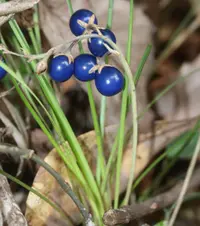
In summer it produces small, pale flowers that are often followed by glossy dark berries, adding subtle interest rather than showy color. This species originates from Japan, where it grows in woodland and rocky habitats.

Its compact size, steady growth, and tolerance of partial shade make it relatively straightforward to care for Black mondo grass in many gardens. It generally prefers consistent moisture, well-drained soil, and protection from harsh, drying sun.

Main Plant Requirements

Care Difficulty

Easy Care

Light Preference

Partial Shade

Water Requirements

Moderate Water

Temperature Preference

Cold Hardy

Hardiness Zone

6–9

Soil Texture

Sandy, Loamy, Organic-rich

Soil pH

Acidic (5.5–6.5), Slightly acidic (6.5–7.0)

Soil Drainage

Moist but well-drained

Fertilization

Minimal (feed rarely)

Get Personalized Care Plan

Scan your plant to receive care tips personalized for your specific plant

Available on iOS and Android

How to Care for the Black mondo grass

This plant prefers bright but gentle light to maintain strong growth and dark foliage.

  • Provide 3–5 hours of morning sun or bright dappled light; afternoon shade prevents leaf scorch, especially in hotter regions.
  • Black mondo grass tolerates partial to full shade, but in deep shade foliage may turn greener and clumps thin over time.
  • In summer, protect from strong sun between 11 a.m.–4 p.m.; in winter, more direct light is beneficial as the sun is weaker.

Water needs are moderate and depend on soil drainage and weather.

  • Allow the top 3–5 cm of soil to dry between waterings, then water deeply so moisture reaches the full root zone.
  • During hot, dry periods, expect to water more often if soil is sandy; in cool or rainy seasons, reduce watering to avoid soggy soil.
  • Signs of underwatering include limp, curling, or browning leaf tips; yellowing, mushy crowns or a sour smell suggest overwatering and poor drainage around Ophiopogon planiscapus.

This species is a hardy perennial that tolerates a wide range of outdoor temperatures.

  • Optimal growth occurs around 60–75°F (16–24°C), with steady growth in mild spring and fall conditions.
  • Mature plants tolerate lows near 0°F (−18°C) in the ground; brief colder snaps are usually survived if soil drains well and crowns are not waterlogged.
  • In hot summers above 90°F (32°C), provide afternoon shade and mulch to keep roots cooler, and avoid heat radiating from dark hardscapes.

This species handles a wide humidity range and rarely needs special humidity management.

  • Target 40–60% humidity, similar to average indoor and outdoor conditions in most homes and gardens.
  • Leaves may brown at tips or edges under very dry air combined with heat or intense sun, mimicking drought stress.
  • If air is extremely dry, improve root hydration instead of misting by mulching the soil surface and watering deeply when the top layer dries.

Ophiopogon planiscapus prefers loose, humus-rich, well-drained soil that stays evenly moist.

  • Use a loamy base blended with 30–40% compost to provide organic matter and moisture retention without becoming sticky.
  • Ensure drainage by incorporating mineral components such as coarse sand, fine gravel, or perlite at 20–30% of the volume.
  • Aim for slightly acidic to neutral pH, around 6.0–7.0, which supports nutrient availability and healthy root growth.
  • Avoid heavy, compacted clay or spots where water pools; raise beds or use grit and organic matter to improve aeration and drainage.

This species is well suited to container growing for borders, patios, and accent plantings.

  • Choose a pot that is wider than it is deep to accommodate the spreading clump and allow space for offsets to form.
  • Select a heavier container material, such as ceramic or concrete, to keep the plant stable as the dense foliage matures.
  • Use a free-draining potting mix and fill the pot so the crown sits slightly above the rim level to prevent water from collecting around the plant base.

This plant has modest nutrient needs but responds well to light feeding during active growth.

  • Apply a balanced slow-release fertilizer (around 10-10-10) once in early spring for Black mondo grass.
  • Supplement with a light top-dressing of compost in late spring to support steady growth.
  • Use liquid balanced NPK at 1/2 strength every 4–6 weeks in containers during the growing season.
  • Stop feeding in fall and winter, as growth slows and excess nutrients can cause weak, soft foliage.

Ophiopogon planiscapus needs minimal structural pruning but benefits from periodic clean-up.

  • Best time is late winter or very early spring, before new growth emerges.
  • Use clean, sharp scissors or hand shears to remove dead, yellowing, or damaged leaves at the base.
  • Thin out crowded or tangled clumps by cutting older leaves, which keeps the mound neat and allows light in.
  • After heavy frost damage, shear lightly above the crown to encourage fresh, uniform new foliage.

This species is more often transplanted in the ground than repotted, as it forms slowly spreading clumps.

  • Transplant or divide every 3–5 years in early spring or early fall when temperatures are mild.
  • Look for tight, congested clumps, slow growth, or roots circling a container drainage hole as signs to move it.
  • Lift clumps carefully with a fork, keeping as much root mass intact as possible to reduce stress.
  • Replant at the same depth in well-drained soil, water thoroughly, then keep evenly moist until well re-established.

Division is the standard and most reliable way to increase Ophiopogon planiscapus plants.

  • Divide mature clumps in early spring or early fall, when weather is cool and soil is workable.
  • Lift the parent clump, then tease or cut it into small sections, each with several shoots and healthy roots.
  • Replant divisions immediately at the same depth in loose, well-drained soil or pots with similar mix.
  • Keep soil consistently slightly moist and provide light shade until new growth confirms successful establishment.

This plant is generally cold hardy in much of the US and needs little special winter care in the ground.

  • In zones near its hardiness limit, apply a 5–8 cm mulch layer over the root zone after the first hard frost.
  • Avoid waterlogged soil in winter, which can lead to root rot in cold conditions.
  • Move container-grown plants into a sheltered, unheated space where temperatures stay roughly above 20–25°F.

Care Tips

Divide Mature Clumps

Every 3–5 years, lift and divide crowded clumps in early spring or early fall, replanting healthy fans with firm roots at the same depth to maintain vigor and uniform color when growing Black mondo grass.

Edge To Contain

Install a shallow physical edging strip 5–8 cm deep around planting areas to prevent slow lateral spread into paths or neighboring low groundcovers while keeping the planting line crisp.

Mulch For Color

Apply a thin 2–3 cm layer of fine, dark mulch or composted bark around plants, keeping it off the crowns, to highlight foliage color and reduce weed competition without suffocating new shoots.

Staggered Groundcover Planting

For dense, even coverage, set plants in a staggered grid at 15–20 cm spacing rather than straight rows, which closes gaps faster and helps suppress weeds between clumps.

Check Crown Level

After heavy rain or frost heave, inspect plants and gently firm soil so crowns sit level with the surface, as sunken or exposed crowns can decline or rot over time.

Common Pests and Diseases

Slugs and snails

This pest group is strongly attracted to the dense, grassy foliage and moist shade where black mondo grass is often grown. Symptoms include shredded leaf tips, irregular holes, and slime trails on or around the plants.

Solution

Hand-pick slugs and snails in the evening, use iron phosphate bait around clumps, and reduce hiding spots such as thick mulch or debris. Copper tape barriers around containers and coarse grit or crushed eggshells at the planting edge can also reduce feeding damage.

Vine weevil

This pest affects Ophiopogon planiscapus mainly through its larvae, which feed on roots and crowns, causing plants to yellow, wilt, and sometimes die, especially in containers. Adult beetles chew neat notches from leaf margins but cause less serious damage than the larvae.

Solution

Inspect and discard heavily affected container plants, and repot survivors into fresh, clean medium. In spring and late summer, apply targeted beneficial nematodes to the soil to control larvae, and physically remove adult beetles from foliage at night to reduce egg-laying.

Leaf spot

This disease causes small brown, purple, or tan lesions on the narrow leaves, sometimes with yellow halos and gradual thinning of the clump. Symptoms include cosmetic damage that can become more obvious in humid, shaded positions with poor air movement.

Solution

Remove and discard affected leaves to reduce spore spread, and avoid overhead watering so foliage dries quickly. Improve airflow by thinning crowded plantings, and if needed use a garden sulfur or copper-based fungicide on new growth during extended wet periods, following label directions carefully.

Crown rot

This disease develops in poorly drained or waterlogged soil, leading to soft, blackened crowns and collapse of whole fans, while leaves yellow and die back from the base. Symptoms include a foul smell from decaying tissue and easy pull-out of affected tufts.

Solution

Lift and discard severely affected clumps, and only replant into soil with improved drainage using raised beds or mounded planting areas. Water deeply but infrequently, avoid burying the crown under heavy mulch, and space plants so the soil surface can dry between irrigations as part of long-term Ophiopogon planiscapus care instructions.

Interesting Facts

Unusual leaf pigmentation

The popular cultivar 'Nigrescens' has leaves that appear nearly black because they contain high levels of dark anthocyanin pigments, which mask the underlying green chlorophyll. This pigmentation can provide some protection from intense light and ultraviolet radiation.

Berries from violet flowers

This species produces small, pale-violet to lilac bell-shaped flowers close to the foliage line in summer. These are followed by rounded, glossy bluish-black berries that add ornamental interest into autumn.

Grasslike but not a grass

Although it looks like a small ornamental grass, this species belongs to the Asparagaceae family, the same family that includes asparagus and some lily-like ornamentals. Its grasslike leaves are an example of convergent evolution, where unrelated plants evolve similar forms for similar environments.

Botan icon

Did you know?

Genetic studies and morphological traits indicate that this species, including its black-leaved forms, originated in Japan, where it naturally occurs on well-drained, often rocky forest margins and slopes rather than in lawns or open grasslands, which explains its tolerance of shade and competition from tree roots.

FAQs about Black mondo grass

This species spreads slowly by short rhizomes, forming tight clumps rather than running widely. It is generally easy to contain and is often used as an edging or small-scale ground cover in mixed plantings.

Grow Healthy Plants with Botan Care

Keep your plants happy and healthy with plant identification, disease detection, and easy care guidance.

Botan plant care app — identify plants on mobile

Explore More Plants