Controlled mowing height
Maintain Kikuyu at 1–1.5 in in high-use lawns and 1.5–2 in in low-use or drought-prone areas, adjusting the mower gradually over 2–3 cuts rather than changing height abruptly to avoid stress and scalping.

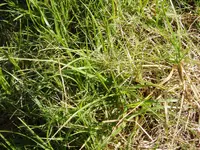
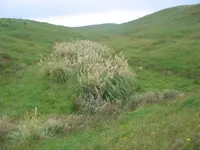
Kikuyu grass (Cenchrus clandestinus) is a warm-season perennial turf grass known for its rapid spreading habit and dense, low-growing mat. It creeps by vigorous stolons and rhizomes, quickly filling bare soil and forming a thick lawn under suitable conditions.
This species originates from East Africa and is now widely used in mild, frost-free or coastal climates for lawns, sports fields, and erosion control. It tolerates heavy foot traffic and recovers fast from wear, which makes it attractive where resilience is more important than fine texture.
Kikuyu grass prefers full sun, moderate moisture, and well-drained soil, and can become invasive in favorable climates. Understanding how to care for Kikuyu Grass is important to balance strong growth with responsible containment.

Care Difficulty
Easy Care

Light Preference
Full Sun

Water Requirements
Moderate Water

Temperature Preference
Warm Climate

Hardiness Zone
8–11

Soil Texture
Sandy, Loamy, Clay

Soil pH
Slightly acidic (6.5–7.0), Slightly alkaline (7.0–7.5)

Soil Drainage
Well-drained

Fertilization
Light (every 4–6 weeks)
Scan your plant to receive care tips personalized for your specific plant
Available on iOS and Android
Warm-season lawns of Cenchrus clandestinus need strong light for dense, green growth.
Cenchrus clandestinus forms a deep-rooted lawn that prefers steady but not excessive soil moisture.
This warm-season grass thrives in mild to hot conditions and slows markedly in cool weather.
Humidity is not a major factor for Cenchrus clandestinus, which adapts well to typical outdoor air conditions.
Cenchrus clandestinus prefers moderately fertile, well-structured soil that drains freely but does not dry out too fast.
This species can be grown in containers, but it is better suited to open ground due to its vigorous spreading habit.
Cenchrus clandestinus responds well to moderate feeding but grows acceptably on low-fertility soils.
Pruning Cenchrus clandestinus focuses on maintaining turf density and removing dead material.
Kikuyu Grass is usually grown as turf, so care centers on lawn establishment and occasional transplanting rather than container repotting.
Cenchrus clandestinus is commonly propagated for turf establishment rather than as an ornamental plant.
Cenchrus clandestinus is a warm-season grass that handles mild winters but suffers in regions with hard freezes.

Plant Health Check
Not sure what's wrong with your plant? Check your plant's health inside the app.
This warm-season grass is native to the highland regions of East Africa, where it evolved under grazing pressure from large herbivores and periodic fires, which shaped its aggressive regrowth and dense mat-forming habit.
The species spreads through both stolons (above-ground runners) and rhizomes (underground stems), forming a thick, intertwined turf that can rapidly colonize open ground and outcompete many other grasses.
It has been widely introduced as a pasture and lawn grass in countries such as Australia, New Zealand, and parts of the US because its dense root and rhizome system helps stabilize soil on slopes and erosion-prone sites.

In several regions outside its native range, this species is classified as an invasive environmental weed because its vigorous growth and dense canopy can suppress native plant communities and alter grassland and coastal ecosystems.
This species spreads very aggressively through both stolons and rhizomes, quickly forming dense turf. It can invade garden beds and neighboring lawns, so edging, regular mowing, and physical barriers are often needed to keep it contained.
Keep your plants happy and healthy with plant identification, disease detection, and easy care guidance.