bearded shorthusk Care (Brachyelytrum erectum)

Also known as: Long-awned Wood Grass, Southern Shorthusk
bearded shorthusk

About bearded shorthusk

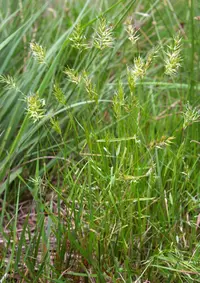
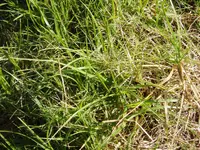
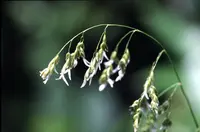
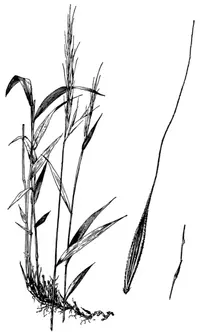
Bearded shorthusk, Brachyelytrum erectum, is a shade-tolerant woodland grass native to eastern North America. It forms loose clumps with arching stems and delicate, narrow flower spikes.

This perennial grass typically grows in deciduous forests, on slopes, and along shaded edges, giving a natural, understory feel to gardens. It spreads slowly and does not become invasive.

Its preference for dappled shade, consistent moisture, and humus-rich soil makes it a good choice for woodland or naturalistic plantings. Once established, it is relatively low-maintenance, so learning how to care for bearded shorthusk is straightforward for most gardeners.

Main Plant Requirements

Care Difficulty

Easy Care

Light Preference

Partial Shade

Water Requirements

Moderate Water

Temperature Preference

Cold Hardy

Hardiness Zone

3–8

Soil Texture

Loamy, Silty, Organic-rich

Soil pH

Acidic (5.5–6.5), Slightly acidic (6.5–7.0)

Soil Drainage

Moist but well-drained

Fertilization

Minimal (feed rarely)

Get Personalized Care Plan

Scan your plant to receive care tips personalized for your specific plant

Available on iOS and Android

How to Care for the bearded shorthusk

This woodland grass prefers soft, filtered light that mimics open forest conditions.

  • Provide bright dappled shade or morning sun with light afternoon shade, aiming for 3–5 hours of direct early sun in cooler climates.
  • In hotter regions, give bearded shorthusk full shade at midday; strong afternoon sun can scorch foliage and dry soil too quickly.
  • If clumps thin out, lean, or show pale leaves, light is likely too low; gradually increase exposure to gentle morning or filtered light.

This perennial grass prefers consistently moist but not soggy soil, especially while establishing.

  • Water when the top 2–4 cm of soil feels slightly dry, aiming to keep the root zone evenly damp without standing water.
  • Use soil rich in organic matter with good drainage so Brachyelytrum erectum can access moisture while excess water runs off easily.
  • In spring and early summer, monitor more often; in cooler or rainy seasons, reduce watering and watch for yellowing, limp leaves as a sign of excess moisture.

This cool-season woodland grass handles a wide temperature range but grows best in moderate conditions.

  • Active growth is strongest around 60–75°F (16–24°C), with steady moisture and some shade to protect foliage.
  • The plant tolerates winter cold down to about -20°F (-29°C) in the ground, going dormant and resuming growth in spring.
  • Short heat waves up to 85–90°F (29–32°C) are tolerated if soil stays moist and shade is available; prolonged extreme heat can cause browning and early dormancy.

This woodland grass manages well in typical outdoor humidity if soil moisture is stable.

  • Prefers 40–60% humidity but relies more on consistently moist, cool soil than air moisture.
  • Tolerates brief dry air, yet combined heat and low humidity can cause leaf-tip browning and rolling.
  • Increase local humidity in hot, dry periods by mulching and grouping plants to shade soil and reduce evaporation.

This species prefers a cool, moist, well-structured soil that mimics deciduous woodland conditions.

  • Choose a loose, loamy soil rich in leaf mold or compost to support fibrous root growth.
  • Ensure steady drainage; soil should hold moisture but never stay saturated or form puddles after rain or watering.
  • Aim for slightly acidic to neutral pH around 5.8–7.0, which supports nutrient availability for Brachyelytrum erectum.
  • Improve aeration and drainage by mixing in fine bark or composted wood chips, avoiding heavy clay or compacted ground.

This grass can grow in containers outdoors if moisture and stability are carefully managed.

  • Use a deep, heavy container to anchor the plant and prevent tipping as the clump enlarges and catches wind.
  • Fill the pot with moisture-retentive, organic-rich mix over a coarse drainage layer to stop waterlogging at the base.
  • Elevate the container slightly on pot feet or bricks so drainage holes do not sit blocked against paving or soil.

This woodland grass is adapted to lean soils, so bearded shorthusk needs only light, infrequent feeding in gardens.

  • Use a thin layer of compost or a balanced slow-release fertilizer (around 10-10-10) in early spring.
  • Apply at low strength, about 1/2 the label rate, to avoid lush, floppy growth.
  • Feed only once each growing season in average garden soil; skip feeding on very rich sites.
  • Stop all fertilization in late summer so new growth hardens before winter.

Brachyelytrum erectum needs minimal pruning, mainly to keep the clump tidy and healthy.

  • Cut back dead or winter-burned foliage in late winter or very early spring before new shoots emerge.
  • Remove damaged or crowded stems at the base during the growing season to maintain an open, graceful clump.
  • Use clean hand pruners or sharp scissors to avoid tearing stems and reduce disease risk.
  • Avoid heavy cutting into fresh growth, which can reduce the plant’s natural arching form.

This grass is usually grown in the ground; focus on careful transplanting rather than frequent repotting.

  • Transplant in early spring or early fall when temperatures are mild and soil moisture is steady.
  • Choose a site with part shade and humus-rich, well-drained soil to mimic its woodland habitat.
  • Move clumps only every several years, when growth thins in the center or crowding occurs.
  • Dig a wide root ball, replant at the same depth, water thoroughly, and mulch lightly to reduce root stress.

Brachyelytrum erectum is most often propagated by division, with seed used mainly for larger restorations.

  • Divide mature clumps in early spring just as new shoots appear, keeping several buds and roots per division.
  • Replant divisions immediately into moist, well-drained soil and water consistently until established.
  • Sow fresh seed outdoors in fall or in cold frames to allow natural winter chilling for better germination.
  • Thin seedlings once they have several true leaves, spacing to allow air flow and steady, stocky growth.

This species is cold hardy in much of its range and usually needs little winter care in the ground.

  • In cold climates, leave dried foliage standing over winter to shield crowns from temperature swings.
  • Apply a light mulch layer (2–5 cm) of leaves or compost around the base after the ground cools.
  • For container plants in very cold areas, move pots into an unheated garage or against a sheltered wall.

Care Tips

Gradual Woodland Establishment

When starting a new clump, underplant it beneath young shrubs or open-canopy trees so the shade slowly increases over several years, matching its natural woodland succession and preventing shock from sudden deep shade.

Leaf-Litter Mulch Layer

Leave a thin layer of shredded leaves around the base year-round to mimic forest duff, which buffers soil moisture, moderates temperature swings, and slowly improves structure without smothering new shoots.

Clump Division Timing

Divide mature clumps only in early spring as new shoots just emerge, then replant divisions at the same depth and water them in thoroughly to reduce transplant stress and maintain the plant’s arching habit.

Understory Pairing Strategy

Plant it in front of taller, deep-rooted woodland perennials or shrubs so their roots draw moisture from deeper layers, leaving the upper soil profile more evenly moist for this shallow-rooted grass.

Low-Input Groundcover Use

Use closely spaced plants, about 25–30 cm apart, to form a loose, shade-tolerant ground layer that suppresses weed seedlings and reduces long-term maintenance when growing bearded shorthusk in larger shaded beds.

Common Pests and Diseases

Leaf spot fungi

This disease causes scattered tan to brown spots on leaves, often with slightly darker margins and occasional yellowing around the lesions.

Solution

Remove and dispose of heavily spotted foliage, avoid overhead watering, and thin nearby vegetation to improve airflow; in consistently wet, shaded sites, consider relocating clumps to a location with better air movement to reduce future infections.

Rust

This disease produces small orange to brown pustules on leaf undersides, sometimes leading to premature leaf yellowing and early dieback.

Solution

Cut and discard affected leaves as soon as symptoms appear, collect and remove fallen foliage in autumn, and maintain good spacing from other ornamental grasses to limit humidity and spore spread; fungicides are rarely needed in garden settings if sanitation is consistent.

Grass aphids

These insects cluster along young stems and leaf bases, sucking sap and sometimes causing slight leaf curling or sticky honeydew on nearby foliage.

Solution

Rinse colonies off with a firm stream of water, encourage natural predators like lady beetles by avoiding broad-spectrum insecticides, and, if populations remain high, spot-treat dense colonies with an insecticidal soap labeled for ornamental grasses as part of broader Brachyelytrum erectum care.

Grass caterpillars

This pest includes larvae of various moths that chew irregular notches or windows in leaves, often visible as tattered blades in late spring or summer.

Solution

Hand-pick caterpillars when damage is first noticed, reduce thatch and leaf litter around clumps to limit hiding sites, and, if chewing is extensive, apply a targeted Bacillus thuringiensis (Bt) product to young larvae following label directions while avoiding contact with non-target plants.

Grass mites

These pests are tiny arachnids that feed on leaf tissue, sometimes causing fine stippling, dulling of leaf color, or subtle webbing in hot, dry weather.

Solution

Increase humidity around the plant slightly, hose foliage to dislodge mites, and prune out the most affected leaves; if populations persist, use a horticultural oil or insecticidal soap labeled for mites, applied thoroughly to both sides of leaves in cooler parts of the day.

Interesting Facts

Shade-forest specialist

This woodland grass typically grows in rich, deciduous forests of eastern North America, where it is adapted to the dappled shade under maple, beech, and oak canopies rather than open grasslands.

Early-season flowering

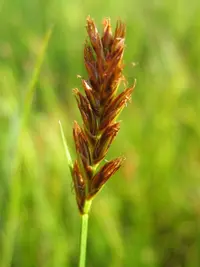
It produces its flowering culms and distinctive bristly-looking spikelets in late spring to early summer, often before surrounding forest vegetation has fully filled in the understory.

Indicator of intact woods

Botanists often treat this species as a conservative woodland indicator, meaning it is more frequently found in relatively undisturbed, mature forests than in recently cleared or heavily managed sites.
Botan icon

Did you know?

Molecular and morphological studies place this species as an early-diverging lineage within the grass subfamily Pooideae, making it of particular interest to researchers studying the evolution of cool-season grasses.

FAQs about bearded shorthusk

This woodland grass forms loose clumps and spreads slowly by short rhizomes and seed. It is not considered aggressive. In average garden settings, it usually stays where planted and integrates well with other shade perennials.

Grow Healthy Plants with Botan Care

Keep your plants happy and healthy with plant identification, disease detection, and easy care guidance.


Botan plant care app — identify plants on mobile

Explore More Plants