Aloe Vera Black Spots: Why Your Plant Is Sending an SOS
Black spots on an aloe vera plant can signal overwatering, infection, or pest damage, so identifying the cause is the first step. Below, you’ll find the key causes, diagnosis tips, and treatment steps to help your aloe recover.

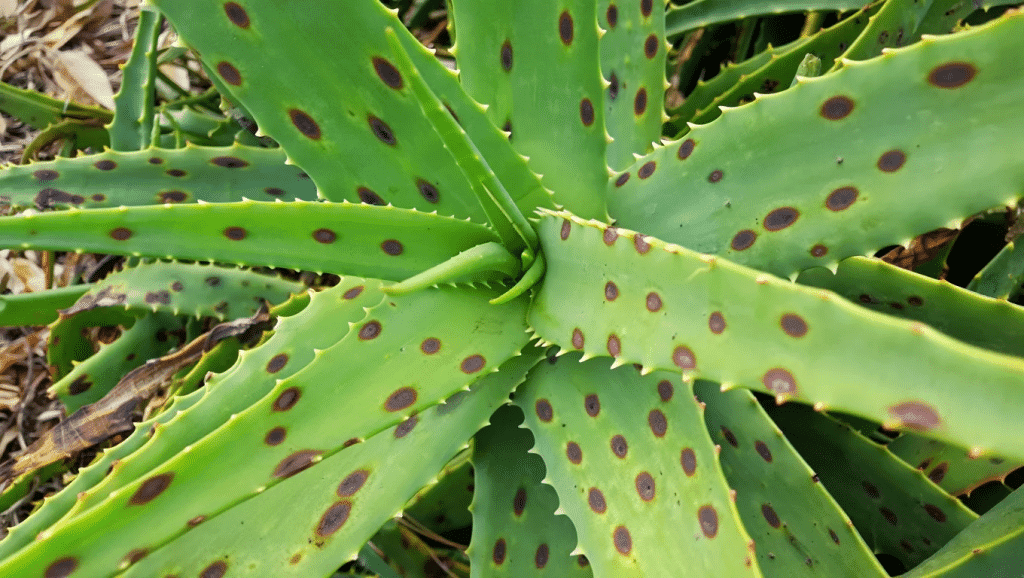
Black spots on an aloe vera plant are a warning sign. They may indicate various problems, from overwatering to infection or pest damage. The most important and the hardest part is interpreting that signal correctly.
The good news is that you can follow a step-by-step approach to identify the issue, take the right actions, and cure your plant. You can do it in seconds with Botan, but knowing the basics of aloe vera care never hurts, especially if you want to prevent problems in the future.
Below, we’ll share all the information on possible causes, diagnostics, and treatment — read on and care for your aloe with confidence.
What Do Black Spots on Aloe Vera Mean?
Dark spots on aloe vera are just a symptom. Their appearance doesn’t necessarily mean that the plant is dying. It rather means that there’s a problem that should be fixed to prevent further damage.
The most common causes of this symptom are:
- Fungal infections. These may be leaf spot disease, aloe rust, anthracnose, or other infections. They are caused by spores that develop under specific favorable conditions: overwatering, excessive heat, and poor airflow.
- Bacterial infections. Pectobacterium chrysanthemi bacteria can cause soft rot of aloe vera. Though the primary symptoms are water-soaked, mushy lesions at the base of the leaf, upper leaves may also have dark, black, or brown spots.
- Environmental stress. Brown or black spots or patches may also appear as a result of sunburn or frost damage.
- Pest damage. Aloe has its “natural enemies,” such as snout beetles, spider mites, gall mites, fungus gnats, mealybugs, scales, and aphids.
- Nutrient imbalance. Nutrient-related issues are less common, but brown spots may also result from fertilizer burn or nutrient excesses.
- Physical damage. Accidental cuts and rough handling can also result in dark spots — one-time injuries that don’t spread.
So, if you notice brown or black spots on aloe vera leaves, they might be due to one of these 6 reasons.
The next step is narrowing down the search. You’ll need to consider the spot’s location, texture, color, and shape, as well as other noticeable changes in your aloe plant’s appearance.

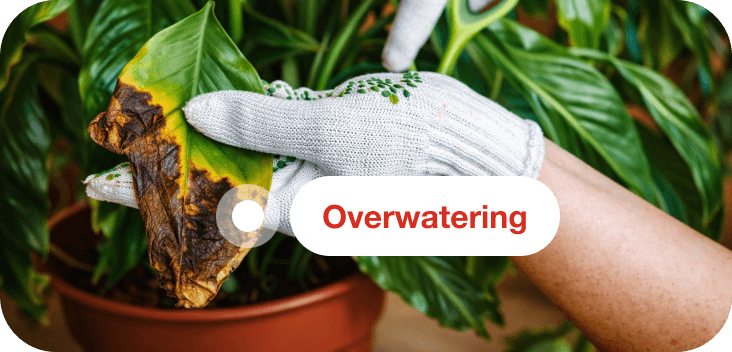
Identify your plant's diseases
Scan with Botan for an instant diagnosis — 98%+ accuracy
Quick Diagnosis: How to Understand What’s Causing Aloe Black Spots
Here’s how disease identification can work in practice:
The Type of Spot | Additional Symptoms | Most Likely Cause |
Dark, circular, sometimes with yellow borders | Growing, merging spots, slowing growth, affected leaves yellow and die off | Fungal infection, overwatering |
Very mushy, water-soaked | Strong odor, very rapid disease progression, slimy leaves | Bacterial infection |
Dry and hard spots | No spot spreading, the rest of the plant looks healthy | Sunburn |
Mushy, glassy | Softer, waterlogged leaves | Frost damage |
Dry, diffused, brown-black | Damages visible on all leaves, leaves are getting pale, slower growth | Nutrient imbalance |
Hardened dark or warty dots/patches | New leaves might appear deformed, sticky residue or white crust on leaves, slower growth | Pests |
Scab-like and isolated | Doesn’t spread, the entire plant is healthy | Mechanical injury |
So, you need to go step by step in your analysis. Check if these are tiny black spots on the aloe plant, mushy and slimy lesions, or dry and hard damaged patches. Consider the overall condition of the plant, and you’ll likely come to the right conclusion.
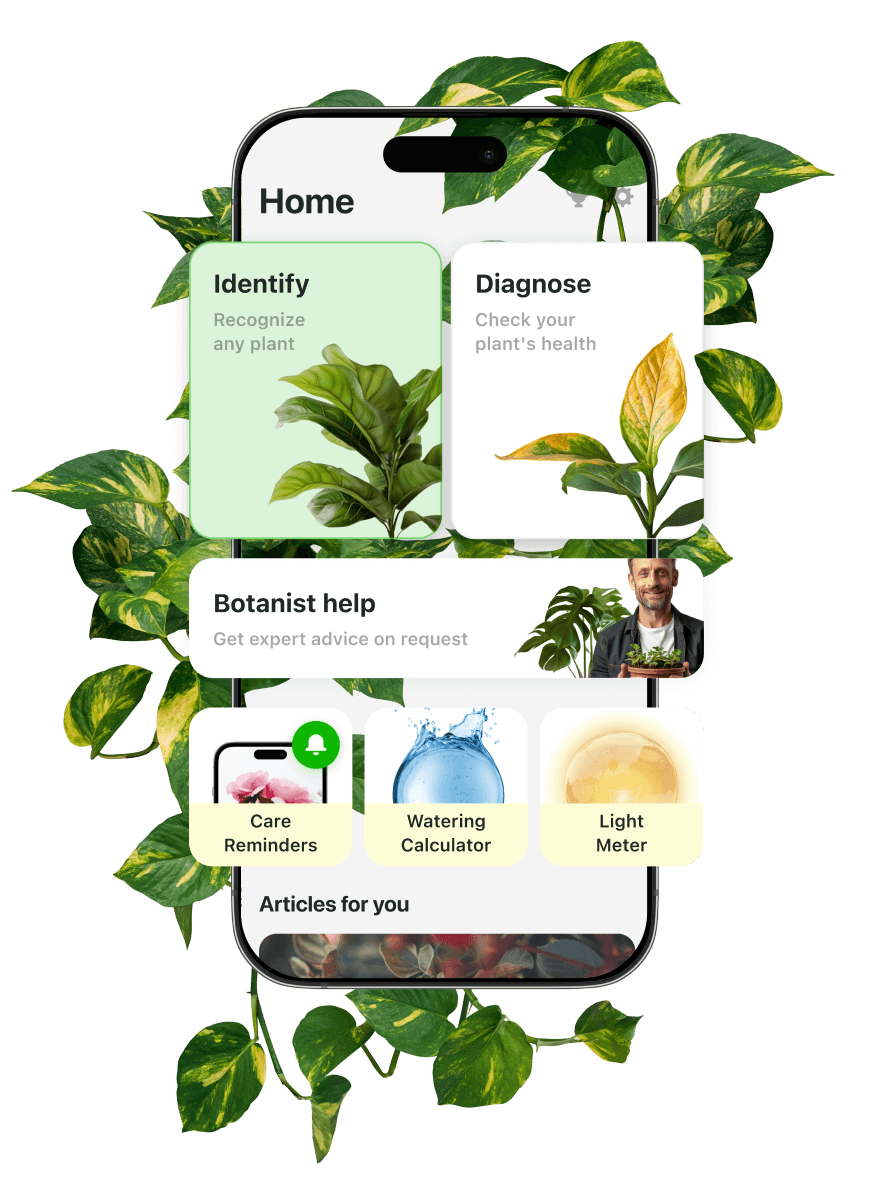
Still, if you want to save time and effort, there’s an alternative. You can try the Botan succulent identifier, scan a photo of your damaged plant, and get a full breakdown of the disease, its causes, and a step-by-step treatment plan. The entire process takes just 1-3 seconds.
How to Treat Black Spots on Aloe
So, if you believe your aloe is sick, consider taking the following steps:
- Try to identify the main cause of spots. Check whether they are spreading, whether they are dry or wet, and evaluate the plant's overall condition.
- Remove all visibly damaged leaves. Also, trim affected tips to limit the spread unless the entire plant is affected.
- If spots are mushy, unpot the plant. Cut off rotten roots, let them dry for at least a few hours, and then plant your aloe in a new pot with drainage.
- If pests might be the problem, use isopropyl alcohol. Dip a cotton swab in isopropyl alcohol and apply it to affected areas, or spray the plant with a solution of insecticidal soap or diluted neem oil. Isolate your aloe vera from other plants.
- Adjust watering. If you believe the problem is caused by overwatering (e.g., fungal infection), stop watering for 2 weeks. See if the situation gets better.
- Adjust the environment. If you believe it’s a sunburn, move the plant out of the direct sunlight. Move indoors if you suspect cold damage. Find a place with better air circulation if fungal infection is the issue.
- Monitor further growth. Keep an eye on your plant to spot any changes after you take the necessary treatment measures.
Also, if you believe the problem is soil, consider repotting. Remember that aloe doesn’t need heavy feeding at all.

How to Prevent the Problem in the Future
There’ll be no aloe vera black spots in the future if you follow a few simple rules:
- Water the plant deeply but infrequently
- Use a pot with a drainage hole
- Provide bright, indirect lighting 6-8 hours daily
- Keep the temperature at 60-80°F (15-27°C)
- Keep the plant in a place with better airflow
- Do pest checks every 2 weeks
That’s enough to maintain aloe’s good health. Success will largely depend on the 3 most important aspects: watering, drainage, and tissue removal.
Water Only When the Soil Is Completely Dry
Aloe is a resilient plant. Always check the soil before you water — the top 2 inches should be completely dry.
The frequency will also depend on the season and the environment. Consider watering approximately every 2-3 weeks in spring and summer, and every 3-4 weeks during autumn and winter. But stick to the “finger-test” approach rather than to the schedule.
Use room-temperature water. Remember that younger plants may need more moisture.
Use Well-Draining Soil
Aloe’s roots are naturally shallow and fibrous. Unlike dense and water-retaining roots, they are designed to dry out quickly. Roots require oxygen and rot if there’s too much moisture.
This, in turn, causes fungal infections and other diseases. Pathogens thrive in wet environments. Get a pot with drainage holes to prevent waterlogging and allow the roots to breathe.
Remove Dead or Damaged Tissue Promptly
That’s necessary to prevent the spread of pathogens. Damaged leaves can have not only dark spots but also lesions, soft rotting areas, or mold.
When you notice one, cut it at the base, leaving about 1-2 inches to avoid damaging the main stem. Use a sterile tool coated with isopropyl alcohol and try to make a single clean cut.
FAQ
Yes, if you identify the cause correctly and take the right actions. Say you notice soft, mushy spots near the base → identify overwatering → get a pot with a drainage hole → water it every 3 weeks, not every 3 days → spots go away. The same approach applies to other problems (infections, pest damage, environmental stress, etc).
Dariia Plaksina
Botanist
5 years of botanical research experience
Dariia Plaksina is a biologist, botanist, and writer of informational articles with over 5 years of experience exploring the world of plants, nature, and biology. She studied at Taras Shevchenko National University of Kyiv, Educational and Scientific Center “Institute of Biology and Medicine,” where she built a strong scientific foundation for her future work.
For Dariia, writing is a hobby, a calling, and a way to make reliable knowledge easier to understand. Her articles focus on plant care, plant health, and natural processes, helping readers learn more about the living world through clear, accessible, and science-based explanations.
Related Articles
5 min read · 16 Sept 2026
How to Keep Cats Away From Plants: 7 Safe and Effective Methods
Cats may dig in potting soil, chew leaves, or knock containers over. These seven methods combine safer placement, physical protection, a suitable chewing alternative, and play to help protect your plants without putting your cat at risk.
5 min read · 7 Sept 2026
Overwatering vs Underwatering: How to Tell the Difference
Overwatering and underwatering can look almost identical, so they're easy to confuse. In this guide, we'll cover the signs of each, simple ways to tell them apart, and how to treat your plant once you know what's wrong.
7 min read · 26 Aug 2026
Brown Spots on Basil Leaves: Causes and How to Fix Them
Brown spots can appear after watering mistakes or disease. Cold exposure and pests leave a distinct pattern too. Learn how to diagnose damaged basil and prevent new marks.
Explore Aloe by Care Needs
Identify the plant and problem. Help your plant recover
Identify plant problems early, understand what's wrong, and get clear care guidance. Botan helps you turn guesswork into confident plant care