Top 5 Causes of Brown Spots on Hydrangea Leaves
Discover the top 5 causes of brown spots on Hydrangea leaves. Find out what the specific pattern means, as well as how to fix the problem and prevent its appearance in the future.

On this page
- Why Are There Brown Spots on Hydrangea Leaves?
- Quick Comparison: What Brown Spots Usually Mean
- Top 5 Causes of Brown Spots on Hydrangea Leaves
- 1. Cercospora Leaf Spot: Most Common Fungal Disease
- 2. Excess Moisture and Poor Air Circulation
- 3. Sunburn and Heat Stress
- 4. Pest Damage
- 5. Nutrient Deficiencies and Water Stress
- How to Prevent Brown Spots from Returning
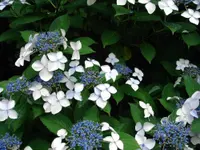
The large inflorescences, resembling lilac-blue lace caps, are a wonderful Instagram location in your garden. However, brown spots on hydrangea leaves may bother you. After all, such a phenomenon usually signals a certain disease, which Botan can identify. Let’s discover the top 5 causes of this problem along with advice on how to fix and prevent it.

Why Are There Brown Spots on Hydrangea Leaves?
Brown spots on Hydrangea leaves are the most common phenomenon in the fall. The foliage naturally ages, changes color, and falls off during this period. But if brown spots appear in the spring or summer, it can signal that something is wrong.
You may think that this is a disease. In reality, this is a symptom of a certain problem, rather than the disease itself. Brown spots can be caused by many factors. The most common among them are:
- fungal or bacterial infection;
- pests damage;
- weather conditions, such as drought, heavy rain, snow, frost, or hail;
- sun damage;
- improper care.
To know exactly cause of brown spots on hydrangea leaves, you should pay attention to the patches’ shape, location, and coloration. For this, examine the plant with your hands, focusing on all parts of the leaves.
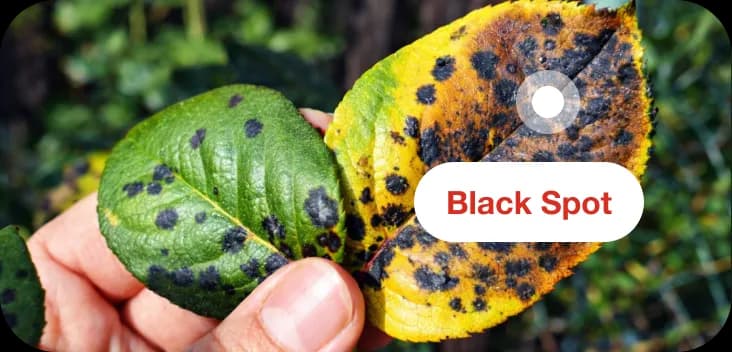
Identify Your Plant's Issues Early
Identify plant problems before they spread
Quick Comparison: What Brown Spots Usually Mean
Even visual examination of the plant in tandem with the flower identification of the Botan app cannot 100% determine the true reason for the appearance of brown spots. The table below will help you to recognize the likely cause based on the symptom pattern and provide short advice on what to do.
Symptom pattern | Most Likely Cause | Severity | Action needed |
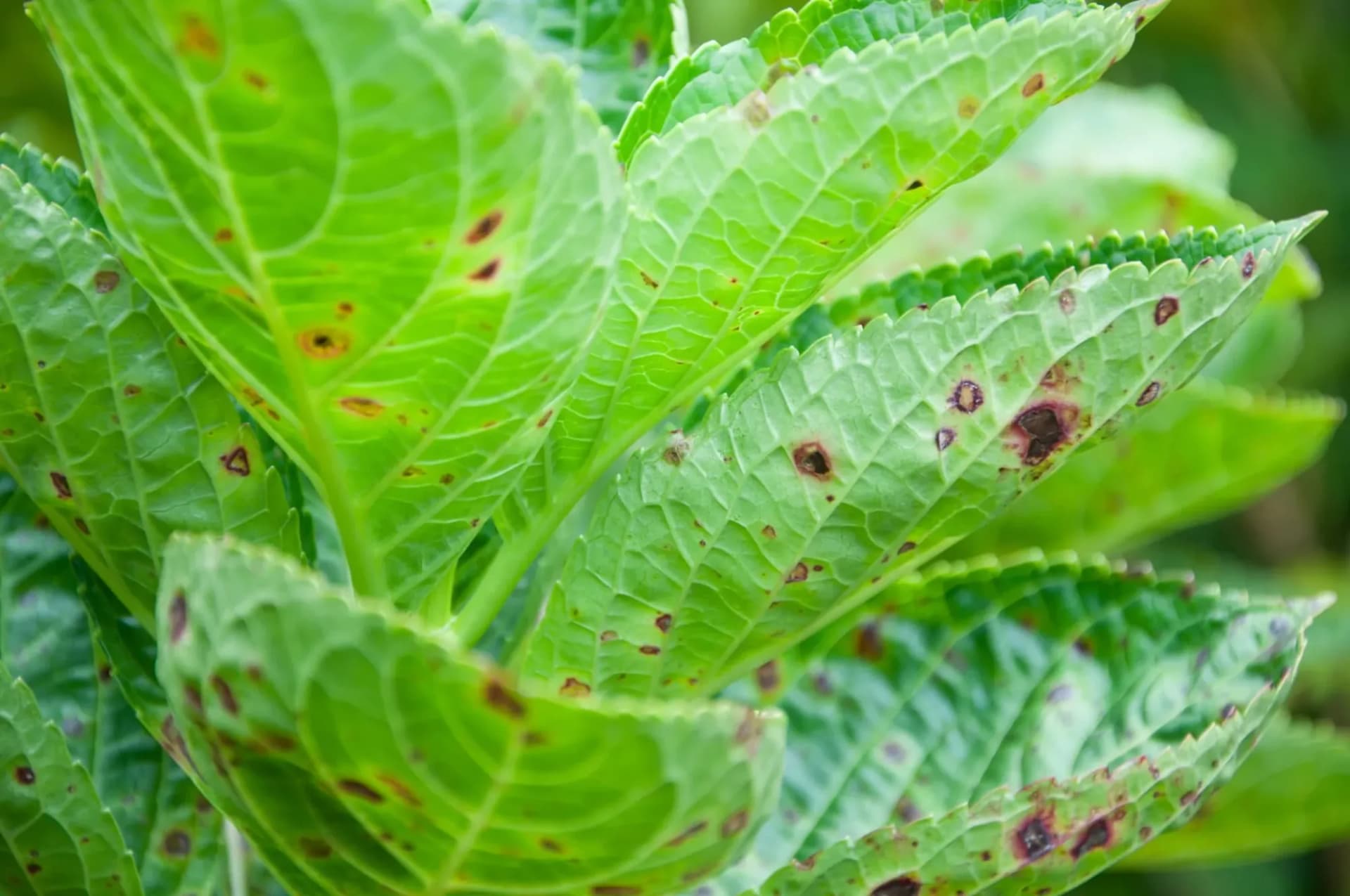
Small round spots with light brown or grey centers and purple borders. | Moderate | Remove and dispose of affected leaves. Provide optimal air circulation. Avoid sprinkling water on leaves. Treat with a copper-based fungicide. | |
Small, round, sunken spots that may be brown, black, or transparent. | Four-lined bug | Low-moderate | Pick all the insects off the leaves and spray the affected areas with an organic insecticide solution. |
Slightly sunken, circular brown spots on leaves and flowers. Its alternating dark and light rings resemble targets. | Anthracnose | Moderate | Spray the plant with a copper-based fungicide. |
Brown and crispy areas on leaves | Sunburn | Low-moderate | Place the hydrangea where it gets morning sun and afternoon shade. |
Top 5 Causes of Brown Spots on Hydrangea Leaves
There are many different reasons for brown leaf spot on Bigleaf Hydrangea. All of them can be divided into three main groups: improper care, unfavorable environmental conditions, and diseases or pests.
However, several factors may affect the plant at the same time. Drought can weaken it, while heavy rains or prolonged watering promote fungal diseases, making the exact cause of the issue difficult to identify. Below, we’ll consider the 5 most common factors that lead to brown spots on leaves.
1. Cercospora Leaf Spot: Most Common Fungal Disease

Cercospora Leaf Spot is what causes brown spots on the leaves of hydrangeas most often. This is a fungal disease that occurs as a result of overwatering or heavy rain. You can identify this problem through a special detector or with your own eyes by visible symptoms.
These are small, round brown or purple spots that gradually spread from the lower leaves to the upper part of the plant. As the spots age, the center turns light brown or gray, and a purple border appears around the edges.
This disease rarely causes hydrangea death. However, it can spoil the plant's appearance and lead to general weakening, causing leaf fall as well as reducing flower production and resistance to frost, heat, and pests.
2. Excess Moisture and Poor Air Circulation

If a hydrangea grows in a region with excessive rainfall, it can cause the leaves to be constantly wet. This, in turn, creates favorable conditions for the spread of fungal spores, which cause brown spots on the leaves.
Overcrowded planting of hydrangea, in turn, impairs air circulation among the leaves and shoots, keeping the plant wet longer after hand-watering or rain, allowing fungal diseases to spread. Transferring fungal spores from one area to another also occurs as a result of watering the plant from above.
3. Sunburn and Heat Stress

Most shrub hydrangeas grow well in a place with morning sun and light shade in the afternoon. If you place this plant in an open area with intense afternoon sun and dry soil due to a hot climate, it may have a hard time tolerating such conditions.
The hydrangea often reacts to the sun and heat by developing sunburns on its leaves, which look like brown spots. Usually, the upper leaves, which are exposed to more direct sunlight, are the ones affected, while lower foliage, the parts located inside the bush, or leaves on the shaded side, remain without changes.
4. Pest Damage

Scales, aphids, bedbugs, and mites may appear on hydrangea leaves. Each of these pests harms the plant in its own way, but does not pose a direct threat to its survival. For example, four-lined bugs feed on plant sap, and wherever they do so, they leave behind sticky residue along with clusters of tiny, round, brown spots.
Two-spotted spider mites leave behind webbing and white or yellow stippling. If the damage is severe, the leaves change color to yellow, then to grayish bronze. Eventually, they may fall off. Regarding the scale, it is a sap-sucking insect that leads to tissue damage that, when severely affected, becomes dry and brown.
5. Nutrient Deficiencies and Water Stress

Hydrangeas require moist, well-draining soil. So, regular watering is important. When the plant dries out, the leaves at the tips become dry and brown. The same occurs due to a huge amount of water. In this case, the roots that are in the moisture suffocate and cannot transport the water through the stem to the leaves.
Regarding nutrient deficiencies, they lead to a change in the leaf color in general. For example, iron chlorosis causes yellowing with prominent green veins. But prolonged deficiency, along with water stress, can cause brown spots.
How to Prevent Brown Spots from Returning
It’s better to prevent the problem than to notice how your plant loses its attractive appearance and use a treatment for brown spots on hydrangea leaves. Here are some practical tips on how to protect your flowering shrub from leaf damage:
- Proper spacing. Place plants 3-5 feet apart. This is essential for optimal ventilation and, therefore, to avoid the appearance of fungi.
- Watering. Water the plant not from above, but by directing jets of water to the bush’s base. Don’t do it in the late evening. Also, regularly monitor moisture levels and avoid drying out.
- Pruning. Every spring, prune away dead and diseased parts of the plant with a secateur. This will help to prevent pests and diseases from multiplying.
- Adding mulch. To keep the soil from drying out, add 2-3 inches of mulch, leaving a 4-6 inch space around the base of the plant. This layer of leaf mold or garden compost helps the soil retain moisture.
- Insect control. Regularly inspect hydrangea leaves, especially their undersides, for scale insects, bugs, mites, or other pests.
Following the above-mentioned advice can help you to grow a healthy hydrangea with green leaves and abundant flowers without brown spots.
FAQ
It’s necessary to remove leaves with brown spots and dispose of them by burying or burning to prevent the spread of disease.
Dariia Plaksina
Botanist
5 years of botanical research experience
Dariia Plaksina is a biologist, botanist, and writer of informational articles with over 5 years of experience exploring the world of plants, nature, and biology. She studied at Taras Shevchenko National University of Kyiv, Educational and Scientific Center “Institute of Biology and Medicine,” where she built a strong scientific foundation for her future work.
For Dariia, writing is a hobby, a calling, and a way to make reliable knowledge easier to understand. Her articles focus on plant care, plant health, and natural processes, helping readers learn more about the living world through clear, accessible, and science-based explanations.
Related Articles
8 min read · 1 Oct 2026
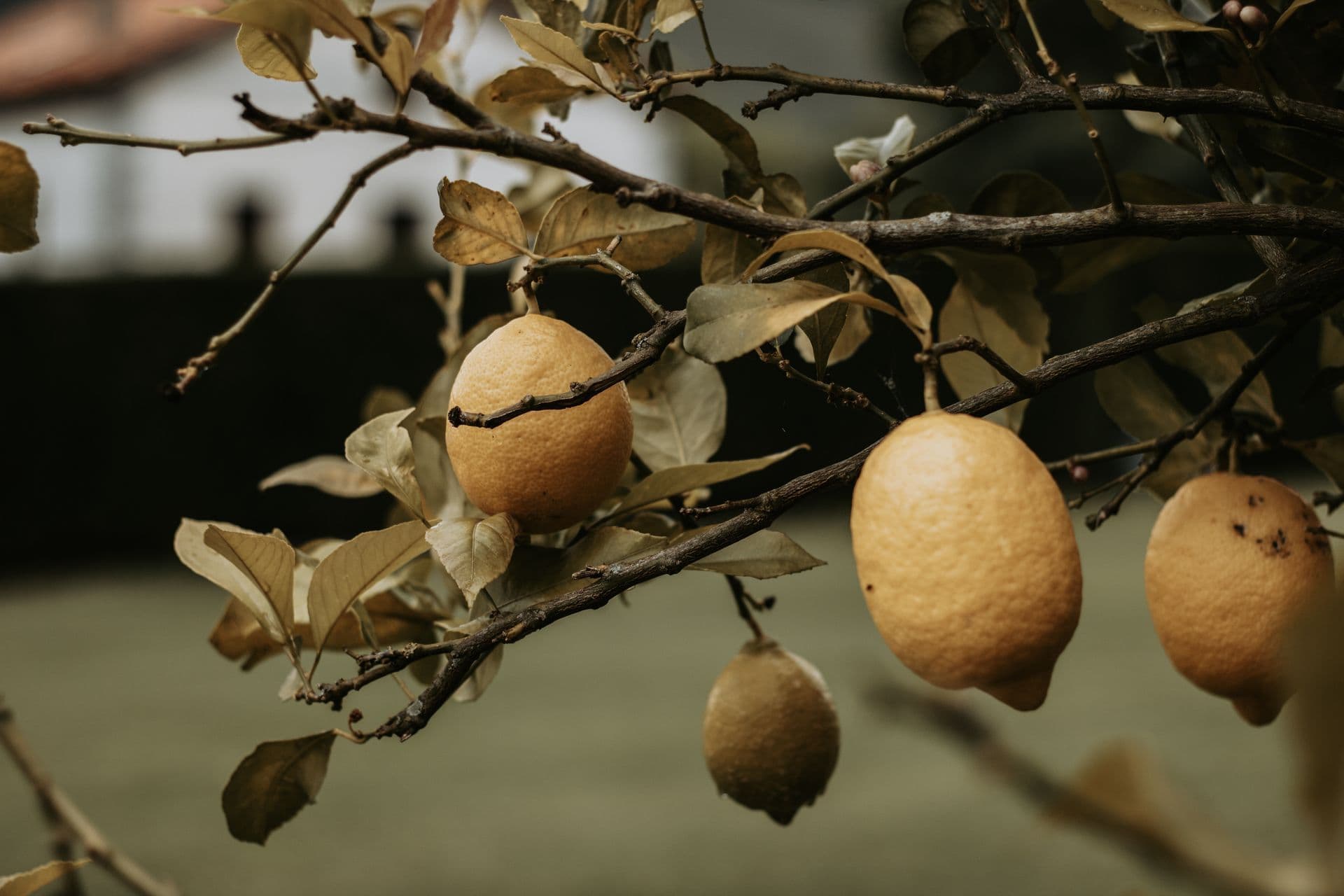
Lemon Tree Leaves Turning Yellow: Causes and How to Fix It
Yellow leaves are one of the most common lemon tree problems. This guide explains eight causes of lemon tree leaves turning yellow, from overwatering to root rot, with a fix for each.
5 min read · 16 Sept 2026
How to Keep Cats Away From Plants: 7 Safe and Effective Methods
Cats may dig in potting soil, chew leaves, or knock containers over. These seven methods combine safer placement, physical protection, a suitable chewing alternative, and play to help protect your plants without putting your cat at risk.
5 min read · 7 Sept 2026
Overwatering vs Underwatering: How to Tell the Difference
Overwatering and underwatering can look almost identical, so they're easy to confuse. In this guide, we'll cover the signs of each, simple ways to tell them apart, and how to treat your plant once you know what's wrong.
Explore Plants by Care Needs
Identify the plant and problem. Help your plant recover
Identify plant problems early, understand what's wrong, and get clear care guidance. Botan helps you turn guesswork into confident plant care