Hydrangea Black Leaves: The Warning Sign Your Shrub Is Sending
Black leaves on a hydrangea usually indicate one of three things: fungus, cold weather, or roots stuck in wet soil. None of these spells the end for your shrub. This guide will help you find the real cause.

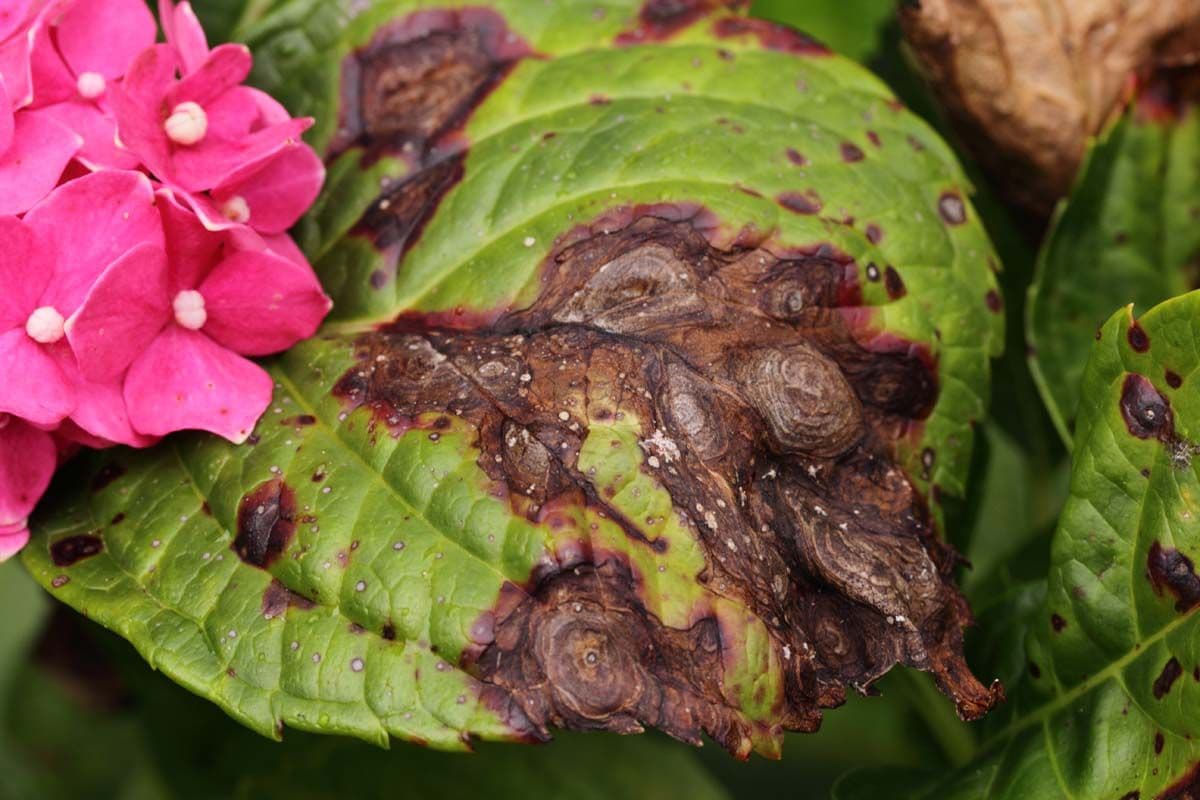
Hydrangea's black leaves baffle many gardeners. Last week, the bush looked fine. Now, half the foliage has turned dark. However, blackening itself isn't a disease — it's a sign of something wrong underneath. Take a picture with a plant scanner like Botan to identify the shrub and the cause of the issue, and then address it.

Main Reasons Why Hydrangea Leaves Are Turning Black
So what causes black spots on hydrangea leaves? There are several possible causes, and at first glance, they seem quite similar. For a bigleaf and panicle hydrangea, the list of causes is virtually the same. The black color is simply a warning sign. To understand the cause, take a closer look:
- Fungus. This is usually a pest called Cercospora. It first covers the lower leaves with spots, then spreads up the plant over the course of several weeks.
- Cold snap. Late frosts burn young shoots. Soft tips and young leaves quickly turn black, sometimes overnight.
- Root problems. Overwatered soil drowns the roots. The blackening spreads from the base, and the bush begins to sag.
- Too much sun. In the midday heat, wet leaves can instantly turn black.
- Bumps and bugs. Damaged areas and insect bites occasionally darken at the edges.
Each cause leaves its mark. Read this before you take any action, as the wrong solution will usually only make the situation worse.

Your Personalized Care Plan
Get personalized plant care recommendations in the app
Quick Comparison of Common Causes
In order to quickly find out the real reason for black spots on hydrangea leaves, you must compare them first. Three things are important here: what the damage looks like, where it's located on the bush, and how severe it is.
If you're unsure what you're looking at, a plant detector like Botan will make an accurate shrub identification from a photo and narrow down the possible causes. Check the table below to explore black spots on hydrangeas informatively:
Cause | Typical Symptoms | Affected Area | Severity |
Cercospora leaf spot | Dark spots with pale centers that spread | Older, lower leaves | Moderate |
Frost / cold snap | Sudden blackening, limp tips | New shoots, young leaves | Low to moderate |
Root rot (overwatering) | Blackening with wilt and droop | Whole shrub | High |
Anthracnose | Large brown and black blotches | Leaves and stems | Moderate to high |
Find the appropriate option in the table, and the treatment will essentially determine itself.
Fungal Diseases
In most cases, black spots on hydrangeas are caused by a fungus, usually Cercospora. It thrives in moist, still air and leaves that remain damp, so densely planted shrubs without adequate air circulation suffer the most.
Rain splashes spores from the ground onto the lower foliage. You'll initially notice small purple or brown spots at the base. Their centers fade or turn light brown as they grow, then the tissue dies and turns black.
If there are enough of these hydrangea fungal leaf spots, the leaf turns yellow and falls off. The disease can be prevented by ensuring adequate air circulation and keeping the plant dry.
Sudden Temperature Drops
Another serious problem is frost. It strikes the plant in the spring, just after warm weather encourages the emergence of new shoots that are still too soft to withstand the frost. When the water inside these young cells freezes, it expands and ruptures them from the inside. Within a day, the tips and new leaves droop and turn black.
Bigleaf hydrangea (Hydrangea macrophylla) is often the victim in this case, as they leaf out very quickly. Older leaves usually survive the frost, and the shrub survives. These blackened tips are a good sign if you still don’t know what damaged your hydrangea.
Overwatering and Root Problems
The leaves reflect how the roots are doing. If they're suffocated, the foliage suffers. The problem begins with poorly drained soil. Heavy, compacted soil retains water at the roots until they rot, and rotted roots can't pump moisture or nutrients to where they're needed.
This causes leaves to wilt, darken, and curl, usually throughout the entire plant rather than in specific areas. Plants in pots without drainage holes die the fastest.
How to Diagnose the Problem Correctly
If you notice a black spot on hydrangea leaves, don't treat it until you know the cause. Misdiagnosis can result in weeks of lost productivity and possibly even stress for the plant. A few quick checks usually help determine the reason:
- Where did it start? Lower leaf lesions that spread upward usually indicate a fungus. Damage to the tips of the leaves is the first sign of cold.
- When did it appear? Sudden blackening after a cold snap — frost. Slow spread during a muggy summer — fungus.
- How is the soil? Moist and heavy under your fingers indicates a possible root problem. Scrape off some soil and smell it for a sour, putrid odor.
- What is the shape? Round spots with fuzzy centers are a classic sign of Cercospora. Larger, jagged spots indicate anthracnose.
Still staring at a single black spot on your hydrangea leaves without a clear explanation? Take a photo of it and compare it to a reliable source. This is better than guessing and treating blindly.
How to Treat Hydrangeas with Black Leaves
Once you determine the cause of black spots on hydrangea leaves, the solution is generally simple. However, to address the problem itself, you simply won't see results:
- Fungus. Remove affected leaves and dispose of them in the trash; do not compost. Also, rake up fallen leaves from the bottom, as spores overwinter there. Provide shrubs with ample space for air circulation and water at the base to keep the foliage dry. When detected early, a fungicide containing chlorothalonil or myclobutanil suppresses Cercospora leaf spot of hydrangea completely.
- Frost. Basically, just wait it out. Postpone pruning off black tips, as another frost can damage the fresh cut. Once the last frost has passed, prune to a living bud.
- Root rot. Reduce watering and improve drainage first. Amend the soil with gravel or compost to loosen it, and repot the plant into a pot with holes if it's in a sealed container. Severely rotted roots may be impossible to restore.
- Sunburn. Shade the plant during the hottest part of the day. Water early in the morning to allow the leaves to dry before the sun rises.
Eliminate the problem, and most black spots on hydrangeas will disappear on their own. Give the plant time — new leaves will grow clear.

How to Prevent Black Leaves in the Future
To prevent black leaves next year, you basically need to follow three rules: air circulation, watering, and timing. Make these rules a habit:
- Give the plant enough space. Dense shrubs trap moist air, and a small space dries out the foliage and prevents fungal growth.
- Water infrequently, early in the morning. Moisten the soil in the morning, not in the evening, and avoid watering the leaves.
- Rake the soil in autumn. Remove old leaves where spores overwinter.
- Mulch. A layer of mulch over the roots stabilizes moisture and protects from the cold.
- Don't overfeed. Excess nitrogen promotes the growth of soft shoots, which are susceptible to frost and fungus.
- Choose frost-hardy seedlings. Young shoots of these species tolerate harsh weather well.
This doesn't require much effort. A little space and regular watering will prevent most problems.
FAQ
Yes, it can. Strong sun shining on damp leaves will burn them, turning them brown or black, especially in hot weather. Move the plant to a shaded area in the afternoon and water early in the morning to prevent the leaves from being wet when the sun is at its highest.
Dariia Plaksina
Botanist
5 years of botanical research experience
Dariia Plaksina is a biologist, botanist, and writer of informational articles with over 5 years of experience exploring the world of plants, nature, and biology. She studied at Taras Shevchenko National University of Kyiv, Educational and Scientific Center “Institute of Biology and Medicine,” where she built a strong scientific foundation for her future work.
For Dariia, writing is a hobby, a calling, and a way to make reliable knowledge easier to understand. Her articles focus on plant care, plant health, and natural processes, helping readers learn more about the living world through clear, accessible, and science-based explanations.
Related Articles
8 min read · 1 Oct 2026
Lemon Tree Leaves Turning Yellow: Causes and How to Fix It
Yellow leaves are one of the most common lemon tree problems. This guide explains eight causes of lemon tree leaves turning yellow, from overwatering to root rot, with a fix for each.
5 min read · 16 Sept 2026
How to Keep Cats Away From Plants: 7 Safe and Effective Methods
Cats may dig in potting soil, chew leaves, or knock containers over. These seven methods combine safer placement, physical protection, a suitable chewing alternative, and play to help protect your plants without putting your cat at risk.
5 min read · 7 Sept 2026
Overwatering vs Underwatering: How to Tell the Difference
Overwatering and underwatering can look almost identical, so they're easy to confuse. In this guide, we'll cover the signs of each, simple ways to tell them apart, and how to treat your plant once you know what's wrong.
Explore Plants by Care Needs
Identify the plant and problem. Help your plant recover
Identify plant problems early, understand what's wrong, and get clear care guidance. Botan helps you turn guesswork into confident plant care