Snow cover management
In cold climates allow a stable winter snow cover to insulate the rosettes, but gently brush off late heavy wet snow in spring to prevent crown rot and mechanical damage.

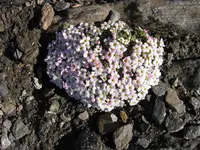
Alpine rock-jasmine (Androsace alpina) is a compact alpine perennial that forms tight cushions of tiny leaves studded with small, usually pink or white, star-shaped flowers. It stays very low to the ground and often nests in rock crevices, giving a dense, moss-like appearance.
This species is native to high mountain regions of the European Alps, where it endures cold, wind, and intense sun. It is considered challenging to grow because it demands excellent drainage, cool roots, and stable, low-nutrient conditions similar to its natural rocky habitat.
Gardeners who care for Alpine rock-jasmine usually grow it in rock gardens, troughs, or specialized alpine houses with bright light, constant but light moisture, and gritty, sharply drained soil.

Care Difficulty
Hard Care

Light Preference
Full Sun

Water Requirements
Moderate Water

Temperature Preference
Cold Hardy

Hardiness Zone
3–7

Soil Texture
Sandy, Rocky, Loamy

Soil pH
Acidic (5.5–6.5), Slightly acidic (6.5–7.0)

Soil Drainage
Well-drained

Fertilization
Minimal (feed rarely)
Scan your plant to receive care tips personalized for your specific plant
Available on iOS and Android
This alpine cushion plant thrives in bright, cool conditions with strong light but limited heat.
This species prefers steady moisture in fast-draining, gritty substrate rather than constant wetness.
This true alpine is highly cold-tolerant but struggles with prolonged heat and warm, wet conditions.
This alpine species tolerates relatively dry air and usually does not need special humidity control outdoors.
Androsace alpina needs sharply drained, gritty soil that mimics rocky alpine scree.
This species can be grown in containers when the pot replicates its fast-draining alpine conditions.
This alpine species is adapted to low-nutrient, rocky soils, so Alpine rock-jasmine needs only very light feeding in cultivation.
Pruning Androsace alpina is minimal and mainly focuses on hygiene and maintaining a compact cushion.
This alpine cushion plant is usually grown in rock gardens or troughs and dislikes frequent disturbance.
Reproduction of Androsace alpina is possible but somewhat specialized, mainly through seed and careful division.
This alpine species is very cold hardy but benefits from good drainage and some winter moisture control.

Plant Health Check
Not sure what's wrong with your plant? Check your plant's health inside the app.
This species naturally occurs on some of the highest siliceous peaks of the central European Alps, often above 2,500 m, where very few flowering plants can survive continuous cold, wind, and intense UV radiation.
It forms compact, dome-shaped cushions of densely packed rosettes, a growth form that traps warmer air, reduces wind exposure, and creates a more stable microclimate on exposed rock ledges.
The plant often grows in shallow crevices on acidic, nutrient-poor rocks, relying on slow accumulation of fine particles and organic matter to support its dense root system.

Androsace alpina is considered a classic flagship species of extreme alpine vegetation in the European Alps and has been used in ecological studies as an indicator of climate change impacts at very high elevations, because even small temperature shifts can influence its narrow habitat range and population dynamics.
Growth is slow. In suitable rock garden or crevice conditions, it may take several seasons to form small, dense cushions a few centimeters across. Patience is essential when trying to grow Androsace alpina from young plants or seed.
Keep your plants happy and healthy with plant identification, disease detection, and easy care guidance.

_(49532732922)-2-200x133.webp)