Regular stem renewal
Pinch back or lightly trim older, woody stems at the base every few months to encourage a constant flush of new, flowering shoots and keep the plant compact and full.

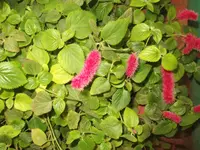
The dwarf chenille plant, Acalypha pendula, is a compact trailing shrub grown mainly for its bright red, fuzzy catkin flowers. It is often used in hanging baskets, small containers, or as a seasonal accent outdoors in warm climates.
This species comes from tropical regions, so it prefers warm conditions and does not tolerate frost. It has a relatively fast growth habit and flowers for long periods when conditions are stable.
In general, it likes bright light, evenly moist but not waterlogged soil, and good air circulation. With these basics in place, it is straightforward to care for Dwarf Chenille Plant for most indoor and patio gardeners.

Care Difficulty
Moderate Care

Light Preference
Partial Sun

Water Requirements
Keep Soil Moist

Temperature Preference
Tropical / Frost Sensitive

Hardiness Zone
10–11

Soil Texture
Loamy, Sandy, Organic-rich

Soil pH
Acidic (5.5–6.5), Slightly acidic (6.5–7.0)

Soil Drainage
Moist but well-drained

Fertilization
Moderate (every 2–4 weeks)
Scan your plant to receive care tips personalized for your specific plant
Available on iOS and Android
This trailing plant prefers bright, gentle light to support dense foliage and fuzzy blooms.
This species prefers evenly moist but not waterlogged soil for steady growth.
This plant performs best in consistently warm, frost-free conditions.
This species prefers moderately humid air and reacts quickly to very dry conditions.
Acalypha pendula performs best in loose, fast-draining, organic-rich soil that still holds some moisture.
This trailing species is well suited to container and hanging basket culture.
Acalypha pendula responds well to moderate, consistent feeding during its active growing season.
Pruning maintains compact form and encourages fresh flowering growth on Acalypha pendula.
Container-grown Dwarf Chenille Plant benefits from periodic repotting to support vigorous growth.
New Acalypha pendula plants are most reliably produced from softwood stem cuttings.
Acalypha pendula is frost-sensitive and needs protection wherever winter temperatures drop near freezing.

Plant Health Check
Not sure what's wrong with your plant? Check your plant's health inside the app.
This species has a naturally prostrate and trailing growth form, which is why it is often used in hanging baskets where the stems can cascade and display the catkin-like flower spikes fully.
The bright red fuzzy flower spikes are dense inflorescences made of many tiny reduced flowers, and individual catkins can remain attractive for a relatively long period compared with many other ornamental species in the Euphorbiaceae family.
Acalypha pendula is native to tropical regions and has adapted to warm, frost-free environments, which explains its sensitivity to cold temperatures in cultivation and its frequent use as a seasonal outdoor plant in cooler climates.
Lack of blooms usually comes from insufficient light, depleted nutrients, or spent flower spikes not being removed. Regular feeding, bright conditions, and light pruning of old catkins encourage repeat flowering and keep the plant producing new spikes.
Keep your plants happy and healthy with plant identification, disease detection, and easy care guidance.