


Mounting orientation
Position plants horizontally or slightly upside down on mounts so water runs off the leaf base after misting, which greatly reduces the risk of rot in the tight leaf sheath.

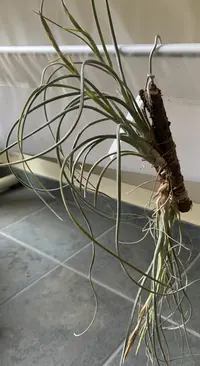
The reflexed airplant, Tillandsia baileyi, is an epiphytic bromeliad that grows without soil, often attached to branches, rocks, or decorative mounts. It stores water and nutrients in its leaves rather than in roots.
Plants form narrow, arching rosettes with smooth, gray-green leaves that curl or reflex backward, creating a graceful, fountain-like shape. Mature plants produce a colorful flower spike that can attract pollinators.
In nature, T. baileyi occurs in coastal regions of Texas and northeastern Mexico, where it experiences bright light, moving air, and periodic moisture from rain or humidity. These traits make care for reflexed airplant relatively straightforward indoors when light, airflow, and regular misting or soaking are provided.

Care Difficulty
Moderate Care

Light Preference
Partial Sun

Water Requirements
Low Water

Temperature Preference
Tropical / Frost Sensitive

Hardiness Zone
10–11

Soil Texture
Sandy, Rocky, Organic-rich

Soil pH
Acidic (5.5–6.5)

Soil Drainage
Well-drained

Fertilization
Light (every 4–6 weeks)
Scan your plant to receive care tips personalized for your specific plant
Available on iOS and Android
Tillandsia baileyi thrives in bright, indirect light with brief periods of soft direct sun.
This air plant absorbs moisture through its leaves and depends on thorough but fast-drying watering.
This species prefers warm, frost-free conditions similar to its native subtropical habitats.
This species prefers consistent moderate humidity for stable growth.
Tillandsia baileyi is epiphytic and should never be planted in regular potting soil.
This air plant is suitable for loose container displays rather than traditional pot culture.
This species benefits from light feeding to support growth without coating its leaves.
Pruning needs for Tillandsia baileyi are minimal and focus on grooming rather than shaping.
This air plant is usually mounted rather than potted, so care focuses on remounting or repositioning rather than classic repotting.
Propagation of this species is commonly done by dividing offsets rather than by seed in home conditions.
Tillandsia baileyi dislikes prolonged cold and needs protection in regions with freezing winters.

Plant Health Check
Not sure what's wrong with your plant? Check your plant's health inside the app.
This species naturally grows on coastal dunes and scrub in south Texas and northeastern Mexico, often attached to shrubs like mesquite, showing a strong adaptation to bright, windy, and seasonally dry habitats.
Its long, slender leaves bend backward and down as they mature, giving the plant a distinctive reflexed, fountain-like shape that helps shed excess water and reduces rot risk in humid weather.
The inflorescence forms a narrow spike with bracts that can take on a reddish or pinkish tone, while the tubular flowers are typically purple, creating a noticeable contrast that attracts hummingbirds in its native range.

In the wild, this species often forms loose, clumping colonies on the same host plant over many years, creating conspicuous hanging masses that can serve as microhabitats for small invertebrates and contribute to local epiphyte diversity.
Lack of bright light, insufficient air movement, or irregular watering commonly delay flowering. Mature plants bloom once when well lit, regularly hydrated, and kept in warm, stable conditions. Occasional dilute, low-nitrogen air-plant fertilizer also supports bud formation.
Keep your plants happy and healthy with plant identification, disease detection, and easy care guidance.

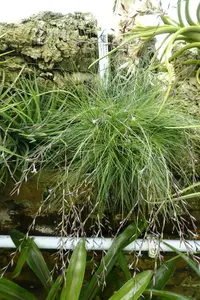
Tillandsia filifolia
Tillandsia filifolia
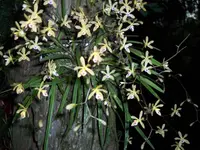
Florida butterfly orchid
Encyclia tampensis
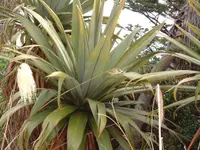
Mountain cabbage tree
Cordyline indivisa
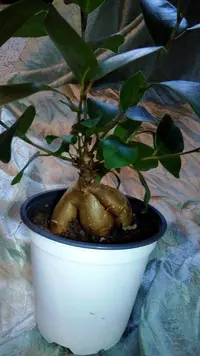
Ficus microcarpa 'Ginseng'
Ficus microcarpa 'Ginseng'
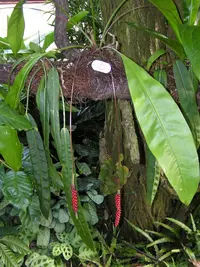
Red Pearls Anthurium
Anthurium gracile

shea tree
Vitellaria paradoxa
Bastard Copperleaf
Acalypha chamaedrifolia
 POPULAR
Watermelon Pilea
Pilea cadierei