Brazilian tree-fern Care (Blechnum brasiliense)

Brazilian tree-fern

About Brazilian tree-fern

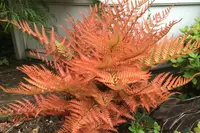
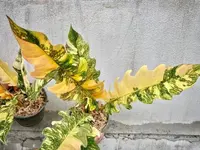
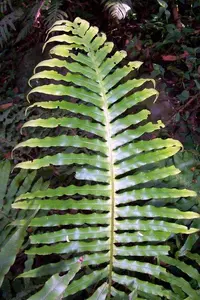
The Brazilian tree-fern, Blechnum brasiliense, is an evergreen fern with a short trunk and a rounded crown of arching fronds. Young fronds often emerge copper-red before maturing to glossy deep green, giving the plant a striking, tropical look. In nature it grows on the forest floor of humid woodlands in Brazil and neighboring regions, where light is filtered and air stays consistently moist. It is moderately demanding, as it dislikes drying out, sudden temperature changes, and low humidity. Gardeners who learn how to care for Brazilian tree-fern usually focus on steady moisture, rich, well-drained soil, and protection from harsh sun and wind.

Main Plant Requirements

Care Difficulty

Moderate Care

Light Preference

Partial Shade

Water Requirements

Keep Soil Moist

Temperature Preference

Tropical / Frost Sensitive

Hardiness Zone

10–11

Soil Texture

Loamy, Peaty, Organic-rich

Soil pH

Acidic (5.5–6.5)

Soil Drainage

Moist but well-drained

Fertilization

Light (every 4–6 weeks)

Get Personalized Care Plan

Scan your plant to receive care tips personalized for your specific plant

Available on iOS and Android

How to Care for the Brazilian tree-fern

This fern prefers bright, indirect light that mimics dappled forest shade.

  • Provide 4–6 hours of bright, filtered light each day, such as under high tree canopy or on an east-facing patio with morning sun and no harsh midday rays.
  • Tolerates partial to full shade, but in very low light fronds become sparse and pale; move slightly closer to a brighter, but still shaded, position.
  • Strong afternoon sun can scorch new red fronds on Brazilian tree-fern, so use shade cloth or position it where buildings or trees block sun from about 11 a.m. to 4 p.m.

This species needs consistently moist, but not waterlogged, soil to stay healthy.

  • Water when the top 2–3 cm of soil feels slightly dry, aiming for evenly moist soil down to root depth rather than alternating between saturation and dryness.
  • In hot or windy weather, check moisture daily; in cool or rainy seasons, water less often and rely more on feel than on a fixed schedule.
  • If Blechnum brasiliense fronds crisp at the tips or curl, it is often too dry; yellowing, limp fronds and a sour smell from the soil suggest overwatering or poor drainage.

This fern prefers mild, stable temperatures with no frost exposure.

  • Ideal growth occurs at 65–80°F (18–27°C), with steady warmth and moderate humidity supporting continuous new frond production.
  • It tolerates brief drops to about 40–45°F (4–7°C), but repeated exposure below this range damages fronds and can kill the crown.
  • Protect from frost and from hot, dry winds; in heat above 86°F (30°C), increase shade and humidity and avoid placing it near heat-reflecting walls or paving.

This fern needs consistently high humidity to keep fronds lush and prevent tip damage.

  • Aim for 60–80% humidity; levels below 50% often lead to browning tips and crisp leaflet edges.
  • In dry indoor air, group plants, use a pebble tray with water below the pot base, or run a small humidifier nearby.
  • Watch for curling fronds, slowed growth, and brown midrib streaks as clear signs of humidity stress in Brazilian tree-fern.

This species prefers loose, moisture-retentive but well-drained, organic-rich soil.

  • Use a mix of 50–60% peat or coir with compost, plus 20–30% fine bark and 10–20% perlite for structure and drainage.
  • Keep pH slightly acidic, around 5.5–6.5, which supports nutrient uptake and reduces leaf yellowing in Blechnum brasiliense.
  • Ensure the mix holds moisture evenly yet drains within a few minutes; avoid sticky, heavy clay that stays waterlogged.
  • Improve aeration by adding extra bark or perlite if the mix compacts, and avoid adding sand that can create dense, cement-like pockets.

This fern adapts well to container growing when the pot supports stable moisture and root spread.

  • Choose a wide, slightly deeper pot to accommodate its fibrous, spreading root system without crowding the crown base.
  • Select a heavier ceramic or clay container outdoors to counterbalance the leafy canopy and prevent wind tipping.
  • Ensure large, unobstructed drainage holes so excess water exits quickly and does not stagnate around the lower rhizomes.

Blechnum brasiliense benefits from modest, consistent feeding during active growth.

  • Use a balanced liquid fertilizer (such as 10-10-10) at 1/4–1/2 strength every 4–6 weeks in spring and summer.
  • For containers, a slow-release, balanced fertilizer in early spring can support steady growth.
  • Avoid high-salt synthetic products and never apply to dry soil; water lightly first.
  • Stop feeding in fall and winter, as growth slows and excess nutrients may damage roots.

Pruning Blechnum brasiliense focuses on hygiene and maintaining a neat rosette shape rather than size control.

  • Best time for pruning is late winter to early spring, or as soon as damaged fronds appear.
  • Remove dead, yellowing, or diseased fronds at the base with clean, sharp scissors or hand pruners.
  • Thin a few crowded inner fronds if needed to improve air flow and reduce fungal issues.
  • Avoid cutting the central growing crown, as damage there can severely stunt new growth.

This fern prefers stable conditions, so repotting or transplanting Blechnum brasiliense is done only when clearly needed.

  • Check for roots circling the pot, emerging from drainage holes, or noticeably slowed growth as signs to repot.
  • Plan repotting or outdoor transplanting in spring, aiming for every 2–3 years for container-grown plants.
  • Move to a pot only 2–5 cm wider, using a moisture-retentive, well-drained mix rich in organic matter.
  • Handle the root ball gently, keep it at the same soil depth, water thoroughly, then keep shaded and evenly moist for 1–2 weeks.

Propagation of Blechnum brasiliense is possible but more advanced than for many houseplants.

  • Division of well-established clumps in spring is the most practical home method.
  • Lift or unpot the plant, then carefully separate small sections, each with healthy roots and at least one growing point.
  • Replant divisions into a fine, moist, well-drained mix and keep in high humidity with bright, indirect light.
  • Spore propagation is possible but slow, requiring sterile conditions, consistently warm temperatures, and patient care.

Winter care for Blechnum brasiliense is important in regions with cold or frosty conditions.

  • This species is frost sensitive and is best grown in USDA zones 9–11 or indoors in cooler climates.
  • For in-ground plants, apply a 5–8 cm mulch layer around the root zone, keeping it slightly away from the crown.
  • Move container plants indoors or into a greenhouse before temperatures drop near 40°F, providing bright, indirect light.

Care Tips

Rotate For Symmetry

Turn the pot 90° every 2–3 weeks so the fronds develop evenly and the crown stays centered rather than leaning toward the brightest side.

Protect Soft Croziers

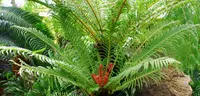
When new fronds are unfurling, keep the plant away from high-traffic areas and avoid brushing past it, as the still-soft croziers bend and deform easily and will not recover their shape.

Use Wide, Stable Pots

Choose a low, wide, heavy container to support the expanding crown and prevent tipping as fronds lengthen and gain weight.

Refresh Top Layer Annually

Once a year, gently scrape off 2–3 cm of the old surface mix around the crown and replace it with fresh, fine-textured peat-free mix to keep the root zone aerated without disturbing the shallow roots.

Plan For Gradual Upsizing

Instead of jumping to a much larger pot, step up container size by only 2–3 cm in diameter at a time to avoid waterlogging and support stable, dense root growth when caring for Brazilian tree-fern.

Common Pests and Diseases

Scale insects

This pest attaches firmly to frond midribs and stems, sucking sap and causing yellowing, stunted fronds, and sticky honeydew that can lead to sooty mold. Symptoms include small dome-shaped or flat brown, gray, or tan bumps that do not brush off easily.

Solution

Wipe fronds and stems with a soft cloth dipped in lukewarm soapy water or a 1:10 mix of rubbing alcohol and water, repeating weekly until new scale stops appearing. For heavier infestations, trim heavily affected fronds, improve air movement, and use a labeled horticultural oil spray, ensuring thorough coverage of the undersides of fronds while protecting the growing crown.

Mealybugs

These insects hide in the fern’s crown, at the base of fronds, and along midribs, appearing as white, cottony masses. This pest weakens the plant by feeding on sap and excreting honeydew, which can attract ants and encourage sooty mold.

Solution

Remove visible clusters with a cotton swab dipped in rubbing alcohol, then gently rinse the foliage with lukewarm water to dislodge remaining insects. In persistent cases, apply an insecticidal soap or light horticultural oil labeled for ferns, repeating every 7–10 days and monitoring tight leaf bases where mealybugs often return, an important step in Blechnum brasiliense care instructions.

Spider mites

These pests are favored by the warm, dry air often used to keep this fern indoors and cause fine speckling, dull fronds, and occasionally fine webbing between pinnae. Symptoms include bronzing or grayish fronds and rapid decline if humidity stays low.

Solution

Increase humidity to 50–60% with a humidifier or pebble tray and give the plant a gentle, full shower to wash mites from both sides of the fronds. For continuing activity, use insecticidal soap or a miticide labeled for ferns, applied to all frond surfaces every 5–7 days for several cycles while avoiding direct hot sun during treatment.

Leaf spot (fungal/bacterial)

This disease causes brown, tan, or black spots that may have purple or darker margins on the delicate fronds, sometimes coalescing into larger dead areas. Symptoms include spotting that starts on older fronds or crowded interior foliage, especially in prolonged leaf wetness and poor air circulation.

Solution

Prune and discard affected fronds, avoiding overhead watering so fronds dry quickly, and space the plant to improve airflow. If new spots continue to appear, apply a fern-safe fungicide according to label directions and keep the crown dry while water is directed to the soil surface.

Crown rot

This disease begins in the crowded, moisture-retentive crown where old frond bases collect, leading to a soft, dark, foul-smelling growing point and collapsing new fronds. Symptoms include sudden wilting, distorted new growth, and mushy tissue at the center of the plant.

Solution

Remove and discard all soft, discolored crown tissue and severely affected fronds, then allow the surface to dry slightly between waterings while ensuring the potting mix drains very well. If firm, healthy tissue remains, repot into fresh, airy fern mix, keep water off the crown, and avoid letting the pot sit in standing water to limit further rot development.

Interesting Facts

Copper-red juvenile fronds

Young fronds of this species emerge in a striking copper to reddish color before gradually turning glossy green as they mature, a trait linked to pigments that help protect tender tissues from intense light and herbivores.

Trunk-forming rainforest fern

Unlike many small ground ferns, this species slowly develops a short, woody-like trunk over time, allowing the crown of fronds to sit above the forest-floor competition in its native Atlantic rainforest habitats of Brazil.

Moisture-loving root system

Its fibrous roots are adapted to consistently moist, humus-rich soils in shaded tropical forests, which is why successful Blechnum brasiliense plant care depends on even moisture and good organic content in the substrate.

Botan icon

Did you know?

In its native range, this fern often grows in the cool, humid understory close to streams and waterfalls, where frequent mist and splash maintain the high ambient humidity that supports its large, finely divided fronds.

FAQs about Brazilian tree-fern

Brown frond tips or edges usually result from low humidity, underwatering, or excess fertilizer salts. Check soil moisture, flush the pot occasionally, raise humidity, and keep the root zone protected from direct hot or cold drafts.

Grow Healthy Plants with Botan Care

Keep your plants happy and healthy with plant identification, disease detection, and easy care guidance.

Botan plant care app — identify plants on mobile

Explore More Plants