Autumn Fern Care (Dryopteris erythrosora 'Brilliance')

Also known as: Japanese Shield Fern

About Autumn Fern

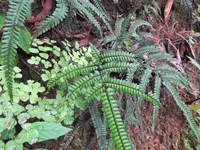
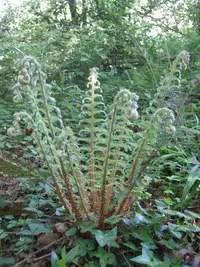
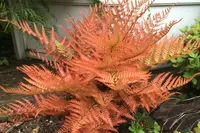
Autumn fern, Dryopteris erythrosora 'Brilliance', is a hardy, evergreen to semi-evergreen fern valued for its changing frond colors. New growth often emerges coppery orange to reddish, then matures to glossy deep green, creating a layered, textured look in shaded spaces.

This clumping fern forms neat, arching rosettes that fit well in woodland borders, shaded beds, and containers. It is native to East Asia, where it grows on forest floors in cool, moist, humus-rich soil.

The plant is generally forgiving if kept evenly moist and protected from harsh sun and drying winds. Once its basic needs are met, it stays attractive with fairly low effort, so learning how to care for Autumn Fern is straightforward for most gardeners.

Main Plant Requirements

Care Difficulty

Easy Care

Light Preference

Partial Shade

Water Requirements

Keep Soil Moist

Temperature Preference

Cold Hardy

Hardiness Zone

5–9

Soil Texture

Loamy, Peaty, Organic-rich

Soil pH

Acidic (5.5–6.5), Slightly acidic (6.5–7.0)

Soil Drainage

Moist but well-drained

Fertilization

Minimal (feed rarely)

Get Personalized Care Plan

Scan your plant to receive care tips personalized for your specific plant

Available on iOS and Android

How to Care for the Autumn Fern

This fern prefers soft, filtered light that mimics woodland conditions for best color and frond health.

  • Provide dappled shade or bright, indirect light with 2–4 hours of gentle morning sun; avoid strong midday or afternoon sun that can scorch fronds.
  • Site Autumn Fern in partial to full shade in hotter climates, using trees, fences, or shade cloth to filter light and reduce leaf burn.
  • In cooler regions, allow more morning light in spring and fall, then increase shade in summer; pale, sparse fronds indicate too little light, crisp brown edges indicate excess sun.

This fern prefers evenly moist, never soggy soil and reacts quickly to extremes in watering.

  • Water when the top 2–3 cm of soil feel slightly dry, soaking the root zone thoroughly, then let excess drain away to prevent root rot.
  • Use rich, well-drained soil with added organic matter so it holds moisture yet allows air flow; avoid compacted or constantly waterlogged spots for Dryopteris erythrosora 'Brilliance'.
  • In spring and summer, expect to water more often during dry spells; in cool or rainy seasons, reduce frequency, watching for limp, crisp fronds from drought or blackened, mushy crowns from overwatering.

This hardy fern tolerates a wide temperature range but grows best in mild, stable conditions.

  • Aim for active growth in 55–75°F (13–24°C); cool, moist conditions support stronger fronds and better color than hot, dry weather.
  • Mature plants tolerate cold down to about 0°F (-18°C) with mulch over the root zone; fronds may die back in winter but crowns usually resprout in spring.
  • During heat above 85°F (29°C), provide extra shade and consistent soil moisture, as prolonged high temperatures with dry soil can cause frond scorch and stress.

This fern prefers steady, moderately high humidity to keep fronds lush and reduce browning.

  • Aim for 50–70% humidity, as dry central heating or air conditioning can desiccate new fronds.
  • Crisping tips, rolled fronds, or slow unfurling signal humidity stress in Autumn Fern.
  • Increase humidity with grouped plants, a pebble tray under the pot, or a cool-mist humidifier rather than frequent misting.

This fern grows best in moist, loose, organic-rich soil that drains freely but never dries out completely.

  • Use a loamy mix with high organic matter, such as 2 parts compost or leaf mold, 1 part garden loam, and 1 part fine bark or perlite.
  • Ensure drainage is fast enough that water does not pool, but add organic matter so the mix still holds even, consistent moisture.
  • Target a slightly acidic to neutral pH of about 5.5–7.0, which supports nutrient uptake for Dryopteris erythrosora 'Brilliance'.
  • Avoid heavy clay, compacted areas, or mixes with large amounts of sand that either waterlog roots or dry out within a day.

This species is well suited to container growing on patios, shaded balconies, or in woodland-style planters.

  • Choose a pot at least as deep as the root ball with extra lateral room, since the crown slowly expands outward over time.
  • Use a heavier or wider-base container outdoors to prevent wind tipping as the fronds arch and add weight to one side.
  • Select a pot material that matches your climate, such as terracotta for cooler, wetter regions and glazed or plastic where mixes dry very quickly.

This fern benefits from modest feeding in containers but usually needs little fertilizer in the ground.

  • Use a balanced, diluted liquid fertilizer (around 10-10-10 at 1/4–1/2 strength) for potted Dryopteris erythrosora 'Brilliance'.
  • Feed every 4–6 weeks during spring–summer active growth if potting mix is low in nutrients.
  • In garden beds, rely mainly on compost or leaf mold worked into the topsoil once each spring.
  • Stop feeding in fall–winter, when growth slows, to avoid weak, soft fronds.

Pruning is light and mainly used to keep Dryopteris erythrosora 'Brilliance' tidy and healthy.

  • Best time is late winter or very early spring, before new fronds unfurl.
  • Cut dead, brown, or damaged fronds at the base using clean, sharp scissors or hand pruners.
  • Remove crowded or crossing fronds to improve air flow and maintain a neat, arching shape.
  • Avoid cutting fresh, healthy fronds, as they are needed for photosynthesis and energy storage.

This fern prefers stable conditions, so repotting or transplanting is done only when clearly needed.

  • Look for roots circling the pot, drying out quickly, or noticeably slowed growth as signals to move up 1 pot size.
  • Plan repotting or outdoor transplanting in early spring or early fall, avoiding extreme heat or cold.
  • Typical interval is every 2–3 years for container plants; garden clumps can stay undisturbed longer.
  • Keep the root ball as intact as possible, replant at the same depth, water thoroughly, and shade from strong sun for 1–2 weeks to reduce stress.

Division is the most practical way to multiply this fern for consistent characteristics.

  • Use clump division in early spring as new fronds start to emerge, when plants are actively preparing for growth.
  • Lift the clump carefully and divide the rhizome into sections, each with several healthy crowns and roots.
  • Replant divisions at original soil depth in moist, humus-rich media, spacing to allow future spread.
  • Keep soil evenly moist, provide shade to bright indirect light, and avoid disturbance until new fronds establish.

This fern is generally cold hardy in suitable climates and needs only modest winter care outdoors.

  • Tolerates light to moderate frost once established but may lose some fronds in very cold snaps.
  • Apply 5–8 cm of leaf mold or bark mulch around the root zone in late fall, keeping it off the crown.
  • Leave browned fronds in very cold regions until late winter, then remove them to tidy and reduce disease.
  • Move containers to a sheltered, frost-free or lightly heated area, keeping soil just barely moist.

Care Tips

Rotate for symmetry

Turn containers or pots a quarter turn every 2–3 weeks so fronds develop evenly and the crown does not lean toward the brightest side.

Staggered frond cleanup

Remove only 20–30% of the oldest, dullest fronds at a time in late winter so the plant keeps enough foliage to fuel new growth while refreshing its appearance.

Mulch to protect crown

Apply a 3–5 cm layer of fine bark or leaf mold around but not over the central crown to keep roots cool, conserve moisture, and reduce soil splash that can mark new fronds when caring for Autumn Fern.

Use gentle overhead rinsing

Hose or shower the plant with a soft, lukewarm spray every few weeks during the growing season to wash dust and pests from fronds, letting the foliage dry before cool night temperatures.

Divide only when dense

Plan division for early spring or early fall and only split clumps that have filled their space, keeping each division with several firm crowns to reduce transplant stress and maintain vigor.

Common Pests and Diseases

Scale insects

This pest appears as small, rounded bumps on fronds and stems, often causing yellowing and a general decline in vigor. These insects feed on plant sap and may excrete sticky honeydew that can attract sooty mold.

Solution

Remove light infestations by gently scraping insects off with a fingernail or cotton swab dipped in 70% isopropyl alcohol, then rinse fronds with lukewarm water. For heavier infestations, use a horticultural oil spray labeled for ferns, applied thoroughly to all frond surfaces in cool, shaded conditions, and repeat as directed on the label.

Aphids

These insects cluster on soft new fronds and stems, causing distortion, puckering, and reduced growth. This pest can also produce honeydew, which supports black sooty mold on the foliage.

Solution

Dislodge aphids with a firm stream of water, paying attention to the undersides of fronds, then follow with an application of insecticidal soap suitable for ferns. Improve plant vigor with proper watering and partial shade, and remove heavily infested fronds to reduce population pressure and improve how to take care of Autumn Fern in the long term.

Fern scale (armored scale)

This pest forms flat, hard, tan or brown scales on the fronds and rachis, which are easy to overlook until fronds begin to yellow and thin. These insects have a protective covering that makes control more difficult than with soft scale species.

Solution

Clip and discard heavily infested fronds to physically remove most of the population, then treat remaining fronds with a light horticultural oil spray, ensuring full coverage of both sides. Repeat treatments as needed according to the product label and avoid oil use during high heat or direct sun to prevent frond burn.

Leaf spot

This disease causes small, brown to black spots or blotches on fronds, sometimes with yellow halos, which can merge into larger dead patches under humid, crowded conditions. Symptoms include premature browning and decline of older fronds while new fronds may appear healthier at first.

Solution

Remove and discard affected fronds promptly to reduce spore spread, and avoid overhead watering so foliage dries quickly. Improve air circulation with proper spacing and, if the problem persists, apply a fungicide labeled for ornamental ferns, following the directions carefully and treating both upper and lower leaf surfaces.

Crown rot

This disease affects the central growing point at the base of the fronds, leading to soft, mushy tissue, frond collapse, and a foul odor in advanced stages. Symptoms include sudden wilting of multiple fronds despite adequate soil moisture.

Solution

Improve drainage by using a loose, well-drained soil mix and avoid planting the crown too deep or allowing water to pool around it. At early stages, remove and discard affected crown tissue and reduce watering, and in severe cases discard the entire plant and sanitize containers and tools before reusing to prevent reinfection.

Interesting Facts

Coppery juvenile fronds

The young fronds emerge in a bright copper-orange to red tone before gradually maturing to glossy deep green, a color change that is more intense and longer lasting in this cultivar than in typical Dryopteris erythrosora forms.

Semi-evergreen in mild climates

In regions with relatively mild winters, this fern often retains a significant portion of its foliage year-round, giving it semi-evergreen character rather than behaving as a fully deciduous woodland fern.

Stable selected cultivar

Brilliance is a clonal selection of the wild autumn fern, chosen and propagated for its enhanced spring and autumn coloration and slightly more compact, uniform growth compared with standard nursery strains, which is an important point in Dryopteris erythrosora 'Brilliance' plant care and selection.

Botan icon

Did you know?

This fern’s sori, the clusters of spore-producing structures on the underside of the fronds, often appear in a distinctive rusty-orange tone before turning darker with age, reinforcing the “autumn” effect and providing an additional seasonal color accent beyond the changing frond tissues themselves.

FAQs about Autumn Fern

This species is semi-evergreen in many mild climates. Fronds often stay green through winter but may partially die back in colder regions. Even if foliage declines, healthy crowns typically push fresh growth again in spring.

Grow Healthy Plants with Botan Care

Keep your plants happy and healthy with plant identification, disease detection, and easy care guidance.

Botan plant care app — identify plants on mobile

Explore More Plants