Encourage compact growth
Pinch back the youngest shoot tips once or twice early in the season to encourage bushier plants and a tighter, more wind‑resistant habit when growing Andryala glandulosa outdoors.

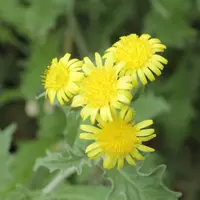
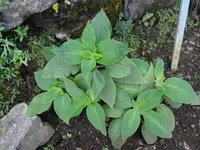
Andryala glandulosa is a small, short-lived herb from the Canary Islands, often found in rocky, open habitats and coastal slopes. It belongs to the daisy family and typically forms low clumps with softly hairy, grey-green leaves and yellow, dandelion-like flower heads. The plant prefers full sun, well-drained, rather poor soil, and relatively dry conditions, which reflects its origin in exposed, Mediterranean-type climates. It suits gardeners looking to grow a drought-tolerant, low-maintenance wildflower, provided winter conditions are not too wet or severe, and basic knowledge of how to care for Andryala glandulosa is applied.

Care Difficulty
Moderate Care

Light Preference
Full Sun

Water Requirements
Low Water

Temperature Preference
Warm Climate

Hardiness Zone
9–11

Soil Texture
Sandy, Loamy, Rocky

Soil pH
Slightly acidic (6.5–7.0), Neutral (7.0)

Soil Drainage
Well-drained

Fertilization
Minimal (feed rarely)
Scan your plant to receive care tips personalized for your specific plant
Available on iOS and Android
This sun-loving perennial performs best in bright, open sites with limited shade.
This species prefers dry, well-drained conditions and is sensitive to prolonged soil moisture.
This plant is adapted to mild, dry climates with good tolerance of heat but poor tolerance of hard frost.
This species tolerates relatively dry air and humidity is not a major limiting factor in cultivation.
This plant prefers mineral, fast-draining substrates that mimic rocky, open habitats.
This species can be grown in containers if the potting setup prevents chronic wetness.
Most established Andryala glandulosa plants in the ground need little added fertilizer if grown in reasonably fertile, well-drained soil.
Light, targeted pruning keeps Andryala glandulosa compact and flowering well without heavy intervention.
This species is more often grown in the ground, so transplanting young plants carefully matters more than frequent repotting.
New Andryala glandulosa plants are most often raised from seed, which suits its natural life cycle.
In mild, well-drained sites, this plant usually needs minimal winter attention once established.

Plant Health Check
Not sure what's wrong with your plant? Check your plant's health inside the app.
This species is naturally restricted to the Canary Islands and Madeira, forming part of the characteristic Macaronesian flora and contributing to the high level of local plant endemism in this Atlantic region.
The leaves and stems are covered with dense, sticky glandular hairs that can trap fine particles and small insects, a trait that helps distinguish it from closely related Andryala and Hieracium species.
Its bright yellow flowerheads are typical of the Asteraceae family, composed of many small florets that together function as a single visual unit to attract pollinating insects such as bees and hoverflies.
The flowers are rich in nectar and pollen and are very attractive to native bees, hoverflies, and small butterflies. Planting several together increases their visibility and supports pollinators in dry, sunny wildlife or Mediterranean-style plantings.
Keep your plants happy and healthy with plant identification, disease detection, and easy care guidance.