Rhizome Containment
Install a 20–30 cm deep root barrier or plant in a large, bottomless container sunk into the ground to keep the spreading rhizomes from invading nearby beds and lawns when growing Indianhemp.

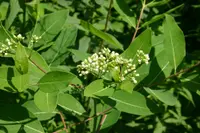
Indianhemp, Apocynum cannabinum, is a hardy, herbaceous perennial native to much of North America. It typically forms upright clumps with slender, branching stems and opposite, lance-shaped leaves.
In summer it produces small, greenish-white flowers, followed by narrow pods containing fluffy seeds that spread on the wind. The plant has deep roots and a tough constitution, which makes it drought-tolerant once established but also capable of spreading.
Indianhemp usually grows in open, sunny areas with well-drained but not overly dry soils, such as prairies, roadsides, and stream banks. Its resilience and spreading habit are key traits to consider when learning how to care for Indianhemp.

Care Difficulty
Easy Care

Light Preference
Full Sun

Water Requirements
Regular Water

Temperature Preference
Cold Hardy

Hardiness Zone
3–9

Soil Texture
Sandy, Loamy, Silty

Soil pH
Acidic (5.5–6.5), Slightly acidic (6.5–7.0)

Soil Drainage
Moist but well-drained

Fertilization
Minimal (feed rarely)
Scan your plant to receive care tips personalized for your specific plant
Available on iOS and Android
This North American perennial prefers open, bright conditions similar to sunny meadows and roadsides.
This species is adapted to seasonally moist sites and prefers soil that cycles between moist and slightly dry.
This hardy perennial tolerates a wide temperature range but grows best in moderate warmth.
Humidity is rarely a concern for Apocynum cannabinum, which is adapted to open, often dry habitats.
Apocynum cannabinum grows best in mineral, well-structured soils that drain freely yet retain some moisture.
This species can be grown in containers but is better suited to large, outdoor pots due to its vigorous root system.
Apocynum cannabinum is a tough native species that usually needs little to no fertilizer in average garden soil.
Pruning Apocynum cannabinum is mainly for safety, tidiness, and limiting spread rather than for plant health.
This deep-rooted native is rarely grown in pots, so care focuses on thoughtful outdoor transplanting rather than frequent repotting.
Apocynum cannabinum is commonly propagated by seed and by careful division of established clumps.
This hardy perennial dies back above ground but usually needs minimal winter attention in most temperate climates.

Plant Health Check
Not sure what's wrong with your plant? Check your plant's health inside the app.
The flowers open in small clusters and produce both nectar and sticky pollen, attracting specific bees and wasps that can navigate the narrow floral tubes and effectively transfer pollen between plants.
This species naturally occurs along North American rivers, streams, and wet meadows, where its deep, spreading root system helps stabilize soil and tolerate periodic flooding and drawdowns.
The long, strong bast fibers in its stems were traditionally processed by many Indigenous peoples of North America to make cordage, nets, and textiles, a practice that has informed modern interest in Apocynum cannabinum plant care as a low-input fiber crop.

This plant contains cardiac glycosides, the same class of compounds found in foxglove, which make it unpalatable to many herbivores and can cause poisoning in livestock and humans if ingested in significant amounts.
This species spreads by both seed and creeping rhizomes, so it can form large patches over time. In garden settings, use root barriers, regular pulling of new shoots, or confined beds to limit unwanted spread.
Keep your plants happy and healthy with plant identification, disease detection, and easy care guidance.