vasevine Care (Clematis viorna)

Also known as: Vase-vine Leatherflower
vasevine

About vasevine

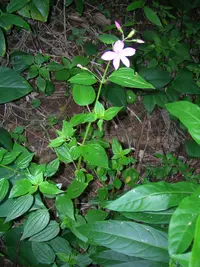
Vasevine, Clematis viorna, is a deciduous, twining vine native to the eastern United States, often found on woodland edges and along streams. It produces nodding, urn-shaped flowers in shades of purple, pink, or cream, followed by decorative, fluffy seed heads.

This species climbs by wrapping its leaf stalks around supports, so it suits trellises, fences, and naturalistic plantings. It stays relatively compact compared to many large-flowered clematis, which can make it easier to place in smaller gardens.

Clematis viorna prefers sun to light shade, consistent moisture, and well-drained, fertile soil. Once its basic needs are understood, it is straightforward to care for vasevine in typical garden conditions.

Main Plant Requirements

Care Difficulty

Moderate Care

Light Preference

Partial Sun

Water Requirements

Moderate Water

Temperature Preference

Cold Hardy

Hardiness Zone

5–9

Soil Texture

Sandy, Loamy, Organic-rich

Soil pH

Acidic (5.5–6.5), Slightly acidic (6.5–7.0)

Soil Drainage

Moist but well-drained

Fertilization

Minimal (feed rarely)

Get Personalized Care Plan

Scan your plant to receive care tips personalized for your specific plant

Available on iOS and Android

How to Care for the vasevine

Clematis viorna prefers bright conditions with several hours of direct sun but benefits from shaded roots.

  • Provide 4–6 hours of direct sun, ideally morning sun with light afternoon shade, especially in hotter regions.
  • Allow the top growth full or partial sun, but shade the root zone with mulch or low plants to prevent overheating and moisture loss.
  • Too little sun leads to weak, sparse flowering, while intense all‑day summer sun can scorch foliage on vasevine, especially in dry, exposed sites.

Clematis viorna prefers consistently moist but not waterlogged soil.

  • Water when the top 3–5 cm of soil feel dry, applying a deep soak at the root zone rather than light surface sprinkling.
  • Use well‑drained soil; prolonged soggy conditions cause yellowing leaves, wilting despite wet soil, and root rot risk.
  • In spring and summer, monitor more often during heat or wind; in cool or rainy periods, extend intervals and watch for dull, drooping foliage as a sign of underwatering.

This species is a hardy vine that tolerates cold winters and warm summers when roots are protected.

  • Active growth and flowering are best around 65–80°F (18–27°C), with cooler nights helping maintain strong stems and bud formation.
  • Established plants often tolerate lows near -20°F (-29°C) in the ground, but new plantings benefit from winter mulch over the root zone.
  • In hot spells above 90°F (32°C), protect roots with mulch and some afternoon shade to reduce stress, leaf scorch, and mid‑summer flowering slowdown.

Clematis viorna grows well in typical outdoor humidity but benefits from slightly moist air in hot, dry regions.

  • Aim for 40–60% humidity; brief dips lower are tolerated if soil moisture is consistent.
  • Dry air stress shows as crisp leaf edges, slowed growth, and buds drying before opening.
  • In prolonged dry heat, group plants, mulch the root zone, and use nearby water features rather than misting to raise local humidity for vasevine.

Clematis viorna prefers deep, moisture-retentive yet free-draining soil with a cool, shaded root zone.

  • Use a loamy, organic-rich base with plenty of fine bark or compost to create a crumbly, well-structured profile.
  • Ensure sharp drainage by incorporating coarse sand or grit in heavier soils and avoiding compacted clay pockets around the root zone.
  • Target a slightly acidic to neutral pH of about 6.0–7.0, amending alkaline soils with composted leaf mold or pine fines.
  • Avoid waterlogged, shallow, or very stony sites, and keep the soil surface mulched to protect roots from heat and surface drying.

This species can be grown successfully in containers if given a large, stable pot and careful moisture management.

  • Choose a tall, heavy container that will not tip as the vine climbs and that allows roots to grow deep rather than wide.
  • Line the bottom with a shallow layer of coarse gravel above drainage holes to prevent mix loss without slowing water exit.
  • Use a chunky, peat-free mix with added bark and perlite so the confined root mass stays aerated yet does not dry out rapidly.

This native vine usually needs modest feeding, but light nutrition supports flowering when grown as an ornamental vasevine.

  • Apply a balanced, slow-release fertilizer (around 10-10-10) at half strength in early spring as new growth starts.
  • In mid-summer, supplement with a light top-dressing of compost to maintain soil fertility and structure.
  • On average, feed 1–2 times per growing season in reasonably fertile garden soil.
  • Stop fertilizing in late summer so shoots harden before winter, and do not feed dormant plants.

Thoughtful pruning keeps Clematis viorna flowering well and prevents it from becoming tangled.

  • Use clean, sharp hand pruners to reduce disease risk and make precise cuts just above healthy buds.
  • In late winter or very early spring, remove dead, damaged, or weak stems down to strong live growth.
  • Thin congested sections by cutting out older, crowded vines to improve light and air movement.
  • Light shaping after flowering can direct new shoots and maintain a manageable size on supports.

This vine is usually grown in the ground, so focus on careful transplanting rather than frequent repotting.

  • Transplant in early spring or early fall, when temperatures are mild and soil is moist but not waterlogged.
  • Look for signs such as circling roots in containers, slow growth, or quick drying soil to decide on moving it.
  • Shift container plants only every few years, stepping up 1 pot size into deep, well-draining, organically enriched soil.
  • Reduce root stress by watering thoroughly before and after transplanting and keeping the root ball as intact as possible.

Clematis viorna is commonly propagated by cuttings, seeds, or simple layering when stock plants are healthy.

  • Take softwood or semi-ripe stem cuttings in late spring–early summer and root in a moist, well-draining, low-nutrient mix.
  • Provide bright, indirect light, high humidity, and steady warmth around 70°F to support root formation in cuttings.
  • Sow fresh seed in containers outdoors for natural winter cold stratification, then maintain lightly moist soil.
  • For layering, pin a flexible stem to the soil, cover the section with compost, and detach once well rooted.

This cold-hardy native clematis usually needs minimal winter attention in most temperate gardens.

  • Tolerates typical frosts in USDA zones where it is native, once well established in the ground.
  • Apply a 5–8 cm layer of mulch around the root zone after soil cools to buffer freeze–thaw cycles.
  • In very cold or exposed sites, loosely tie stems to supports to limit wind damage and breakage.
  • Move container-grown plants to a sheltered, unheated but frost-free or slightly protected spot for winter.

Care Tips

Cool Root Zone

Apply a 5–8 cm layer of organic mulch around the base, keeping it 5 cm away from stems, to keep roots cool and moist while the vine top grows in full sun.

Early Vine Training

Install a sturdy trellis or wire frame at planting and gently tie new shoots with soft ties in a loose figure-eight shape so stems harden in the desired direction without kinking.

Stem Protection Collar

Place a short section of slit plastic tubing or a mesh guard around the lower 10–15 cm of stems to reduce damage from string trimmers, rodents, and accidental foot traffic.

Targeted Pest Scouting

Inspect leaf undersides and tender shoots weekly in late spring for aphids and caterpillars, and flush small infestations off with a firm water spray before resorting to insecticidal soap.

Support Renewal Plan

Every few years, check that anchors, wires, and trellises are not cutting into thickening stems and replace or reposition supports in late winter while the plant is leafless to keep the structure safe and accessible when caring for vasevine.

Common Pests and Diseases

Clematis wilt

This disease causes sudden blackening and collapse of shoots, often just as new growth becomes vigorous and flower buds form. Symptoms include dark, sunken lesions at the stem base and rapid wilting of all growth above the affected point.

Solution

Cut back affected stems well below the blackened area into healthy green tissue and remove all fallen leaves and stems from the area. Keep the crown slightly above soil level in well-drained soil, avoid mechanical damage at the stem base, and encourage new shoots by maintaining even moisture and mulching lightly around but not over the crown as part of Clematis viorna care.

Powdery mildew

This disease produces a white or gray powdery coating on leaves and young stems, which may curl, yellow, and drop prematurely. Symptoms include reduced vigor and fewer flowers, especially in warm, dry conditions with poor air movement.

Solution

Remove and discard heavily affected leaves to reduce spore load, then improve air circulation by thinning crowded growth and keeping nearby vegetation pruned back. Water at soil level, avoid wetting foliage, and if outbreaks recur, use a labeled sulfur or potassium bicarbonate spray applied according to directions when conditions favor mildew development.

Leaf spot

This disease shows as small purple, brown, or tan spots on leaves that may merge into larger blotches, sometimes with yellow halos. Symptoms include premature leaf drop and a generally thin or unsightly canopy, especially in humid or rainy weather.

Solution

Prune out and discard heavily spotted foliage and any dead, congested stems to increase airflow around the vine. Water at the base in the morning, keep mulch from touching the stems, and if needed use a copper- or chlorothalonil-based fungicide labeled for ornamental vines at the first sign of spotting.

Aphids

These insects cluster on tender shoot tips and flower stalks, sucking sap and causing distorted growth and sticky honeydew on leaves. This pest can also attract ants and promote sooty mold on the vine surface.

Solution

Dislodge colonies with a firm stream of water, then inspect regularly and repeat as needed. For persistent infestations, use insecticidal soap or horticultural oil, applied thoroughly to shoot tips and the undersides of leaves, while encouraging natural predators like lady beetles by avoiding broad-spectrum insecticides nearby.

Spider mites

These pests are tiny sap-feeding arachnids that cause fine speckling, bronzing, and eventual leaf drop, often accompanied by delicate webbing on the undersides of leaves. This pest tends to worsen in hot, dry conditions and on plants growing against sun-heated walls or fences.

Solution

Rinse foliage thoroughly, especially leaf undersides, with water 2–3 times per week to knock down populations and raise local humidity. For heavier infestations, apply horticultural oil or insecticidal soap labeled for spider mites, and reduce heat stress by providing partial shade during the hottest part of the day and maintaining even soil moisture.

Interesting Facts

Distinctive urn-shaped flowers

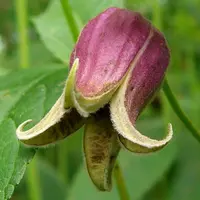
This species produces thick-textured, nodding flowers shaped like small urns or bells, unlike the flat star-shaped blooms of many other clematis species. The sepals are often purple to reddish with recurved tips, giving the flowers a curled, almost leather-like appearance.

Native woodland climber

Clematis viorna is native to eastern North America, where it naturally twines through shrubs and small trees along woodland edges, stream banks, and thickets. It climbs by leaf petioles, which wrap around nearby supports rather than using tendrils or aerial roots.

Feathery seed heads

After flowering, the plant develops clusters of achenes (dry fruits) each with a long, silky, persistent style that matures into a feathery plume. These silvery seed heads are wind-dispersed and can remain decorative on the vine well into late season.

Botan icon

Did you know?

Historical herbarium records and field observations show that Clematis viorna exhibits notable geographic variation in flower color and size across its native range, and some botanists have used this variation to discuss whether certain local forms might represent distinct varieties or just natural population-level diversity.

FAQs about vasevine

This species is a twining vine that climbs rather than sprawling. Stems wrap around nearby supports such as trellises, shrubs, or fences. Without something to grab, it tends to flop and tangle close to the ground.

Grow Healthy Plants with Botan Care

Keep your plants happy and healthy with plant identification, disease detection, and easy care guidance.

Botan plant care app — identify plants on mobile

Explore More Plants