Provide climbing structure
Install a sturdy trellis, fence, or wire mesh before planting, then loosely tie new stems with soft garden ties so they can quickly secure themselves and avoid wind damage.

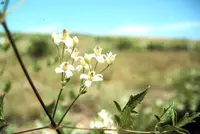
Western white clematis (Clematis ligusticifolia) is a vigorous, woody climbing vine native to western North America. It often scrambles over shrubs, fences, and streamside vegetation.
The plant bears clusters of small, creamy white flowers followed by fluffy, silvery seed heads that give it a soft, cloudlike look in late season. Stems use leaf stalks to twist and cling rather than tendrils.
It typically occurs in moist canyons, riverbanks, and open woodlands, favoring sun to light shade and well-drained, often rocky soils. Understanding these natural conditions helps gardeners learn how to care for western white clematis in home landscapes.

Care Difficulty
Moderate Care

Light Preference
Full Sun

Water Requirements
Moderate Water

Temperature Preference
Cold Hardy

Hardiness Zone
4–9

Soil Texture
Sandy, Loamy, Rocky

Soil pH
Slightly acidic (6.5–7.0), Neutral (7.0)

Soil Drainage
Well-drained

Fertilization
Minimal (feed rarely)
Scan your plant to receive care tips personalized for your specific plant
Available on iOS and Android
This vigorous vine grows best in bright outdoor conditions with a balance of sun and protection for its roots.
This species prefers consistently moist, well-drained soil rather than extremes of drought or saturation.
This hardy vine tolerates a wide range of outdoor temperatures but performs best with moderate seasonal conditions.
Humidity is rarely a concern for Clematis ligusticifolia grown outdoors in its native-type conditions.
Clematis ligusticifolia prefers deep, loose, well-drained ground that still retains moderate moisture.
This species can be grown in large outdoor containers but needs careful support and root space.
Clematis ligusticifolia is a vigorous native vine that benefits from light feeding in lean or disturbed soils, but established plants in rich ground often need little input.
Clematis ligusticifolia responds well to thoughtful pruning that keeps the vine manageable and encourages flowering on new growth.
This vigorous vine is usually grown in the ground, so care focuses on transplanting young Clematis ligusticifolia plants rather than frequent repotting.
This species is commonly propagated for restoration and native gardens using seeds and softwood cuttings.
This vine is generally cold hardy in much of its native range and usually needs only minimal winter care.

Plant Health Check
Not sure what's wrong with your plant? Check your plant's health inside the app.
This species often develops a woody root crown called a lignotuber, allowing it to resprout vigorously after fire or cutting and helping it persist in disturbance-prone western North American habitats.
It serves as a larval host plant for several native Lepidoptera, including some checkerspot and moth species, making it an important structural and nutritional component in riparian and shrubland food webs.
The fruits carry long, feathery styles that act like plumes, helping the seeds travel by wind and catch on surrounding vegetation, which aids the plant in quickly colonizing open or disturbed sites.

Pioneer ethnobotanical records from several Indigenous groups in western North America describe the careful use of small amounts of this plant’s strongly acrid tissues externally, such as for poultices and liniments, reflecting a detailed traditional understanding of its toxicity and handling rather than general food or tonic use.
This species can spread vigorously by seed and stems, especially in moist, sunny sites. In some regions it behaves weedy, so monitor seedlings, prune after flowering, and avoid planting near sensitive natural areas when following basic Clematis ligusticifolia care.
Keep your plants happy and healthy with plant identification, disease detection, and easy care guidance.