Rosette spacing
Space individual rosettes at least 5–8 cm apart in a dish garden or nursery flat to maintain airflow and reduce the risk of mealybugs and fungal spotting as they mature.

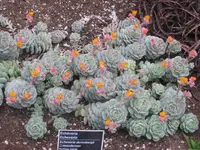
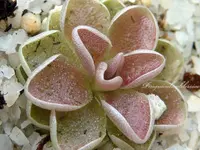
Echeveria derenbergii, commonly called Derenberg's Painted Lady, is a small rosette-forming succulent from Mexico. It belongs to the Crassulaceae family and stores water in its thick leaves. The plant forms tight, low clumps with bluish green leaves that often show pink or red tips in strong light. In good conditions it produces short flower stalks with bell-shaped yellow to orange blooms. This species stays compact, which makes it suitable for windowsills, containers, and mixed succulent bowls. Its drought tolerance and slow, tidy growth habit generally make it easy to care for Derenberg's Painted Lady, as long as it receives bright light, well-drained soil, and infrequent watering.

Care Difficulty
Easy Care

Light Preference
Full Sun

Water Requirements
Low Water

Temperature Preference
Warm Climate

Hardiness Zone
9–11

Soil Texture
Sandy, Loamy, Rocky

Soil pH
Slightly acidic (6.5–7.0), Neutral (7.0)

Soil Drainage
Well-drained

Fertilization
Minimal (feed rarely)
Scan your plant to receive care tips personalized for your specific plant
Available on iOS and Android
This compact succulent needs strong light to keep its rosettes tight and colored.
This species prefers infrequent, thorough watering with time to dry between soakings.
This succulent favors warm, dry conditions and is sensitive to prolonged cold and frost.
This succulent prefers dry air and usually stays healthy at 30–50% humidity.
Use a fast-draining, mineral-rich mix to prevent root and crown rot.
This species is well suited to container growing when excess moisture is controlled carefully.
This small succulent benefits from light feeding but grows acceptably even with minimal fertilizer.
Pruning needs for Echeveria derenbergii are light and mainly cosmetic.
This compact succulent prefers slightly tight pots and only occasional repotting.
This species is commonly multiplied to create dense clusters or new containers.
This succulent is not fully frost hardy and needs protection in cold climates.

Plant Health Check
Not sure what's wrong with your plant? Check your plant's health inside the app.
This species is native to rocky slopes in central Mexico, where it grows at higher elevations with strong light, cool nights, and very sharp drainage, which explains its compact rosette and strong drought tolerance.
The blue-green leaves have a characteristic toothed or bumpy margin with red to pink tips, a combination used by taxonomists to distinguish it from similar small Echeveria species.
Compared with many other Echeveria species, it tolerates short, light frosts in its native habitat, which is why it can often survive brief dips close to freezing if the soil stays dry.
This species usually blooms in late winter to spring, producing arching stalks with small yellow, urn-shaped flowers edged in red. Individual blooms last several days, and a healthy rosette can send up multiple flowering stems.
Keep your plants happy and healthy with plant identification, disease detection, and easy care guidance.