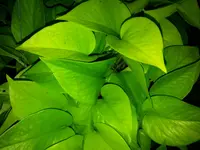



Pothos (Epipremnum aureum 'Neon') Light Needs

Pothos grows best in bright, indirect light with only brief gentle morning sun if exposed directly.

Light Preference

Bright Indirect Light

Epipremnum aureum 'Neon' Light Requirements

In its tropical forest habitat, Epipremnum aureum grows as a climbing aroid where tree cover breaks and filters the sun. Leaves receive bright, scattered light, short periods of softened sun, and shade from nearby vegetation rather than open, all-day sun.

That pattern explains why cultivated Pothos tolerates shade but colors and grows better with steadier brightness. Preferred light is bright indirect light.

  • Ideal exposure:

    Pothos needs about 6–8 hours of bright indirect or filtered light daily, including up to 1–2 hours of gentle direct morning sun.

  • Direct sun:

    Brief early sun is usually tolerated, but full sun and hot afternoon rays can scorch the thin leaves.

  • Lower light:

    Shade is tolerated, but growth may slow and the neon leaf color can become less vivid.

  • Best timing:

    Morning light is safer than afternoon light because it is cooler and less likely to bleach foliage.

Pothos is commonly grown indoors and adapts well when placed near steady, filtered light.

NSuitable
North-facing window:

Use a north-facing window only if the room is bright and the plant can sit close to the glass.

EBest
East-facing window:

Place it close to an east-facing window where it receives soft morning sun and bright indirect light afterward.

SConditional
South-facing window:

Keep it several feet back from a south-facing window or filter the light with a sheer curtain.

WConditional
West-facing window:

A west-facing window can work if late-afternoon sun is filtered or the pot sits 3–6 ft back.

The best indoor position gives bright surroundings without hot sun resting on the leaves for long periods.

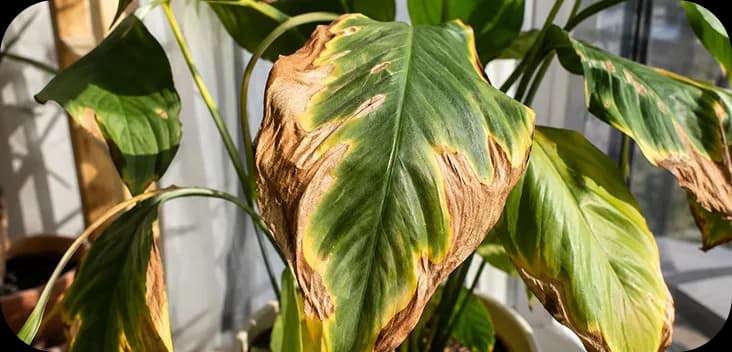
Strong direct sun usually shows on exposed leaves first.

Bleached patches:

Leaves may develop washed-out areas where strong sun hits the same surface directly.

Tan scorch spots:

Dry tan marks can appear on the sun-facing side after sudden bright exposure.

Temporary curling:

Leaves may curl or look limp during hot window sun, then relax after the light softens.

Dull leaf color:

The neon color may look faded or yellowed where light is too intense.

Move it out of direct afternoon sun or add a sheer curtain. Trim only fully damaged sections after the plant is in safer light.

Weak light often appears gradually. The plant may stay alive but grow with less strength and color.

  • Long internodes:

    New vines may develop wider spaces between leaves as they reach toward the light.

  • Leaning growth:

    Stems may angle strongly toward the nearest bright source instead of growing evenly.

  • Smaller leaves:

    New leaves may emerge smaller than older leaves during the active growing season.

  • Duller color:

    The bright chartreuse tone may shift darker green when light stays too weak.

Move it gradually into brighter indirect light, checking new growth over the next few weeks. Avoid moving it straight from shade into harsh sun.

If ideal brightness is not available, choose the brightest spot that avoids hot direct afternoon rays; this is the better compromise than deep shade.

Move the pot 1–3 ft closer to the light source when growth stretches, or pull it back when leaves look washed out.

Rotate the pot every 1–2 weeks so new vines do not lean strongly toward one side.

Get Personalized Care Plan

Scan your plant to receive care tips personalized for your specific plant

FAQ

This plant does best with bright, indirect light for most of the day. It tolerates dimmer rooms, but growth is usually slower and the leaf color can become less vivid.

Everything About Pothos

More Plant Light Guides

Get the Botan App

Discover how to care for your plants with Botan.

Botan app identifying a plant with a phone camera
What Plants Don't Like Epsom Salt?

11 min read · 29 Jul 2026

What Plants Don't Like Epsom Salt?

Learn which plants can be seriously damaged by Epsom salt and which will thrive on it. We’ll explain when and how to use it properly, provide tips for indoor & outdoor plants — read on and enjoy a healthy garden.

Plant Care
What Plants Don't Like Epsom Salt?
20 Funny Plant Names That Make You Laugh

8 min read · 16 Oct 2026

20 Funny Plant Names That Make You Laugh

Some plants carry names that sound like jokes. This guide explains the origins of 20 funny plant names. You will also see which of these plants you can grow at home.

Plant Recommendations
20 Funny Plant Names That Make You Laugh
Dill Companion Plants – What to Grow Next to Dill

9 min read · 17 Jul 2026

Dill Companion Plants – What to Grow Next to Dill

Dill is an easy-to-grow plant that gets along well with many vegetables. This guide describes 15 plants that can be planted alongside it, a few to avoid, and mistakes that can quietly sabotage the entire process.

Plant Recommendations
Dill Companion Plants – What to Grow Next to Dill