

Cape jasmine (Gardenia jasminoides) Light Needs

Cape jasmine grows best in bright light with partial sun, especially gentle morning sun and protection from harsh afternoon rays.

Light Preference

Partial Sun

Gardenia jasminoides Light Requirements

Gardenia jasminoides is native to warm, humid parts of East Asia, where it grows in open woodland edges, thickets, and bright understory sites. In these settings, light is strong but often broken by surrounding vegetation, with periods of direct sun and filtered light through the day.

This background explains its preference in cultivation: bright light is important, but the safest exposure is partial sun with gentle direct sun.

  • Ideal exposure:

    Cape jasmine needs about 6–8 hours of bright, filtered light daily, including 3–4 hours of gentle direct sun.

  • Full sun tolerance:

    It can handle longer direct sun outdoors when acclimated, but hot afternoon rays behind glass or in summer heat can scorch leaves.

  • Lower light limit:

    Bright shade may keep foliage alive for a time, but flowering is usually reduced and growth becomes weak.

  • Morning advantage:

    Morning sun is safer than late-day sun because leaves receive strong light before heat builds.

Indoors, place it where bright light reaches the foliage for most of the day.

NPoor
North-facing window:

A north window is usually too dim unless it is very large, unobstructed, and supplemented by brighter light nearby.

EBest
East-facing window:

An east window is often best because it gives gentle direct morning sun and bright light without intense afternoon heat.

SSuitable
South-facing window:

A south window works well if the plant sits 2–4 ft back or direct midday rays are softened with a sheer curtain.

WConditional
West-facing window:

A west window can work only with filtering or some distance from the glass, since late afternoon sun can be too hot.

If the plant leans or stops producing buds, increase light gradually rather than moving it straight into harsh sun.

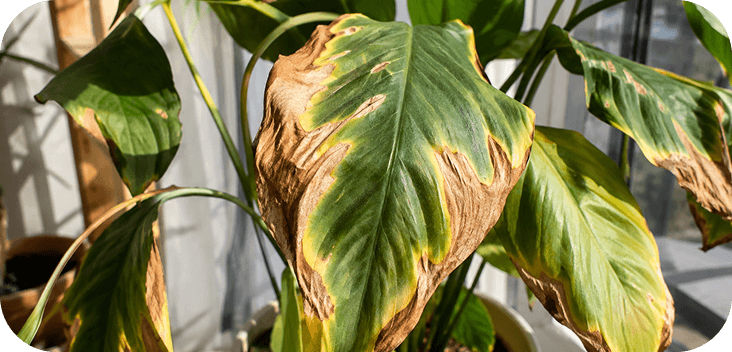
Excess light usually appears on the most exposed leaves first.

Bleached patches:

Leaves facing the strongest sun may develop pale, washed-out areas instead of an even green surface.

Dry tan spots:

Flat tan marks can appear after sudden exposure to direct sun, especially close to hot glass.

Heat curl:

Leaves may curl or look dull during the brightest afternoon hours, then partly recover later.

Bud stress:

Flower buds exposed to intense heat and sun may dry before opening, especially after a quick location change.

Move it out of harsh afternoon sun, or filter the light with a sheer curtain. Reintroduce brighter sun gradually over 1–2 weeks if more direct exposure is needed.

Weak light mainly affects growth and flowering. These signs are most useful when they appear during the active growing season.

  • Few flowers:

    Flower buds may form poorly, open less often, or fail to develop in persistently dim light.

  • Stretched stems:

    New shoots may become longer and thinner, with wider spaces between leaves.

  • Leaning growth:

    The plant may angle toward the brightest side instead of holding an even shape.

  • Small new leaves:

    Fresh growth may emerge smaller than older leaves during the active growing season.

Move it to a brighter position with gentle direct sun. Increase exposure in steps so the foliage can adjust.

Choose the brightest available spot and prioritize 3–4 hours of gentle direct sun over a full day of dim brightness.

Rotate the pot every 1–2 weeks so all sides receive light and the canopy develops more evenly.

Avoid deep shade because it usually reduces flower bud development and produces weaker growth.

Get Personalized Care Plan

Scan your plant to receive care tips personalized for your specific plant

FAQ

Cape jasmine light requirements are about 6–8 hours of bright light daily, including roughly 3–4 hours of gentle direct sun when possible.

More Plant Light Guides

Get the Botan App

Discover how to care for your plants with Botan.

Botan app identifying a plant with a phone camera
How to Winterize Your Garden in 6 Steps

5 min read · 28 Sept 2026

How to Winterize Your Garden in 6 Steps

Learn how to prepare your garden for winter with a practical six-step checklist covering cleanup, tender plant care, watering, mulching, winter protection, and winterizing equipment and containers.

Plant Care
How to Winterize Your Garden in 6 Steps
How to Mist Plants – Proper Technique and Common Mistakes

7 min read · 30 Jul 2026

How to Mist Plants – Proper Technique and Common Mistakes

Find out when misting works well and when to avoid it. Here, you’ll find detailed information about compatible and incompatible species, tips on how often to mist plants and do it correctly, and some great alternatives for raising humidity.

Beginner Guides
How to Mist Plants – Proper Technique and Common Mistakes
How Long Can Flowers Go Without Water? Everything You Need to Know

6 min read · 10 Jul 2026

How Long Can Flowers Go Without Water? Everything You Need to Know

Flowers can survive without water anywhere from 1-2 hours to several months, depending on the plant type, species, and growing conditions. Some strong-looking flowers are drought-sensitive, while delicate-looking plants may tolerate long dry periods surprisingly well.

Plant Care
How Long Can Flowers Go Without Water? Everything You Need to Know