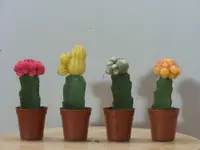


Moon Cactus (Gymnocalycium mihanovichii) Light Needs

Moon Cactus grows best in bright indirect light with a short period of gentle morning sun.

Light Preference

Bright Indirect Light

Gymnocalycium mihanovichii Light Requirements

Gymnocalycium mihanovichii is native to dry grassland and scrub habitats in parts of South America, especially Paraguay and nearby northern Argentina. In these open but uneven habitats, it receives strong seasonal light, often softened by terrain or surrounding cover rather than constant exposed sun.

Cultivated Moon Cactus, especially grafted colorful forms, is more sensitive to harsh sun. It prefers bright indirect or filtered light.

  • Ideal exposure:

    Moon Cactus needs about 6–8 hours of bright indirect or filtered light daily, including up to 1–2 hours of gentle direct morning sun.

  • Direct sun limit:

    Hot midday or afternoon sun can scorch the exposed rounded top, especially behind glass.

  • Partial shade:

    It can tolerate partial shade, but growth may weaken if the spot stays dim for weeks.

  • Winter light:

    Winter light is lower, so a brighter position is usually safer than deep room placement.

Indoors, Moon Cactus needs a bright location that avoids long exposure to hot direct sun.

NConditional
North-facing window:

Use only if the window is large, unobstructed, and the pot sits within 12 in of the glass.

EBest
East-facing window:

Place it within 1–2 ft of the glass so it gets bright morning light without harsh afternoon sun.

SConditional
South-facing window:

Set it 2–4 ft back or use a sheer curtain because direct midday sun can scorch the top.

WConditional
West-facing window:

Use only with filtering or a few feet of distance, since late-day sun is often too hot.

Adjust placement if the colored top fades, scars, or starts leaning toward the light.

Excess light usually shows after direct sun increases suddenly.

Bleached patches:

Pale tan or whitish areas on the sunny side can appear after sudden exposure to direct sun.

Corky scars:

Damaged spots may dry into rough, corky patches that do not turn green again.

Faded color:

The colored top may look washed out when light is intense and heat builds behind glass.

Sun-side collapse:

A softened or sunken area on one exposed side can follow severe scorch.

Move the plant to bright filtered light right away. Use a sheer curtain or increase the distance from the glass, then reintroduce gentle morning sun gradually.

Low light problems develop slowly because Gymnocalycium mihanovichii can sit unchanged for some time. Look for changes in shape and direction.

  • Stretched shape:

    The rounded top may begin to elongate instead of staying compact.

  • Leaning growth:

    Growth may tilt toward the brightest side when light comes from only one direction.

  • Weak color:

    Color may look duller when the plant spends weeks in a dim location.

  • Reduced flowering:

    Mature plants may bloom less often if bright light is missing during the growing season.

  • Small new growth:

    New tissue may develop more slowly and stay smaller during spring or summer.

Move it to brighter indirect light over several days. Avoid shifting from a dim shelf straight into strong direct sun.

If ideal light is not available, choose the brightest spot that avoids harsh afternoon rays; this is better than a dim shelf.

Filter intense sun with a sheer curtain, or move the pot 2–4 ft back from hot glass.

Rotate the pot a quarter turn every 1–2 weeks to keep the rounded top evenly exposed.

Get Personalized Care Plan

Scan your plant to receive care tips personalized for your specific plant

FAQ

This plant does best with 6–8 hours of bright indirect or filtered light each day. A little direct morning sun is useful, but strong afternoon sun is not ideal.

Everything About Moon Cactus

More Plant Light Guides

Get the Botan App

Discover how to care for your plants with Botan.

Botan app identifying a plant with a phone camera
12 Best Plants for Bathroom That Thrive in Humid Conditions

9 min read · 29 Sept 2026

12 Best Plants for Bathroom That Thrive in Humid Conditions

Discover the 12 best plants for bathroom spaces. Each pick comes with its own advantages, plus light, humidity, watering, and placement tips. Take a look and match the plant to your specific bathroom.

Plant Recommendations
12 Best Plants for Bathroom That Thrive in Humid Conditions
13 Best Front Yard Trees for Every Home and Yard

12 min read · 7 Aug 2026

13 Best Front Yard Trees for Every Home and Yard

A front yard tree can stay for decades. Therefore, choosing one deserves serious consideration. Here are 13 trees that have proven themselves, sorted by their purpose. You'll also find five species to avoid and basic planting information.

Plant Recommendations
13 Best Front Yard Trees for Every Home and Yard
What Plants Don't Like Epsom Salt?

11 min read · 29 Jul 2026

What Plants Don't Like Epsom Salt?

Learn which plants can be seriously damaged by Epsom salt and which will thrive on it. We’ll explain when and how to use it properly, provide tips for indoor & outdoor plants — read on and enjoy a healthy garden.

Plant Care
What Plants Don't Like Epsom Salt?