

String of Buttons (Crassula perforata) Light Needs

String of Buttons grows best in bright light with several hours of gentle direct sun.

Light Preference

Partial Sun

Crassula perforata Light Requirements

In its native South African range, Crassula perforata grows in dry, open habitats where light is strong and rainfall is limited. Plants may receive direct sun for part of the day, with some shelter from nearby rocks or low vegetation during the harshest hours.

This background explains its need for bright conditions in cultivation rather than shade. Preferred light is bright light with partial sun.

  • Ideal exposure:

    String of Buttons needs about 6–8 hours of bright, partial sun exposure daily, including 3–5 hours of direct morning or late-afternoon sun.

  • Direct sun:

    Established plants can tolerate more sun outdoors, but sudden midday exposure can scorch leaves.

  • Lower light:

    Dim rooms are not suitable because stems stretch and the stacked leaves become spaced apart.

  • Afternoon intensity:

    In hot windows or summer outdoor spots, filter harsh afternoon rays or increase distance from glass.

Indoors, place this plant where it receives bright light and some direct sun for much of the day.

NPoor
North-facing window:

A north window usually does not provide enough direct sun to keep growth compact.

ESuitable
East-facing window:

An east window is suitable when it gives several hours of direct morning sun and bright light afterward.

SBest
South-facing window:

Place it 1–3 ft from an unobstructed south window, or use a sheer curtain if leaves heat against glass.

WConditional
West-facing window:

A west window can work if afternoon sun is filtered or the pot sits a few feet back during summer.

Adjust placement seasonally if stems stretch toward the window or leaves show sunburn after a move.

Excess light usually follows a sudden move into stronger sun.

Bleached patches:

Sun-facing leaves may develop pale tan or whitish areas that do not green up again.

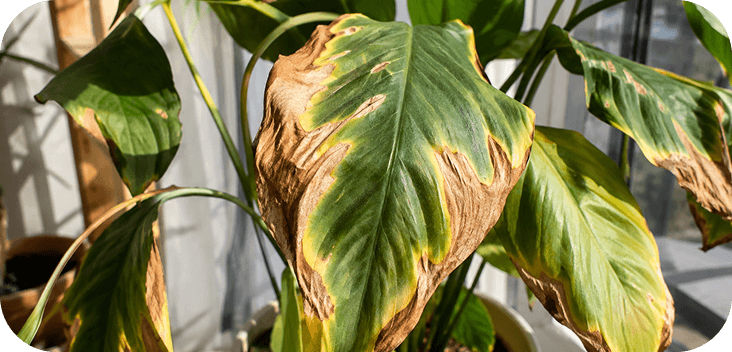
Dry scald marks:

Damaged spots can turn papery or corky, especially on the upper sides of stacked leaves.

Collapsed tips:

Newer tip growth may look tight, dull, or slightly shriveled when sun and heat combine.

Unusual red stress:

A light red edge can be normal, but broad reddening with scald marks suggests exposure is too intense.

Move the pot into bright light with gentler morning sun. Reintroduce stronger sun gradually over 1–2 weeks, especially after indoor growth.

Low light shows up in the shape of the stems first.

  • Long gaps:

    The stacked leaf pairs become farther apart as stems stretch toward the brightest source.

  • Leaning stems:

    Growth may tilt strongly toward a window instead of staying evenly upright or trailing evenly.

  • Small new leaves:

    New growth can appear narrower and less tightly stacked than older growth formed in better light.

  • Muted color:

    Leaves often stay flatter green, with less sun-tinted edging than this species can show in brighter conditions.

Move Crassula perforata to a brighter window or closer to the light source. Increase sun exposure in steps to avoid scorch.

If ideal sun is limited, choose the brightest available spot and give the plant the longest stretch of direct morning light available.

Rotate the pot a quarter turn every 1–2 weeks so the stacked stems do not lean in one direction.

A dim shelf several feet from the light is unsuitable because compact growth depends on strong light near the source.

Get Personalized Care Plan

Scan your plant to receive care tips personalized for your specific plant

FAQ

This plant does best with about 6–8 hours of bright light daily, including several hours of gentle direct sun. The best light for String of Buttons is bright partial sun.

More Plant Light Guides

Get the Botan App

Discover how to care for your plants with Botan.

Botan app identifying a plant with a phone camera
Plant Pot Sizes: How to Choose the Right Plant Container

7 min read · 20 Aug 2026

Plant Pot Sizes: How to Choose the Right Plant Container

Plant pot sizes can be confusing because the number on the label only tells you part of the required information. A container may look spacious but actually be too shallow. So, how to choose pot size for plant species?

Beginner Guides
Plant Pot Sizes: How to Choose the Right Plant Container
12 Best Plants That Repel Spiders For Your Home and Garden

8 min read · 24 Jul 2026

12 Best Plants That Repel Spiders For Your Home and Garden

Spiders constantly appear in places you don't want them. A few common plants can help repel them using scent alone. Here are 12 options suitable for both indoors and outdoors, plus care tips for each.

Plant Recommendations
12 Best Plants That Repel Spiders For Your Home and Garden
What Plants Don't Like Epsom Salt?

11 min read · 29 Jul 2026

What Plants Don't Like Epsom Salt?

Learn which plants can be seriously damaged by Epsom salt and which will thrive on it. We’ll explain when and how to use it properly, provide tips for indoor & outdoor plants — read on and enjoy a healthy garden.

Plant Care
What Plants Don't Like Epsom Salt?