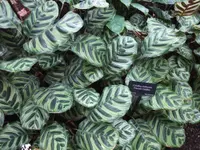


peacock plant (Goeppertia makoyana) Light Needs

The peacock plant grows best in bright, indirect light with protection from harsh direct sun.

Light Preference

Bright Indirect Light

Goeppertia makoyana Light Requirements

Goeppertia makoyana is native to tropical forests of eastern Brazil, where it grows below taller vegetation rather than in open sun. Light reaches the leaves after passing through canopy cover, so it is bright but softened, with brief seasonal sunflecks instead of long direct exposure.

In cultivation, this understory habit explains its sensitivity to harsh rays and its tolerance of partial shade. Preferred light is bright, indirect or filtered light.

  • Ideal exposure:

    Goeppertia makoyana needs about 6–8 hours of bright, indirect or filtered light daily, including up to 1–2 hours of gentle direct morning sun.

  • Direct sun limit:

    Avoid full sun, especially midday or afternoon rays, because the thin leaves can scorch quickly behind hot glass.

  • Lower light tolerance:

    It can tolerate moderate shade, but growth and leaf pattern usually weaken when the room stays dim.

  • Filtered brightness:

    A sheer curtain or a position set back from a bright window keeps light strong without direct heat.

Indoors, choose the brightest spot that keeps direct sun brief and gentle.

NConditional
North-facing window:

Use a north window only if it is large and unobstructed, and keep the plant close to the glass.

EBest
East-facing window:

Place it within 1–3 ft of an east window, where morning sun and bright indirect light are usually ideal.

SConditional
South-facing window:

Set it 4–8 ft back from a south window or filter the light with a sheer curtain.

WConditional
West-facing window:

Use a west window only with filtering, because late-afternoon sun can overheat and scorch the leaves.

Move it farther back if leaf surfaces look faded or papery after sun exposure.

Excess light usually appears on the leaves facing the window first.

Faded pattern:

The pale markings may look washed out after repeated exposure to strong direct sun.

Papery patches:

Dry tan or beige areas can form where hot rays hit the leaf surface.

Curling in sun:

Leaves may fold or curl during bright periods as the plant reduces exposed surface area.

Bleached edges:

Outer leaf areas may turn pale when light is intense, especially near west or south glass.

Move Goeppertia makoyana out of direct afternoon sun and filter the window if needed. Trim only fully damaged sections after the plant is in a safer position.

Low light is usually gradual, so changes may be easy to miss at first. The pattern is often more noticeable during active growth.

  • Leaning growth:

    Stems and leaves may angle toward the nearest window instead of staying evenly arranged.

  • Longer spacing:

    New growth can appear looser, with more space between leaves than older growth.

  • Duller pattern:

    The feathered markings may look less crisp when Goeppertia makoyana receives too little usable light.

  • Small new leaves:

    Fresh leaves may open smaller during the active growing season.

Shift the plant to brighter indirect light, making the change over several days. Avoid placing it straight into harsh sun as a quick fix.

If ideal light is not available, choose bright filtered light over direct sun. Move the pot a few feet from intense rays rather than accepting leaf scorch for extra brightness.

Rotate the pot one quarter turn every 1–2 weeks so new leaves do not lean toward one side.

Do not use a dark corner as a long-term setup; the foliage pattern and growth usually weaken there.

Get Personalized Care Plan

Scan your plant to receive care tips personalized for your specific plant

FAQ

Peacock plant light requirements are best met with 6–8 hours of bright, indirect or filtered light each day. Gentle morning sun is acceptable, but prolonged direct sun is not ideal.

Everything About peacock plant

More Plant Light Guides

Get the Botan App

Discover how to care for your plants with Botan.

Botan app identifying a plant with a phone camera
Plant Pot Sizes: How to Choose the Right Plant Container

7 min read · 20 Aug 2026

Plant Pot Sizes: How to Choose the Right Plant Container

Plant pot sizes can be confusing because the number on the label only tells you part of the required information. A container may look spacious but actually be too shallow. So, how to choose pot size for plant species?

Beginner Guides
Plant Pot Sizes: How to Choose the Right Plant Container
How Long Can Flowers Go Without Water? Everything You Need to Know

6 min read · 10 Jul 2026

How Long Can Flowers Go Without Water? Everything You Need to Know

Flowers can survive without water anywhere from 1-2 hours to several months, depending on the plant type, species, and growing conditions. Some strong-looking flowers are drought-sensitive, while delicate-looking plants may tolerate long dry periods surprisingly well.

Plant Care
How Long Can Flowers Go Without Water? Everything You Need to Know
13 Best Front Yard Trees for Every Home and Yard

12 min read · 7 Aug 2026

13 Best Front Yard Trees for Every Home and Yard

A front yard tree can stay for decades. Therefore, choosing one deserves serious consideration. Here are 13 trees that have proven themselves, sorted by their purpose. You'll also find five species to avoid and basic planting information.

Plant Recommendations
13 Best Front Yard Trees for Every Home and Yard